The South on the Nation’s Psychiatric Couch, Again

A Review of Tracy Thompson, The New Mind of the South. New York and London: The Free Press, 2013.

[NOTE:  I became a historian of the South not by birth, but because a southern grad school to which I’d applied made me “an offer I couldn’t refuse.” On the way to becoming a “Southern historian,” I had to tackle prickly topics like slavery, “the War” and Reconstruction, the “Age of Jim Crow,” the Civil Rights Movement, and, especially, the “mind of the South” (or, the question of “Southern Identity”).

For example, John Hope Franklin wrote about The Militant South; David Bertelson portrayed The Lazy South; Clement Eaton held forth on The Mind of the Old South; W.E.B. DuBois analyzed The Souls of Black Folk. Moreover, C. Vann Woodward managed, over a long career, to carve out a place as the historian of the modern South, in Tom Watson: Agrarian Rebel; The Strange Career of Jim Crow; Origins of the New South, 1877-1913; The Burden of Southern History; and, eventually, an autobiographical work, Thinking Back.

And yet, the more I read about the “mind” or the “identity” of the South, the more I came to see that, while historians loved to hold forth on the significance of the region in American history, the still reigning king of that topic, even in the 1970s, was journalist Wilbur J. Cash, whose 1941 monograph, The Mind of the South, whether one agreed with it or not, had to be taken very seriously, indeed.

Once I finished my doctorate, I fetched up at a “independent school” across town, and, while teaching some of Atlanta’s “best and brightest,” in the city of Margaret Mitchell and Gone With the Wind, I could hardly avoid Southern History in general or the “War Between the States,” in particular, even had I wished to. So I continued to read books on the Southern “mind” and Southern “identity” for the rest of my career and on into retirement as well. Interesting later works included, for example, Peter Applebome, Dixie Rising (1996); James C. Cobb, Away Down South: A History of Southern Identity (2005); and Gail Collins, As Texas Goes. . .How the Lone Star State Hijacked the American Agenda (2012).]

* * * * *

This brings me, in a roundabout way, to the volume under review, The New Mind of the South, by Tracy Thompson.

[tracythompson.com]

[tracythompson.com]

Tracy Thompson grew up on a farm in Clayton County, Georgia, south of Atlanta; attended Atlanta’s Emory University and Yale Law School; was a reporter for the Atlanta Constitution in the early 1980s; and eventually moved to the Washington, D.C. area, where she still lives. More importantly, Thompson discovered that one of her Georgia relatives had opposed the Confederacy during the Civil War, which nudged her towards the question of what exactly makes one a “Southerner.” For Thompson, this question was not abstract: her family’s past was rapidly disappearing, thanks to death, economic “progress,” and the real estate development mania that forms the lifeblood of Atlanta’s economy. (3-7) So, she set out to explore the South (which she defines basically as the eleven states of the former Confederacy), its people, and their values.

In analyzing the “new mind of the South,” Thompson imagines a box labeled “southern identity,” which includes, as historical constants, evangelical religion and slavery (race), both of which she traces from the antebellum era to their legacies in the early twenty-first century. More recent additions to the southern identity “box” include the apparent paradox that modern southerners are both “conservative” and famous for their “adaptability,” and that they lack “historical awareness.” (11-12) Lacking “historical awareness” certainly is not peculiar to the modern South, but Thompson maintains that, in the South, “the ideals of democracy met the reality of race,” which explains why “only Southerners today can claim membership in a genuinely biracial society.” (242)

W.J. Cash’s great book was essentially about the mind of the “white South,” but Thompson is from an era that celebrates “diversity.” She believes there is no such thing as a “southern culture”; rather, there are numerous “southern cultures.” For example, children of Hispanic immigrants, even if born or raised in the South, do not consider themselves “Southerners.” (18) Moreover, Thompson notes the return to the South, beginning in the 1970s, of descendants of African Americans who had fled the region during the “Great Migration” a generation earlier. This trend certainly has contributed, along with the rise of the “Sunbelt South,” to the “diversity” of major southern cities like Atlanta, which, to Thompson, is evidence that, despite manifold wrenching changes over the decades, Southerners still hanker for a sense of community.

Her journey takes Thompson from the Mississippi Delta to Atlanta, from the 2008 Children of the Confederacy convention, where the “Lost Cause” version of Southern history is taught as gospel, to mega-churches, which emphasize the “prosperity gospel.” Thompson’s writing style, wit, and insight make it a pleasure for the reader to accompany her.

Thompson’s work often is self-referential, but how could it not be, given her southern birth, Atlanta upbringing, and the questions that led her to undertake the project? It also is anecdotal, occasionally leaving the reader puzzled, for instance, whether Atlanta is “typical” of southern cities, but, to her credit, Thompson doesn’t simply transcribe interviews or offer a sort of “intellectual travelogue.” She obviously has read standard secondary works, scoured the journalistic literature, and availed herself of appropriate statistical evidence.

Thompson takes Southerners to task for their selective view of Southern history, including the idea that the Civil War (which “true southerners” usually refer to as the “War Between the States”) was all about “state rights” rather than slavery (and, in a note, she even tells doubters where they can find evidence supporting her interpretation). (41-43) This blinkered Southern take on the past certainly served the cause of the region’s “resurrection” after Reconstruction (AKA, “the Age of Jim Crow”), when Southern “Bourbons” were trying to attract Northern investors. At the same time, groups like the United Daughters of the Confederacy were struggling mightily to rewrite the region’s history and prevent “incorrect” versions of the Southern past from perverting the minds of virginal southern children. (43ff) And these same interpretations buttress the self-esteem of today’s “true southerners,” as the nation stumbles through the sesquicentennial of the Civil War.

Among the more discreditable episodes in the Southern past that Thompson regrets not having been exposed to while growing up south of Atlanta was the regional lynching bee that followed Reconstruction and continued into the years after World War II. Yet, it’s hard to place the blame for silence on this issue exclusively on Southern schools. (I didn’t learn about it in high school in Delaware, for example.)

Moreover, the idea that high school students would be exposed to gory details about lynching is pretty far-fetched, says someone who taught American (and Southern) history in an Atlanta prep school for almost four decades. Even Advanced Placement courses, where an outside observer might expect students to learn about lynching, probably didn’t include much beyond statistics, if that, because the emphasis in AP is on the “big picture” of the American past, not on highlights (or lowlights) of regional history. (Admittedly, my treatment of that topic in my Civil Rights course was a different story, but that class was a one-semester elective, with a small enrollment, and without a broad, sweeping end-of-course exam.)

A child of religious fundamentalism, Thompson contributes a stimulating chapter, “Jesusland,” on contemporary Southern religion. No one can deny the hold of evangelical Protestant Christianity in the white South, but Thompson makes the important point that, thanks to its history, “the South had become something unique in American history: a biracial [emphasis added] culture bound together by one religion.” During the Age of Jim Crow, in fact, black southerners created “a parallel evangelical universe that in its way exerted more influence on white culture than the other way around,” and, as the history of the modern Civil Rights Movement indicates, the black church “was the means by which a social system based on racial segregation unwittingly nourished the seeds of its own destruction.” (111-114)

After a trip to the Mississippi Delta, Thompson weighs the benefits of “heritage tourism” against the disappearance of “community,” which she sees “at the heart of agrarian values.” (162-163) And yet, if one considers the “black remigration, which began in the 1970s and shows no sign of letting up,” perhaps the future is not as bleak as she suggests, even in the rural South, since, according to Thompson, this phenomenon also suggests a quest for community. (174) Three-quarters of the nation’s increase in black population during the first decade of the twenty-first century was in the South, and “today, the South accounts for 57 percent of the nation’s black population.” (175)

Among Thompson’s best chapters is her treatment of Atlanta, a provocative, cynical, hilarious picture of the city and its history. She argues, for instance, that, despite its critics, Atlanta is actually a very southern city, perhaps even “an allegory for the twenty-first century South as a whole,” thanks to its “inferiority complex”; “its reflexive need to sugarcoat racial realities”; and “its resilience and adaptability in the face of calamity.” (178) And then there’s southern sociologist John Shelton Reed’s wonderfully acerbic comment that, “Every time I look at Atlanta, I see what a quarter of a million Confederate soldiers died to prevent.” (180)

In her concluding chapter, Thompson maintains that, if Wilbur J. Cash could somehow be brought to today’s South, he still would recognize it and understand its “mind.” Just below the surface lies a point that Thompson might have emphasized more. In Cash’s day, the South was regarded by non-southerners as the most bizarre corner of the nation, or, as Harper Lee might have put it, as the nation’s Boo Radley. The South was America’s “Number 1 Economic Problem” during the Great Depression, as FDR famously said, and, according to those “in the know” during the Civil Rights era, the locus of America’s struggle with race.

Today, on the other hand, in significant ways the nation as a whole shares the “new mind of the South”; the United States has become “southernized,” for better or for worse. Nowadays, it’s not only the South that is experiencing a resurgence of “nativism” in the face of the immigration issue, nor is it only Dixie that has begun to try to restrict the right to vote, erecting barriers between the polls and poor, African American, and immigrant voters, based on angrily declaimed, but unproven, charges of “corruption” in the electoral process. Attacks on labor unions and the right of workers to organize and bargain collectively is not a regional phenomenon today, but, while the South has historically been anti-union, the rest of the country seems to be catching up.

None of this is reassuring to a historian of the South. The question seems to be: Has the country reached some sort of pragmatic accommodation in dealing with its problems, or is the rest of the nation following Dixie down the rabbit hole, sippin’ sweet tea and eatin’ grits?

* * * * * *

For those interested in reading more of my reflections on history, here are links to my books on the subject:

REABP CoverRancorous Enmities and Blind Partialities:  Parties and Factions in Georgia, 1807-1845 (University Press of America, 2015)

Pursuit Cover

In Pursuit of Dead Georgians:  One Historian’s Excursions into the History of His Adopted State (iUniverse, 2015)

Politics on the Periphery:  Factions and Parties in Georgia, 1783-1806 (University of Delaware Press, 1986)

Posted in Age of Jim Crow, American History, Books, Civil Rights Movement, Civil War, Current Events, Georgia History, Historical Reflection, History, History graduate school, Popular Culture, Southern (Georgia) History, Southern History, Uncategorized | Tagged , , , , , , | 2 Comments

Georgia and the American Revolution, I: Colonial Background, 1732-1763 (In Pursuit of Dead Georgians, 12)

[NOTE: In the winter of 1976, I offered an eight-week course (meeting one evening a week) on “Georgia and the American Revolution, 1763-1783,” to interested members of our parent body. A new book on the subject, combining narrative with primary sources, had just been published, so the choice of textbook was easy. The course also offered me a chance to invite a couple of scholarly acquaintances as guest speakers and use one of my articles and one by another colleague as supplementary reading. I prepared several lectures, in outline form, covering much of the time period. What follows is the first of four posts based on those outlines.  Two additional posts, derived from lectures prepared for other venues, will carry the story of political developments in Georgia through 1806.  A list of suggested readings will be appended to Part V.]

* * * * *

Georgia was the last of the original thirteen colonies founded. While, in some ways, motives for the establishment of Georgia and techniques used to settle it resembled those for the first colony, Virginia, over a century before, there were also significant differences. The most obvious, indeed striking, difference was the role played by humanitarianism in the founding of Georgia; unfortunately, this idealism soon proved to be misplaced, and the young colony nearly expired before it could be firmly planted. Though a change of government enabled the British to snatch victory from the jaws of defeat, the first two decades of Georgia’s existence seemed to guarantee that, when the American Revolution came, Georgia would be the most reluctantly rebellious of colonies.

General James Oglethorpe (Wikipedia)

General James Oglethorpe (Wikipedia)

Britain’s motives for founding Georgia were both strategic and humanitarian. First of all, Britain and Spain both claimed the lands lying between the Savannah River below South Carolina and the Altamaha River north of Spanish Florida. In 1730, the Board of Trade in London suggested that the area be settled by “the poor persons of London,” which fit in well with the philanthropic views of the influential General James Oglethorpe and the Irish nobleman Viscount Percival, who later became the first Earl of Egmont.

Earl of Egmont (Wikipedia)

Earl of Egmont (Wikipedia)

Both men had been active in Parliament, trying to improve deplorable conditions in English jails. One byproduct of their crusade was a law setting free an estimated 10,000 imprisoned debtors. Oglethorpe and Percival shifted the emphasis of their efforts about 1730 and began to advocate settling the area south of the Savannah River with destitute but hard-working Englishmen. Their plan had at least two obvious advantages: it would remove from England a number of persons whose maintenance burdened the British government and private charities; and every Englishman sent to Georgia made it more difficult for Spain to encroach on territory claimed by Britain.

The Crown approved a charter for the colony of Georgia in 1732, vesting control in a group of Trustees, for a period of twenty-one years. The Trustees were to govern Georgia from London, an arrangement similar to that for Virginia at the time of its founding in 1607, but with two major differences: the Trustees were not to profit from the colony; and Parliament contributed eighty percent of the funds expended by the Trustees (former “companies” that had established colonies had been required to finance the projects themselves). The Trustees also publicly appealed for money, emphasizing the charitable nature of their undertaking. Collection plates passed in British churches eventually netted 18,000 pounds for the new venture, the Bank of England contributed money, and individuals also furnished financial aid, as well as numerous uplifting religious books and tracts.

A number of factors dictated the rules established by the Trustees. Mercantilism, the economic theory underlying the major European empires, held that a colony should produce crops unavailable in the Mother Country and that hence must be imported. Moreover, so far as the British government was concerned, Georgia settlers were supposed to contain the northern expansion of the Spaniards from Florida. Then, too, simply removing the “deserving poor” from Britain would serve no real purpose if, once in Georgia, they reverted to “vicious” habits like laziness, drunkenness, and vice. Finally, Britain was unwilling to allow skilled workers to leave for Georgia, which meant that, except for farmers forced off their lands by the enclosure movement, emigrants to Georgia would be ill-equipped to cope with the hardships of colonization.

The rules established by the Trustees were an unmitigated disaster, so far as most colonists were concerned. The factors cited above, especially the noble ideals of the Trustees, who had never been to Georgia and, with the exception of Oglethorpe himself, would never go there, partly explain this. Then there were the colonists themselves, who were strongly influenced by their nearest neighbors, in South Carolina.

Each male head of household who went to Georgia at the Trustees’ expense received fifty acres of land; any colonist who paid his own way was entitled to receive an additional fifty acres for each member of his “family,” up to a maximum allotment of five hundred acres. Settlers were to be citizen-soldiers; landholdings were kept small so as to be more easily defensible. The land also was not owned by colonists: it could be inherited, but only by a male heir; in the absence of a male heir, the land reverted to the Trustees. Because the Trustees were convinced that Georgia’s most important contribution to the British Empire would be the production of silk, each settler was required to plant mulberry trees on his land. (While some mulberry trees did grow in Georgia, they were the wrong sort of mulberry trees.) The Trustees also encouraged the production of grapes for wine, an impractical idea that was abandoned more readily than the notion of silk production.

One reason landholdings were limited was to prevent the development of large plantations, which would be difficult to defend and might also encourage land speculation. As a further guarantee that Georgians would become yeoman farmers rather than country squires, slavery was prohibited in the colony. The Trustees also banned the importation, manufacture, and consumption of hard liquor, another way to forestall the development of bad habits. This ban did not apply to beer or to wine, however, production of the latter of which was of course to be encouraged. Finally, as befit the “charitable” nature of the undertaking, new Georgians were to have almost no voice in directing their affairs. Everything was to be done for them, not by them, from the store controlled by the Trustees and their agents to the lack of a representative assembly.

In retrospect, the response of Georgians to the Trustees’ system was predictable. Some colonists simply departed for South Carolina, where they could acquire as much land as they could afford, exploit slave labor, and consume as much hard liquor as their systems could hold. Settlers who remained in Georgia launched a determined campaign against the Trustees, while simultaneously attempting to evade the ban on the use of slaves and the prohibition on hard liquor.

Since the Trustees were prohibited by the charter from profiting from their control of the colony, what kept them going was their humanitarianism. As resistance to their plan grew among their ungrateful charges, many of the Trustees lost interest. The others modified the system: eventually, the maximum allotment of land was increased to two thousand acres; the ban on the use of African slaves was lifted; prohibition of hard liquor was abandoned; and a representative assembly was created that could present petitions to the Trustees, though it could not make laws. Finally, the Trustees became so discouraged that they surrendered their charter to the Crown in 1752, one year before it was to expire, paving the way for the transition of Georgia from a proprietary to a royal colony.

Since Georgia’s public expenses during the first twenty years of its existence had been covered either by public contributions or governmental appropriations, there had been no need to pay taxes, and hence no need for a representative assembly. Therefore, the Trustees had not laid a foundation for self-government. Georgians were generally happy to see an end to the Trusteeship, and they welcomed the advent of royal government after 1752, seeing the new system as a way to develop a flourishing economy, a chance denied them by Oglethorpe and the Trustees.

* * * * *

Sir James Wright (Wikipedia)

Sir James Wright (Wikipedia)

Under the new system, Georgia was presided over by a series of royal governors: the querulous, arrogant John Reynolds (1754-1756); the competent Henry Ellis (1757-1760), who left for health reasons; and Georgia’s last royal governor, James Wright (1760-1782), among the ablest of Britain’s colonial governors. The upper house of Georgia’s colonial legislature was the Council, a small body whose members were drawn from the economic and social elite, while the lower house was the Assembly, a popularly-elected body.

As a royal colony, especially under Governor Wright, Georgia enjoyed unprecedented material prosperity, population growth, and territorial expansion. Unlike many other royal governors, Wright took a sincere personal interest in the advancement of his colony. In 1751, when the Trustees petitioned Parliament to surrender their charter, they estimated the colony’s population as 1,700 whites and 400 slaves. By 1760, the population had increased to 6,000 whites and 3,000 slaves; and, by 1773, 18,000 whites and 15,000 slaves. By 1771, Wright owned 523 slaves on eleven plantations, totaling more than 24,000 acres.

During the Trusteeship, only the military objective of containing Spanish expansion north of the St. Mary’s River succeeded. After 1752, Georgia finally became an economic asset to the British Empire. Silk and wine production were all but abandoned, but the colonists turned to planting rice, indigo, corn, peas, tobacco, wheat, and rye; making pitch, tar, turpentine, shingles, and barrel staves; sawing lumber; and securing deer and beaver skins through trade with neighboring Indians. Foreign trade also became an important element of Georgia’s economy. The principal exports were rice, indigo, and skins to Europe, and lumber, horses, and provisions to the West Indies. Between 1755 and 1773, shipping grew impressively, from 52 ships whose cargoes were valued at 15,744 pounds to 225 ships with cargoes valued at more than 121,000 pounds.

We still think of America’s frontier experience as important in the growth of “American democracy,” but Georgia’s royal governor, Sir James Wright, tied outgoing areas of his colony firmly to the royal government because of his skill in negotiating land cessions from Indian tribes on the colony’s borders. In 1764, Spain ceded Florida to Britain, and Georgia’s southern boundary finally was fixed at the St. Mary’s River, a decision that doubled her territory at a single stroke. The Mississippi River was established as the colony’s western boundary, and the way opened for a new influx of settlers and an even more marked increase in prosperity.

In 1763, the end of the Seven Years War and the date most historians accept as crucial in understanding the coming of the American Revolution, Georgia was prospering as never before, under the conscientious and popular royal governor Wright. Once the recipient of British charity, Georgia had at last found a niche in Britain’s mercantilist scheme as a royal colony with a representative assembly that, unlike similar bodies in other colonies, had no real “power of the purse” because royal officials’ salaries were paid directly from London.

Writing at the end of the American Revolution, Anthony Stokes, Chief Justice of Georgia under the royal government, who had been forced to leave Georgia, summarized the colony’s situation between the end of the Seven Years War and the outbreak of the Revolution:

Georgia continued under the King’s Government to be one of the most free and happy countries in the world—justice was regularly and impartially dispensed—oppression was unknown—the taxes levied on the subjects were trifling—and every man that had industry became opulent—the people there were more particularly indebted to the Crown than those of any other Colony—immense sums were expended by Government in settling and protecting that country—troops of rangers were kept up by the Crown for several years—Civil Government was annually provided for by vote of the House of Commons in Great Britain, and most of the inhabitants owed every acre of land they had to the King’s free gift; in short, there was scarce a man in the Province that did not lie under particular obligation to the Crown.

Even taking into account Stokes’ pro-British bias, it seems clear that few Georgians in 1763 had grievances against the Crown. Thus, it is not surprising that in the years after 1763 the revolutionary spirit developed more slowly in Georgia than in many of her sister colonies. In fact, one might wonder why Georgia joined in the Revolution at all.

[End of Part I]

_______________

For those interested in reading more about Georgia History, here are links to my books on the subject:

REABP CoverRancorous Enmities and Blind Partialities:  Parties and Factions in Georgia, 1807-1845 (University Press of America, 2015)

Pursuit Cover

In Pursuit of Dead Georgians:  One Historian’s Excursions into the History of His Adopted State (iUniverse, 2015)

Politics on the Periphery:  Factions and Parties in Georgia, 1783-1806 (University of Delaware Press, 1986)

Posted in American History, American Revolution, Colonial Georgia, Georgia History, Historical Reflection, History, History Curriculum, Prep School, prep school teaching with a PhD, Research, Retirement, Southern History, Teaching, Uncategorized, WP Long Form | Tagged , , , , , | Leave a comment

Growing Up in Colonial New England (Adventures in Interdisciplinary Land, 6)

[Note: One of the “joys” of teaching in a prep school with a PhD., at least in the state of Georgia, was the state’s assumption, “back in the day,” that folks like me were deficient in “professional education” courses and needed to make up that deficit posthaste. Consequently, I was issued a temporary certificate, on the understanding that I would begin to take a series of such courses, two a year for five years, at the completion of which I would be issued a permanent certificate. One of the courses I enrolled in was “Advanced Adolescent Psychology,” which required a short research paper. Because I was a historian, I decided to investigate childhood in Colonial New England, figuring that: a) I remembered from preparing for comprehensive exams in grad school that I had enjoyed reading a number of books and articles produced by “social historians” of the American colonial experience, in the 1960s; and b) a paper on the topic might come in handy in my AP U.S. History course. What follows is a lightly revised version of that effort, which was well-received by my Education professor and did prove useful in bringing colonial America alive to high school seniors, at least for a while.]

* * * * *

Puritan Family (Stereotypical)

Puritan Family (Stereotypical)

Authority was ever-present in Puritan New England, and children felt its constraints quite early in their lives. In a sense, of course, the first duty of Puritan parents was the same as that of parents anywhere, anytime: to provide food, shelter, and protection for their children. Nevertheless, the male head of a Puritan family had a larger, almost awesome responsibility: he bound himself, on behalf of his entire household, by a so-called “covenant of grace,” to live according to God’s laws. Consequently, he was required to ensure civil behavior on the part of all family members. To the Puritan father, then, enforcing morality was the means of forestalling the wrath of God from descending upon his family and, because of the ramifications of the covenant ideal in Puritan society, upon the church and state as well.

Cotton Mather

Cotton Mather

The Puritans believed that God’s laws were found in Holy Scripture, especially the Ten Commandments. To the Puritan child, the most important Commandment was the fifth: “Honor thy father and thy mother; that thy days may be long upon the land.”

Infants probably had an easy time for the first year or so of life, but thereafter parents were likely to react with firmness to counter any childish efforts at self-assertion. Though parental authority was preeminent, ministers frequently warned that the rod must be used only as a last resort. As New England divine Cotton Mather explained in his diary:

The first Chastisement, which I inflict for an ordinary fault, is to lett [sic] the
Child see and hear me in an Astonishment, and hardly able to beleeve [sic] that the
Child could do so base a Thing, but beleeving [sic] that they will never do it again.
I would never come, to give a child a Blow; except in Case of Obstinacy; or
some gross Enormity.
To be chased for a while out of my Presence, I would make to be look’d
upon, as the sorest Punishment in the Family. . . .
The slavish way of Education, carried on with raving and kicking and
scourging (in Schools as well as Families,) tis abominable; and a dreadful Judgment
of God upon the World.

* * * * *

The Puritan child probably wore distinctive clothing until sometime between the ages of six and eight, from which point the youngster was dressed like a miniature version of his or her parent. The years from six to eight were also the time when Puritan parents decided whether or not to “put out” their children, that is, to place them in another home.

This decision could be made for a number of reasons: the poverty of the family concerned; the desire of the parents that a son be apprenticed to learn a trade (a daughter might also be apprenticed in order to learn housework, though normally this was taught in her own home by her mother); the realization that another family could provide better educational opportunities for the child; or, according to one scholar, the parents’ fear that their affection might overrule the need to discipline the youngster when he or she began to assert his or her independence. That the practice of “putting out” children was widespread in Puritan New England is suggested by a study of Plymouth Colony by John Demos, who estimates that from one-third to one-half of all children in Plymouth during the seventeenth century grew up in households other than those of their parents.

For those children who were not “put out,” their home remained the center of both religious and vocational training. The only “career” open to girls was that of housewife, so they began to learn the rudiments of “homemaking” as early as their fifth to seventh years. Boys, of course, were taught the skills necessary for them to aid their fathers around home and in the fields. At about age fourteen, boys might also be apprenticed for a period of up to seven years in order to learn a craft or trade. Those few boys who were not taught and trained at home or “put out” to be apprenticed in their teens were probably destined for college, the main purpose of which was to produce Christian ministers.

* * * * *

Puritan Church Service

Puritan Church Service

The main business of education in the Puritans colonies was to prepare children for religious conversion by teaching them the doctrines and moral precepts of Christianity. Their elders believed that children were born both evil and ignorant, but that ignorance could be enlightened by education, and evil restrained by discipline, if the effort were begun early enough. Parents were required by law to examine their offspring at least once a week on their knowledge of the Puritan catechism. For the children, this meant time spent in memorization; individual initiative was discouraged, for ministers felt it might lead to the development of heretical religious views. Children also received religious instruction in school and church. Once children had begun to attend church, their fathers might quiz them at home after the service to see how much of what the minister had said they remembered and understood.

* * * * *

It is difficult to determine the point at which a Puritan youngster assumed various “adult” responsibilities. In fact, this whole question is so hazy that the historian of Plymouth Colony, John Demos, has argued that children did not pass through a separate stage recognized by their contemporaries as “adolescence.” In other words, for Plymouth at least, the process of growth and maturation was so gradual that the child experienced no “awkward age.”

Puritan Wedding

Puritan Wedding

Whether or not Puritan society recognized a period of “adolescence,” the dependence of the young upon their parents was usually terminated in a legal sense by marriage. The most important matters to parents in arranging the marriages of their children were the religion, social status, and wealth of his or her intended. Love might be considered, but the prospective bride and groom also were expected to use reason to keep passion in check. In fact, historian Edmund Morgan notes that Puritan love “was not so much the cause as it was the product of marriage.”

The process of making a marriage involved several steps: courtship, usually initiated by the young people themselves; securing the approval of the respective parents to the match; the betrothal, or “contract,” the period analogous to the engagement of today, during which the parents reached a mutually satisfactory financial arrangement and the contracting parties worked on learning to love one another; “publishing” the banns, or officially informing the community of the intended match; the transfer from parents to child of a “portion” of the family property; and, perhaps two to three months after betrothal, the performance of the marriage ceremony.

John Demos’s findings indicate that Plymouth residents normally married several years after reaching the age of twenty-one. Therefore, he contends that, strictly speaking, even marriage did not serve as a “rite of passage” from youth (or adolescence) to adulthood. Yet, his own evidence for Plymouth Colony, and that of Edmund Morgan for Massachusetts Bay Colony as well, suggest that parents had an abiding interest in arranging proper matches for their children. Consequently, it seems fair to conclude that, for Puritan elders at least, marriage marked the “coming of age” of their progeny.

SOURCES

Demos, John. A Little Commonwealth: Family Life in Plymouth Colony. New York: Oxford University Press, 1970.
__________. “Notes on Life in Plymouth Colony.” William and Mary Quarterly, 3rd Series, XXII (1965): 264-286.
Greven, Philip J. “Family Structure in Seventeenth-Century Andover, Massachusetts,” in Stanley N. Katz, editor, Colonial America: Essays in Politics and Social Development. Boston: Little, Brown and Company, 1971.
Morgan, Edmund S. The Puritan Family. Revised edition. New York: Harper Torchbooks, 1966.
Zuckerman, Michael. Peaceable Kingdoms: New England Towns in the Eighteenth Century. New York: Alfred A. Knopf, 1970.

* * * * * *

For those interested in reading more of my reflections on history, here are links to my books on the subject:

REABP CoverRancorous Enmities and Blind Partialities:  Parties and Factions in Georgia, 1807-1845 (University Press of America, 2015)

Pursuit Cover

In Pursuit of Dead Georgians:  One Historian’s Excursions into the History of His Adopted State (iUniverse, 2015)

Politics on the Periphery:  Factions and Parties in Georgia, 1783-1806 (University of Delaware Press, 1986)

Posted in "Education Courses", American History, Historical Reflection, History, History Curriculum, Interdisciplinary Work, Research, Retirement, Teaching, Uncategorized | Tagged , , , , , , , , | 1 Comment

Early Blues–Full of Sound and Fury, Signifying Everything (Blues Stories, 17)


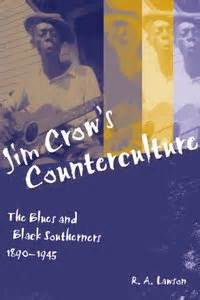
A Review of R.A. Lawson, Jim Crow’s Counterculture: The Blues and Black Southerners, 1890-1945. Baton Rouge: Louisiana State University Press, 2010.

LSU Press

LSU Press

[NOTE: As I’ve explained elsewhere, my initial interest in the Blues developed because my older son and I were trying to decide what type of music to listen to in the morning as we rode to school. By the time my son graduated and headed off to college four years later, I had become addicted to the Blues. The historian in me was stirred by the flair of the early Blues men, as well as the obvious roots of the music in the American South during the era of Jim Crow, as the lyrics of one early Blues tune after another made clear.

The more I researched the origins of the Blues, the more convinced I became that injecting this musical genre into my treatment of the rise of Jim Crow in the post-Civil War South in my A.P U.S. History course could help my students better understand what life was like for African Americans in the late nineteenth-century. This approach worked so well that I eventually extended it to a senior elective course, the Modern Civil Rights Movement, as well as to Blues history mini-courses I taught interested alums in our annual “Back-to-School Night” program.]

* * * * *

So, imagine how excited I was at the appearance of R.A. “Stovetop” Lawson’s Jim Crow’s Counterculture: The Blues and Black Southerners, 1890-1945 (LSU Press, 2010). Lawson, who is both a History professor and member of a Blues band, studied closely the Blues produced by Black southerners during a seminal era. His book is a perceptive account of how those performers essentially created an “audio documentary and commentary” (134) on the history of African Americans in the South, as well as of their departure from the region during the Great Migration and what that exodus portended for the self-image of a people and for the nation in which they lived.

Lawson argues that southern African American Blues musicians created songs, as well as a stereotypical “Blues man” persona, that were “countercultural” in several ways: initially, the music “preached an antiwork ethic and peddled a culture of individual escapism and hedonism, often by portraying values and behaviors that reflected the same debased culture of sex, drugs, and violence that whites ascribed to blacks.” (x-xi) But this worldview would change over the next few decades, until, by World War II, it began to produce a “generation of pluralist musicians who regenerated the blues’ countercultural impulse by leaning toward that which the Jim Crow segregationists would deny them: a fuller identity of American citizenship.” (xi)

To Lawson, early Blues men (his emphasis throughout is on male performers) entertained working-class audiences with songs that were “opposed to white supremacy, Christian forbearance, and bourgeois pragmatism and propriety.” (2) Much like their West African griot ancestors, these Blues troubadours communicated “through veiled and coded language,” thanks, perhaps ironically, to the very success of Jim Crow: their main modes of communication, live performances at juke joints and the commercial production of small-label “race records,” did not attract much attention from whites, though they did upset some members of the region’s small black middle class and many faithful black churchgoers, who considered the Blues “the devil’s music.

The Great Migration, which began during World War I and continued through World War II, and the development of recording and broadcast technology carried the countercultural message of the Blues out of the South and into the rest of the nation. (11) And, despite the fact that significant, effective civil rights legislation did not come until the mid-1960s, Lawson contends that two decades earlier, thanks to the Mississippi River flood of 1927, the Great Depression, and World War II, “the rebellious and raucous blues counterculture was sheltering, or perhaps incubating, the growing idea among southern blacks that they were citizens—an identity that necessarily meant rejecting the culture of second-class status institutionalized by Jim Crow statutes.” (21)

Big Bill Broonzy

Big Bill Broonzy

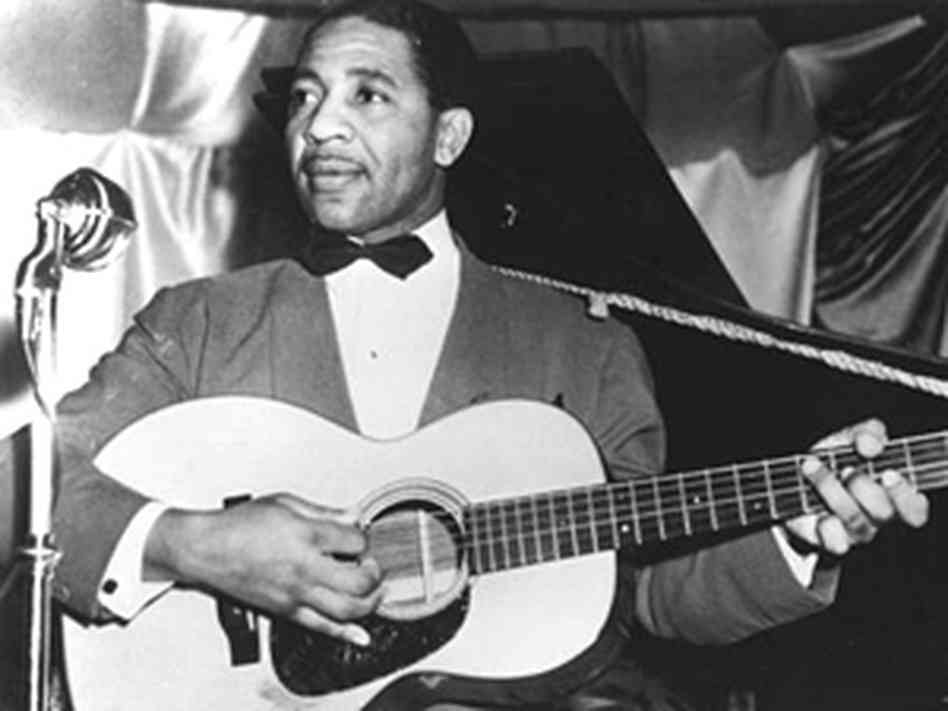
After sketching his thesis in broad strokes, Lawson adopts a straightforward chronological approach. During the Jim Crow era, Blues performers like the pragmatic Big Bill Broonzy passed on their talents and skills to other performers. Lawson also highlights the career of Huddie Ledbetter, or “Leadbelly,” rescued from Angola State Penitentiary in Louisiana by musicologists John and Alan Lomax, who massaged Leadbelly’s image to present him as a “crude, authentic folk artifact.” At the same time, though, Leadbelly also came across as “the stereotypical southern black ‘badman’: womanizer, murderer, escaped convict, wandering singer,” (31), a figure who represented both accommodation and resistance in the Blues.

Leadbelly

Leadbelly

During the Age of Jim Crow, landowners exploited Black sharecroppers, a truism that came through in Blues songs, which also treated themes like white supremacy, disfranchisement, segregation, and lynching. This allowed Blues singers to “talk back” to southern whites, using “a lonely sort of democratic individualism.” (53) And, not surprisingly, “black listeners could read between the lines in ways the white audience might not.” (61) At the least, according to Lawson, the Blues gave listeners ways to cope with disfranchisement, if not to challenge it directly. (62) But there was another side to this type of music: Blues culture tended to reinforce “whites’ conceptions of blacks as slothful and immoral,” drudges in thrall to the “devil’s music” who regularly flaunted their sexuality, used drugs (especially alcohol), and frequently resorted to violence in juke joints or at house parties. (64-65)

In treating the Great Migration, Lawson emphasizes the significance of “mobility” (“ramblin’”) to Blues performers, even maintaining that some songs that seemed to stress the end of a love affair as a reason for leaving the South actually might have been veiled references to social and economic conditions that made leaving a necessity. So, “the countercultural blues took on a new aspect—life outside of the Jim Crow South.” (85) The music changed in these new environs—“jump blues”; “boogie-woogie” guitar; barrelhouse piano; and electric guitar. African Americans who escaped the Jim Crow South demanded a new type of Blues to commemorate their new lives, and, according to Lawson, it is wrong to assume that the “real” Blues only describes the hard scrabble existence of field hands and their families in the agricultural South. (This is not a point with which I agree, but Lawson obviously feels strongly about it.)

Lawson’s approach to the Great Migration is even-handed. Although messages spread through Black newspapers, recordings, and radio programs offered hope to African Americans still trapped in the Jim Crow South, those who had fled the region for the purported Eden of Chicago and points east did not exactly find themselves in Nirvana: instead of the “Promised Land” of freedom and opportunity, they encountered segregated housing, economic discrimination in hiring, and racial violence. Yet, while Big Bill Broonzy might sing about “Going Back to Arkansas,” “most southern blacks who had moved north did not want to go home again,” (113) because, whatever they encountered, at least they had the vote.

Despite the urging of Black intellectuals and newspapers, World War I was not a “turning point” for African Americans. The executive branch of the federal government was biased against them, and the American military was segregated. On the home front, the lives of African Americans in the South differed little from their prewar existence, and, after the war, returning Black veterans in uniform were, to put it mildly, not warmly welcomed by whites.

Peetie Wheatstraw

Peetie Wheatstraw

The events that spurred Black out-migration from the South after the First World War included the Great Mississippi Flood of 1927 and the Great Depression. A significant Blues man here was William Bunch, a former sharecropper who performed as “Peetie Wheatstraw,” “the Devil’s son-in-law.” Wheatstraw emphasized freedom of movement and the resulting material gains, the same benefits being enjoyed by contemporary white Americans. Another interesting point is Lawson’s treatment of the allegedly “satanic” aspects of the music of Wheatstraw and Robert Johnson, which he sees as a marketing tool that “probably had more to do with metaphors for domestic and social violence than actual necromancy and ‘black arts.’” (131)

The national government’s response to the 1927 flood was exactly what African Americans in the South had expected. The aid extended was channeled through local white landowners, which meant that–surprise!–African Americans got little aid and ended up doing the heavy lifting during the recovery process. Within a couple of years, the stock market crashed, ushering in the Great Depression. In 1933, a new President, Franklin Delano Roosevelt, brought a cheering message to a nation in crisis, but African Americans in the South had difficulty looking beyond the obvious fact that FDR was a Democrat, the titular head of the party that, in their region, represented white supremacy.

Lawson runs into a problem at this point, for the Crash and the ensuing Depression basically killed the “race record” industry. So, his effort to interpret the views of Blues performers towards FDR and the New Deal must rely on a fairly small sample of records issued before the full force of the Depression was evident. The national government’s response to crisis resembled earlier periods, when the scant aid sent to the South was controlled by white southern Democrats, and black folks got little of it. However, as the New Deal evolved, African American performers became more optimistic, so that Blues lyrics began to transcend the “wholly negative image of Jim Crow life in the South and could now include a more positive imagined future in which work, consumption, and stability were valued over vagrancy and avoidance of pain.” (168)

According to Lawson, World War II represented a definite turning point in the history of African Americans in the South. Latching onto “the war-era culture of pluralism,” they seized “the identity of citizenship for themselves,” and, thus, helped lay the groundwork for the modern Civil Rights Movement of the 1950s and 1960s. (174-175) Ironically, in supporting the idea that Americans were “a distinct ‘race’ of people,” Blues singers also accepted–and employed in their songs–anti-Japanese racial stereotypes. On balance, during the Second World War, Lawson argues, “black musicians claimed for themselves a place in the democracy and pushed back at Jim Crow society, rejecting second-class citizenship and perpetual poverty.” (194)

* * * * *

Lawson’s treatment of the Blues as “Jim Crow’s Counterculture” is impressively researched, well-organized, and clearly written. He employs analysis shrewdly, assessing, for example, both sides of the Great Migration coin, and examining several versions of the song “Red Cross Blues” to gauge the African American view of the help extended by the national government during the Depression. Lawson also makes effective use of statistics, comparisons and contrasts, and a series of biographical sketches of important Blues men.

Racing through the post-World War II period in the last few pages of his book, Lawson contends, using the Leiber and Stoller composition, “Hound Dog,” as an example, that black and white musicians were able to rework the Blues into “a countercultural form so revolutionary as to be declared a new kind of music: rock and roll,” which both blurred the lines between “white music” and “black music” and continued to speak truth to power through the 1960s. (196) Yet, Lawson’s treatment of “Hound Dog” in isolation to illustrate the rise of rock ‘n’ roll and the impact of the Blues in bringing that about, while certainly suggestive, proves a weak reed on which to rest such an important argument. Here’s hoping that the “countercultural” role of the Blues, rock ‘n’ roll, and folk music in the 1950s and 1960s will be the topic of Professor Lawson’s next book. If not, I’m hopeful that the next unread Blues history book on my shelf, John Milward’s Crossroads: How the Blues Shaped Rock ‘n’ Roll (and Rock Saved the Blues), will help answer the question. Stay tuned.

* * * * * *

For those interested in reading more of my reflections on history, here are links to my books on the subject:

REABP CoverRancorous Enmities and Blind Partialities:  Parties and Factions in Georgia, 1807-1845 (University Press of America, 2015)

Pursuit Cover

In Pursuit of Dead Georgians:  One Historian’s Excursions into the History of His Adopted State (iUniverse, 2015)
Politics on the Periphery:  Factions and Parties in Georgia, 1783-1806 (University of Delaware Press, 1986)

Posted in Age of Jim Crow, Alan Lomax, American History, Big Bill Broonzy, Chicago Blues, Civil Rights Movement, Delta Blues, Historical Reflection, History, History Curriculum, History of Rock and Roll, Interdisciplinary Work, Leadbelly, Popular Culture, Robert Johnson, Southern History, Teaching, The Blues, Uncategorized, Urban Blues | Tagged , , , , , , , , , | 5 Comments

“That’s Why They Paid Me the Big Bucks” (Be True to Your School, I)

[NOTE: What follows is a revised version of an editorial from the final issue I edited of Atlanta’s Finest Prep School’s (AFPS) History Department newsletter, upon the occasion of my retirement. The title phrase was one I used regularly with my students, to good effect, but without much in the way of an explanation–I guess you had to be there! Perhaps that’ll be the topic of another post.]

* * * * *

I have now been on the AFPS faculty for more than a generation. I was perhaps the last teacher hired by the school’s founding president, signing on the dotted line in the spring of 1973, just before that legend retired. I now regularly teach the children of my former students; several of those former students are now faculty colleagues; and another was-ahem!–“Senior Warden” at my church a couple of years ago–and, thus, my “boss,” because I was Clerk of the Vestry at the time. So, despite my Delaware roots and lack of a southern accent, I am from around here, at least in AFPS terms.

I somehow wound up here even though I came “burdened” with a PhD. After studying across town for five years at My Old Graduate School to become a History “professor,” I went looking for a job in the college ranks, but there were no jobs as a “professor” looking for me. So, I signed on here until, as I told myself frequently, “something better came along.” When one of my grad school friends learned that I was trolling the ranks of “prep schools” in search of employment, he averred that he’d “rather sell shoes than teach in high school,” but, in the event, he did neither.

Having trained to be a “professor,” I believed I was well-equipped to “profess” on the secondary level, especially because I had been assured that my new school was “like a little college.” And, for the first couple of years here, I pretty much lectured, or “professed,” in the classroom exclusively. (In my defense, I should mention that, in grad school, I had taken a required course called “Introduction to College Teaching,” which could just as well have been entitled “How to Lecture about History for Fun, but Little Profit.”) The transition from “professor” to “teacher” took several years, and, once I’d made it, I never looked back. Nevertheless, I’m still amazed that I was hired in the first place and have stayed so long. That I did, I attribute to the influence of two people whose obituaries I have had tacked on the bulletin board at the back of my classroom for a number of years.

* * * * *

The first of these “role models” was Miss Gertrude Weaver, my Modern European History teacher in 10th grade (we had no Advanced Placement courses at my high school in 1959). Miss Weaver came to us from the U. S. Armed Forces schools in Germany. While she looked the part of the “old schoolmarm,” she certainly didn’t act it. Miss Weaver was a bundle of energy and brought to the classroom a truly impressive variety of eccentricities that seemed to say, “This History stuff is a lot of fun, and I don’t take myself all that seriously either!” After only a few classes, though, I realized that, despite her seemingly deep-seated “nuttiness,” Miss Weaver took her teaching responsibilities very seriously and expected us to meet her demanding standards–or else! It was Miss Weaver, then, who taught me the importance of enthusiasm and the uses of eccentricity in the classroom, as well as the need to maintain rigorous academic standards.

The second obituary is of my grad school mentor, Professor James Z. Rabun. I took courses from him on the American Revolution and the Old South. The first of these led to my dissertation topic, while the second made me a southern historian. Dr. Rabun was the consummate southern gentleman. From him, I learned the importance of really knowing one’s subject thoroughly before trying to teach it; of cultivating the art of writing history in all its forms; of “keeping up in one’s field”; and I had a refresher course in the use of both eccentricity and (dry) humor in teaching about the past.

Occasionally, I got a look at the lecture notes Dr. Rabun brought with him to class: they were typed on paper yellowed with age, but in the margins and on slips of paper, clipped to the notes, were revisions, written in pencil in Dr. Rabun’s neat, precise script, based on new books and articles he’d encountered since he’d originally put the lecture together. I also appreciated his approach to serving as a dissertation director: he knew my work from his courses and had enough confidence in me to let me do things pretty much my own way, which I always thought of as the “give ’em enough rope” theory of directing a dissertation.

Although Dr. Rabun was disappointed when I told him I had “only” accepted a position at a secondary school, he continued to support me once I started at AFPS. He regularly sent me news of college and university posts supposedly available to folks like me, but these never amounted to very much. One of the hardest things I’ve ever had to do was, a few years later, to thank Dr. Rabun for his help but assure him that I was determined to stay where I was–in a prep school rather than a college–“for the foreseeable future,” I always added.

And, in just a few more days, “the foreseeable future” will be here. I’ll clean out “my” room and prepare to begin the next phase of my life: I hope to finish a book I’ve been working on since the mid-1990s, research for which I’ve only been able to do each summer, in two and a half months of intensive activity, given the demands of my job the other nine and a half months of each academic year. While there are some things I won’t miss about this school, there are many I will: life in the classroom, for example, and you, my History Department colleagues (including a few outliers who have been “adopted” into the school’s finest department–you know who you are).

For thirty-seven years, I’ve left the house each morning but never “gone to work”; instead, I’ve “gone to school.” I’ve enjoyed it all, whether or not I’ve ever really been paid the “Big Bucks,” as I used to tell my students. In the words of the Rolling Stones, “You can’t always get what you want, but you get what you need.” Or, as Muddy Waters put it, “You can’t lose what you ain’t never had.”

* * * * * *

For those interested in reading more of my reflections on history, here are links to my books on the subject:

REABP CoverRancorous Enmities and Blind Partialities:  Parties and Factions in Georgia, 1807-1845 (University Press of America, 2015)

Pursuit Cover

In Pursuit of Dead Georgians:  One Historian’s Excursions into the History of His Adopted State (iUniverse, 2015)
Politics on the Periphery:  Factions and Parties in Georgia, 1783-1806 (University of Delaware Press, 1986)

Posted in Historical Reflection, History, Prep School, prep school teaching with a PhD, Retirement, Southern (Georgia) History, Southern History, Teaching, Uncategorized | Tagged , , , , | 12 Comments

Blues Theology, Part 2: “Me and the Devil” (Blues Stories, 16)

[NOTE: Thus far, we’ve looked at the birth of the Blues in the Mississippi Delta and reviewed in rather broad terms the charge that, for many African Americans, the Blues was the “Devil’s Music.” In this post, we’ll look at several Blues men and examine the degree to which, in the contexts of their lives, certain of their songs reflect satanic or Christian themes.]

* * * * *

Tommy Johnson

Tommy Johnson

Let’s begin by looking again at Blues man Tommy Johnson’s explanation for how he (or anyone) could learn to play Blues guitar:

If you want to learn how to play anything you want to play and learn how to make songs yourself, you take your guitar and you go to where . . . the crossroad is. . . . Be sure to get there, just a little ‘fore twelve o’ clock that night. . . . You have to go by yourself and be sitting there playing a piece. A big black man will walk up there and take your guitar and he’ll tune it. And then he’ll play a piece and hand it back to you. That’s the way I learned how to play everything I want. (Quoted in Cobb, 288)

Guitarist Ike Zinnerman of Hazelhurst, Mississippi, had a similar story of being taught how to play guitar in a cemetery at midnight. (Wardlow, 197) While these accounts might strike us as incredible, it’s important to remember that Delta Blacks were generally very poorly educated and prone to superstition. As The Rev. Booker Miller from Greenwood, Mississippi, who had played Blues with Charley Patton in the 1920s and then become a Baptist minister, put it:

“Them old folks did believe the devil would get you for playin’ the blues and livin’ like that,” meaning the sins of adultery, fornication, gambling, lying, and drinking. He confirmed that the idea of “selling yourself to the devil” came from “those old slavery times.” (Wardlow, 197)

Lonnie Johnson

Lonnie Johnson

In his song, “Devil Got My Woman,” another Blues man, Lonnie Johnson, lamented,

The blues is like the devil,
It comes on you like a spell.
Blues will leave your heart full of trouble
And your poor mind full of hell.
(Cobb, 298)

Peetie Wheatstraw

Peetie Wheatstraw

Then there was William Bundy (AKA “Peetie Wheatstraw”), who “carried the association with the Devil to its most obviously orchestrated extreme,” advertising himself as “The Devil’s Son-in-Law” and “The High Sheriff from Hell.” (Cobb, 289) Yet, as Ted Gioia remarks in Delta Blues,

Just as satanic rockers would find their niche market a half century later, a group of early blues singers embraced the harshest attacks their critics leveled at them–deviltry, blasphemy, apostasy, call it what you will–and tried to turn them into marks, if not of distinction, at least of notoriety. (Gioia, 116)

Gioia’s description suggests that Blues performers like “Peetie Wheatstraw,” who flaunted their alleged associations with the Devil, were simply indulging in what we would today call “hype.”

* * * * *

Robert Johnson

Robert Johnson

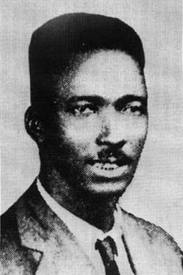
Although neither Tommy Johnson nor Lonnie Johnson ever actually sang about his encounter with the Devil at the crossroads, Robert Johnson supposedly did, in his most famous song, “Cross Road Blues”, but the verdict on what exactly he meant in his purportedly satanic verses is decidedly mixed. For a time, the consensus was that Johnson himself had never actually spread the story that he had bartered his soul to Satan in exchange for unmatched guitar-playing skills. In recent years, however, as we have learned a bit more about Robert Johnson’s life and career, the view has shifted to the notion that, although the idea of the “devil’s bargain” is rooted in African religious beliefs, Johnson’s “Devil at the Crossroads” story was widely known in his brief lifetime and so was probably spread by Johnson himself.

The traits Robert Johnson demonstrated when he played included some that might have been considered demonic by Delta residents: he had a cataract in one eye, often played with his back turned to other musicians, and favored unusual guitar tunings. Perhaps such a story would protect Johnson (or other performers similarly inclined) from rough customers in juke joints. It is also possible that, as Robert Palmer contends, while Johnson might have been “fascinated with and probably obsessed by supernatural imagery, . . . some of his satanic references were simply macho posturing.” (Palmer, 127) Finally, it’s important to remember that, in the words of Francis Davis, “Johnson’s lyrics can’t be completely explained away, because the intensity with which he delivers them can give you an existential migraine.” (Davis, 130)

Listen to “Cross Road Blues,” and decide for yourself. While “Cross Road Blues” is Robert Johnson’s signature tune, it certainly was not the only one in which he played with satanic imagery–listen to “Hellhound on my Trail”, for example, or “Me and the Devil.”

* * * * *

Skip James

Skip James

Another Blues man known for songs referring to the Devil was Nehemiah “Skip” James, who without a doubt had one of the most distinctive voices in the Blues. Like a number of other Blues men, James went back and forth between the Blues and sacred music, but, unlike Son House, James had no sudden conversion experience. Rather, according to Ted Gioia,

The various life changes of Skip James all followed a consistent pattern, each new vocation drawing inspiration from his unwavering desire for a sense of independence and superiority, a craving for intensity of experience, and a commitment to self-expression . . . . (Gioia, 138)

James’ eventual religious conversion was evidently more a way to become “dry again” (i.e., stop drinking) than to be “born again,” yet he never really “found a means of self-expression in religious music that would approach the pathos and intensity of his blues.” (Ibid., 145-147)

Skip James dropped out of the Blues limelight in the early 1930s and rejoined his minister father for a number of years. Rediscovered during the Blues revival of the early 1960s, James had misgivings about playing the Blues again. In coming to terms with inoperable cancer near the end of his life, Skip James “sometimes wondered whether his affliction were somehow due to his blues playing,” and he promised that, “if the Lord favored him with a return to health, he would restrict his performances to religious songs.” And, despite the allegedly more enlightened, secular atmosphere of the 1960s, James was not alone among the old Blues players to be gripped with such anxiety–“similar concerns . . . prevented Ishmon Bracey, Robert Wilkins, and others from taking advantage of opportunities to resume their careers as blues singers during the decade.” (Gioia, 370) In order to get a sense of the sheer power of his Blues, listen to Skip James in two recordings from 1930, “Devil Got My Woman” and “Hard Time Killin’ Floor Blues.”

* * * * *

John Lee Hooker

John Lee Hooker

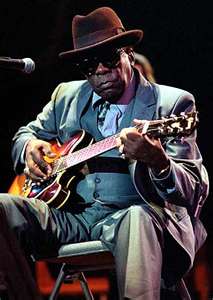
Last, but certainly not least, there is John Lee Hooker (c.1917-2001), who created a masterful expression of “Blues Theology,” in one of his earliest recorded songs, “Burning Hell” (1949). The lyrics are simple–deceptively so, as we’ll see when we place Hooker’s song in the context of his biography.

Hooker’s father, The Rev. William Hooker, was a loving parent, but, while allowing his son to keep a guitar, he would not let him bring it into the house. Hooker’s stepfather, Will Moore, on the other hand, was a musician himself and encouraged the young man’s musical aspirations. “Burning Hell” can be seen as the product of Hooker’s struggle between his love of the Blues, nurtured by his stepfather, Will Moore, and the tenets of religion he’d been taught by his father, The Rev. William Hooker. Or, as his biographer, Charles Murray, writes, “having visualized God in Rev. Hooker’s image, John remade him in Will Moore’s.” (Murray, 39) And it was this God, in the image of his stepfather Will Moore, that Hooker continued to believe in until the day he died. John Lee Hooker told his biographer half a century later, in a surprisingly complex probing of the theological concept of theodicy (i.e., if God is good, why is there evil in the world?), that

I’m a religious person, but I don’t believe in going to church. The way I look at it, your heaven is here, and your hell is here. . . . For a long time, my parents had me believin’ that there was a burnin’ hell and there was a heaven, but it has come to me . . ., as I grew older. . . that if there was a God, then he was an unjust God for burnin’ you forever an’ ever, stickin’ fire to you. If the God was a heavenly father, a good God, then he wouldn’t torture you and burn you. . . . But he tortures you, in a way, if you got nothin’ to eat and [are] hungry, don’t know where you gonna get your next meal, don’t know where you gonna sleep at, half sick, can’t work, driftin’ from door to door . . . that’s your hell. But you’re not bein’ tortured with fire. . . . No. So you not gonna fly outta there with wings in the sky like an angel, milk and honey, as I was taught, if you go to heaven. You not gonna do that. There’s nothin’ up there but sky. . . .
. . . . I believe in a Supreme Being, don’t get me wrong, but I don’t believe that there’s a hell that you’re gonna be tortured in. I believed in all of that, then I grew up and realized, and I wrote the song: ‘Ain’t no heaven, ain’t no burnin’ hell/where you go when you die, nobody can tell.’ Nobody knows. . . . I could be wrong, but I don’t think I’m wrong.” (Murray, pp. 37-38)

. . . . “As years go by, I learned more and more about the world. The world growed, and I growed with the world. . . . When I was in Mississippi, I was strictly in a spiritual world. . . . I was restricted to a lot of things I couldn’t do there, but when I was eighteen, nineteen, twenty, I filled up with all these things. I could do what I wanted.” (Ibid., 39. N.B.: Hooker fled the Delta for points North in 1933, when he was about sixteen.)

* * * * *

Any study of the theological dimensions of the blues can only scratch the surface. And, one needs to keep in mind that many of the folks in the Saturday night audiences at various Blues joints were also in the congregations on Sunday morning, singing gospel tunes at the top of their lungs! But, from my own experience listening to and studying the Blues over the last quarter of a century, I can testify that there is literally no end to the subject. This two-part post, in other words, is not an end, it’s a beginning. . . , or at least I hope it is.

SOURCES

Books:
Calt, Stephen. I’d Rather Be the Devil: Skip James and the Blues. Chicago: Chicago Review Press, 1994.
Cobb, James C. The Most Southern Place on Earth: The Mississippi Delta and the Roots of Regional Identity. New York and Oxford: Oxford University Press, 1994.
Davis, Francis. The History of the Blues: The Roots, The Music, The People, From Charley Patton to Robert Cray. New York: Hyperion, 1995.
Gioia, Ted. Delta Blues: The Life and Times of the Mississippi Masters Who Revolutionized American Music. New York and London: W.W. Norton & Company, 2008.

Gussow, Adam.  Beyond the Crossroads: The Devil and the Blues Tradition. Chapel Hill: The University of North Carolina Press, 2017.
Murray, Charles Shaar. Boogie Man: The Adventures of John Lee Hooker in the American Twentieth Century. New York: St. Martin’s Press, 2000.
Palmer, Robert. Deep Blues. New York: Penguin Books, 1981.
Wardlow, Gayle Dean. Chasin’ That Devil Music: Searching for the Blues. San Francisco: Miller Freeman Books, 1998.

Music:
Hooker, John Lee. Burning Hell. Riverside Records, OBCCD-555-2 (RLP-008) (1992).
James, Skip. The Complete Early Recordings of Skip James. Yazoo 2009 (1994).
Johnson, Robert. The Complete Recordings. Columbia C2K46222 (1990).

* * * * * *

For those interested in reading more of my reflections on history, here are links to my books on the subject:

REABP CoverRancorous Enmities and Blind Partialities:  Parties and Factions in Georgia, 1807-1845 (University Press of America, 2015)

Pursuit Cover

In Pursuit of Dead Georgians:  One Historian’s Excursions into the History of His Adopted State (iUniverse, 2015)

Politics on the Periphery:  Factions and Parties in Georgia, 1783-1806 (University of Delaware Press, 1986)

Posted in "Charley Patton", Age of Jim Crow, Delta Blues, History, John Lee Hooker, Research, Southern History, The Blues, Uncategorized | Tagged , , , , , , , | Leave a comment

“Famous for Being Famous”: A Kardashian for the Gilded Age

Let’s admit it up front: for a lot of us, there is a definite “cringe factor” when we make our way through the supermarket checkout aisle and glance at magazine covers, or sign in to msn.com or yahoo.com. Whether or not we understand who the prominently featured people are on Internet homepages or in those magazines in the checkout line (“blocked” from the prying eyes of “innocent” children by a hard sheet of colored plastic in some cases), or why we should care–there they are, the “celebrities” adored by many Americans. Think about it: “Baby bumps”; BFFs; “calling out” another celebrity for some real or imagined slight; “news” of a change in hair style or color; a new wardrobe (or, a “wardrobe malfunction”). Oh, and let’s not forget the celebrity “couples” who are so much in the public eye that they lose their individual identities and are combined into another—e.g., “Benifer.” (Who remembers this? Anyone? Anyone?) And then there are the Kardashians, an entire family the cause of whose “celebrity” apparently is wrapped in mystery; they are “famous,” but few people can say why. Oh, wait: they’re “reality tv stars” (oxymoron alert!).

Now, celebrity “worship” is certainly nothing new—for example, consider “ballyhoo” in the 1920s (i.e. Lindbergh, Babe Ruth, Rudolph Valentino, Clara Bow, flagpole sitters, goldfish eating, telephone booth stuffing); and the rise of “movie magazines,” which began early in the twentieth century and still survive, though much of their “celebrity thunder” is regularly stolen nowadays by tabloid publications like People and US. [In the early 1960s, when I was in high school, I was known (in a very small circle, to be sure) for my “dramatic readings” of the front covers of movie and romance magazines, in a drug store across from the church where my Explorer Scout troop met.] Moreover, the roots of the worship of sports “celebrities” stretch back even further, at least to the era of the “sporting press” in New York City and elsewhere in the nineteenth century.

If you’re like me, though, you probably find yourself, at least occasionally, contemplating both the present and the future of the United States and of our popular culture, based upon the influence of the tabloid press and the Internet. The results of this process are not encouraging: Surely Americans cannot be so superficial, can they? But, if they are, is there anything the rest of us can do about it? Or should we even bother trying?

* * * * *

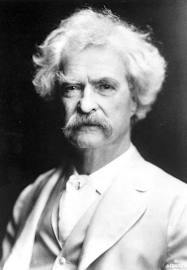
Mark Twain

Mark Twain

Burdened with such gloomy thoughts, imagine my surprise when I discovered that, in the second volume of his Autobiography, the leading cynic of the late nineteenth century, Mark Twain, has something relevant to add to this conundrum, describing a woman who was nothing less than a Gilded Age equivalent of today’s generic member of the “Kardashian klan,” a person who became “famous” without much actual claim to that label, at least in a contemporary context.

Olive Logan

Olive Logan

According to Twain, Olive Logan [in good twenty-first century fashion, perhaps we should refer to her as “Olive L.”] was among the “new kind of female lecturer who invaded the [Lyceum] platform” during the Gilded Age after the Civil War. (43) Unlike their articulate, principled female predecessors on the Lyceum circuit (women who had been active, for example, in the antebellum Abolitionist movement), public speakers like Logan “hadn’t anything to say, and couldn’t have said it if they had had anything to say; [they are] women who invaded the platform to show their clothes.” (43) Anxious to make a name for herself on the lecture circuit, Logan, Twain asserted, had “set herself the task of manufacturing a reputation,” at first by offering examples of her writing, none of which did much to raise her celebrity. Then, Logan married “a penny-a-liner [journalist, William Wirt Sikes],” who circulated brief notices about her, her opinions, wardrobe, and activities, to newspapers and magazines. While Logan’s name gradually became more prominent in the press, thanks to her new husband and his journalistic contacts, Twain wrote scathingly, there “was never a word of explanation of who Olive Logan might be or of what she had done to earn fame.” (43, 45)

Much to Twain’s surprise, however, these efforts by Logan’s “penny-a-liner” husband eventually succeeded in raising her reputation, actually making her “famous,” at least as measured by one Gilded Age standard, the fee she could command for her appearances on the Lyceum lecture circuit ($100 a night, less than Twain received, but still. . . .). Yet, despite this “fame,” Twain asserted, “there wasn’t a human being in the United States who could answer if you asked him, ‘What is [Logan’s] fame based on? What is it that she has done?’” (44)

Logan's Sixth Lecture

Logan’s Sixth Lecture

And, in a description that, to modern eyes, has “Kardashian” written all over it, Twain opined that Olive Logan “had built up a great, a commercially valuable name, on absolute emptiness; built it up upon mere remarks about her clothes and where she was going to spend the summer, and her opinions about things nobody had asked her to express herself about.” It was, he concluded, “the emptiest reputation that was ever invented in this world.” (44)

* * * * *

According to Twain, then, Logan was a no-talent actress, journalist, dramatist, and public speaker, whose husband had used the Lyceum lecture circuit and the availability of regional and national newspapers and magazines to advance her career. (And, to be fair, the excruciatingly thorough editors of Twain’s Autobiography try their best to present a more objective view of Logan and her achievements, as do some online resources, though without much success.) The major differences between the “celebrity” career of Olive Logan and those of today’s “celebs” appear to be that Logan’s “fame” took a lot longer to build, and, in terms of what she did or said, she was not nearly as outrageous as her modern successors. And, golly gee-whiz, whether you liked her or not, Logan actually had accomplished a few things, unlike a lot of today’s “celebs.”

Logan’s husband arranged lectures for her on the Lyceum circuit, and these might or might not have been covered by local, regional, or national publications. Yet, ultimately, because of the coverage Logan did receive, thanks largely to her husband’s efforts, she earned a reputation that brought her national acclaim–of a sort. Nowadays, of course, in addition to supermarket tabloids, entertainment magazines, and the homepages of various Internet service providers, a veritable raft of “celebrities” have their own reality television shows, “destination viewing” for fans hungry for “news” about their favorites.

As for the rest of us, what do we know—or care—about the careers of the Kardashians and their vapid rivals? Certainly, nobody forces us to watch reality television shows. Yet, lately, it seems that virtually every major network or cable system has its share of “reality” programs, including–God save the mark!–PBS. Evidently these offerings are inexpensive to make and manage to attract an audience. Don’t ask me how–I’m still trying to figure out the appeal of “professional wrestling”!

The thing is that the hoary cliché about enjoying one’s ten (or fifteen) minutes of fame apparently has been rendered almost irrelevant by the continuing power of the Internet. Now, homepage “celeb news” sections, links, and blogs, have produced a “democratization,” or perhaps a “debasement” (or even a “bastardization”?) of the concept of “celebrity” or “fame.” And, of course, there are larger cultural issues at play here. For example, New York Times columnist Frank Bruni argued recently that today the very concept of “Water Cooler” TV shows, programs watched by a huge number of Americans, has become a thing of the past. American popular culture has become Balkanized and, thanks to the Internet, “In a wired world with hundreds of television channels, countless byways in cyberspace and all sorts of technological advances that permit each of us to customize his or her diet of entertainment and information, are common points of reference dwindling? Has the personal niche supplanted the public square?”

I guess you “pays your money and you takes your choice,” as W. C. Fields, or some other ancient commentator, said. And, again in the interest of fairness, we survived the “celebrity” of Olive Logan and her successors prior to our own celebrity-steeped age, so perhaps we’ll make it past the Kardashians. I certainly hope so! As for me: sorry, Kim K.; I prefer Olive L., any day, but I’ve still got to wonder what Mark Twain would think of you!

SOURCES

“Q&A on the News,” Atlanta Journal-Constitution, Dec. 9, 2013, B-2.

Benjamin Griffin, Harriet Elinor Smith, et al, eds., Autobiography of Mark Twain, Volume 2. Berkeley, Los Angeles, and London: University of California Press, 2013.

http://www.ulib.niu.edu/badndp/logan_olive.html

http://en.wikipedia.org/wiki/Olive_Logan

* * * * * *

For  those interested in reading more of my reflections on history, here are links to several books on the subject:

REABP CoverRancorous Enmities and Blind Partialities:  Parties and Factions in Georgia, 1807-1845 (University Press of America, 2015)

Pursuit Cover

In Pursuit of Dead Georgians:  One Historian’s Excursions into the History of His Adopted State (iUniverse, 2015)
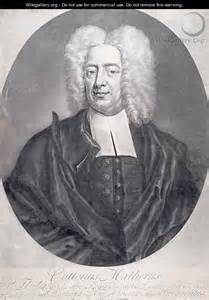
Politics on the Periphery:  Factions and Parties in Georgia, 1783-1806 (University of Delaware Press, 1986)

Posted in American History, Books, Current Events, Historical Reflection, History, Interdisciplinary Work, Mark Twain, Popular Culture, Retirement, Uncategorized | Tagged , , , , , , , | Comments Off on “Famous for Being Famous”: A Kardashian for the Gilded Age

Blues Theology, Part 1: The “Devil’s Music” (Blues Stories, 15)

[Note: In previous posts [here and here], we have looked at the origins of the Blues in the Mississippi Delta and seen that life for Delta blacks involved hard physical labor, rigid segregation, and shocking violence. Among the few places African Americans could find some consolation were the church, where gospel music held sway, and the juke joint, home of the Blues.

There has been a debate, both at the time and since, about whether or not the Blues was the “Devil’s music,” or whether at least some of the songs had theological meaning, when understood in the context of the performer’s life and career. This will be the theme of this post and the next.]

* * * * *

According to historian Ted Gioia, Delta Blues singers had a tendency to treat secular topics

with a fervor more typical of religious music. Sometimes the songs explicitly talked about fall and redemption, about the devil in hot pursuit, or anticipated some coming apocalypse in language more resonant of the Book of Revelation than the Book of Love. But even when the time-honored topics of romance or wanderlust figure in this music, they are regularly filtered through an anguished soul-searching. . . . . (Gioia, 6)

Paul Oliver, in Blues Fell This Morning, adds that

In its bare realism the blues is somewhat bereft of spiritual values. Lower-class Blacks often had to decide whether to accept with meekness the cross they had to bear in this world and to join the church with the promise of “Eternal Peace in the Promised Land” or whether to attempt to meet the present world on its own terms, come what may. The blues singer chose the latter course. (Oliver, 118)

Historian James Cobb remarks that Blues lyrics seemed “to offer a disturbing contradiction to the reassurances provided by the teachings of the church.” Blues performances “possessed a certain spiritual quality of their own and therefore threatened to usurp the communal, cathartic role that was otherwise the function of organized religious activity.” (Cobb, 285) “Little Son” Jackson, a Blues man turned gospel singer,

identified the “sinfulness” of the Blues in terms of the sense of autonomy and individual responsibility for one’s own fate that they projected: “If a man feel hurt within side and he sing a church song then he’s askin’ God for help. . . .If a man sing the blues it’s more or less out of himself. . . .He’s not askin’ no one for help. And he’s not really clingin’ to no-one. But he’s expressin’ how he feel. . . .You’re tryin’ to get your feelin’s over to the next person through the blues, and that’s what makes it a sin.” (Cobb, 286)

James Cobb also notes certain parallels between Blues man and preacher: “Like his clerical counterpart, the blues man was a key figure, symbolic of a communal culture. Moreover, like the preacher, the blues man entertained his audiences by expressing deeply felt, shared emotions in a manner that made him more than an entertainer.” Both Blues men and preachers enjoyed the “privileges of their office: more money, greater social prestige, finer clothes and an attractiveness to women not shared by the common man.” Thus, both preacher and Blues man might have felt pressured “to conform to widely held stereotypes. For the preacher this meant flamboyance, conviviality, and possibly an eye for women; for the bluesman it certainly meant an eye for women, but it demanded as well a reckless, rambling, hard-drinking lifestyle that made his music and his persona one and the same. . . .” (Cobb, 288)

* * * * * 

This brings us to one of the central puzzles of the Blues, the pressure placed on performers to abandon the Blues and return to the sacred music of their childhoods, or vice versa, sometimes more than once. Muddy Waters‘ mother criticized him for playing the Blues, while Howlin’ Wolf’s mother rejected him forever for the same “sin.” (Beaumont, 91) Big Bill Broonzy‘s parents believed that “the instruments and the music Bill and his friends played on them were sinful,” and Bill claimed that he “never brought his guitar into his parents’ home, out of respect for [his mother’s] wish that there be” no “sinful things done around the house.” (Riesman, 28, 120) “Jazz” Gillum’s uncle threatened to punish him if Jazz used his uncle’s organ to play Blues instead of church music. (Riesman, 79)

Charley Patton

Charley Patton

Charley Patton, who sang about the boll weevil, a local sheriff, and the Great Mississippi Flood of 1927, among other secular topics, also preached successfully on a few occasions, and, although his conversions to ministry never lasted, “he recorded a favorite sermon drawn largely from the book of Revelation and allegedly repeated it in a frenzy on his deathbed.” Famed Blues harmonica player Sonny Boy Williamson, born into a deeply religious, “sanctified” Pentecostal family, claimed to have been a minister at one time, but he soon abandoned the pulpit for a career in the Blues, and Vicksburg, Mississippi-born Blues man Willie Dixon claimed that he “was raised on blues and spirituals, but after you wake up to a lot of facts about life, you know, the spiritual thing starts to look kind of phony in places.” (Cobb, 286-288)

Blues man Robert Wilkins decided, following a homicide at a “house frolic” in Hernando, Mississippi, where he was performing, that “playing the blues was too dangerous,” so he joined the Church of God in Christ and turned from singing Blues to spirituals. (Beaumont, p.12) Ishmon Bracey and Rube Lacy actually became ministers; Skip James left the Blues to join his father’s ministry in Texas; and various Delta singers (e.g., Charley Patton, Bukka White, and B.B. King) “felt compelled at various junctures in their careers to record or perform sacred music.” Moreover, Robert Johnson’s “life seemed to be lived in purely secular terms, yet [his] music constantly returned to the most intense, soul-haunted themes, songs that have irrevocably shaped our image of him as a man at the crossroads between darkness and light.” (Gioia, 31)

Son House

Son House

* * * * *

To see how this tension between religion and the Blues played out over a long career, consider Son House, who embodied both spiritual and secular influences. House’s father “experienced the same conflict between religion and secular music that his son would experience,” but, whereas he stopped playing the Blues, quit drinking, and became a deacon in his church, his son’s course was much less direct. Son House was a preacher who denounced the Blues at one point in his life, then a Blues singer who ridiculed ministers in a famous song, “Preachin’ the Blues.” As a young man, House’s life “revolved around the church, Sunday school, and prayer and revival meetings,” and he apparently had a religious conversion experience in an alfalfa field in the early 1920s. On a Saturday night in 1927, however, House had a conversion of another kind, “this time in response to a bottleneck guitar”:

Well, I stopped, because the people were all crowded around. This boy, Willie Wilson, had a thing on his finger like a small medicine bottle, and he was zinging it, you know. I said “Jesus, I like that!” And from there, I got the idea and said, ‘I believe I want to play one of them things. (Gioia, 80)

According to Blues historian Francis Davis,

House’s own songs suggest that he thought of the blues as wicked, and of his talent for them as grim fate. This is what gives his work its drenching intensity: the suspicion that he recognized the blues as both his only means of self-expression and a form of blasphemy. (Davis, 109)

And House’s biographer, Daniel Beaumont, tellingly adds that House’s “ambivalent attitude about religion would become for him a full blown conflict whose tension and violence would fuel his drinking–but also raise his musical performances to the level of powerful art.” (Beaumont, 69)

In November 1964, Son House himself explained to a Blues audience why he left the church:

I was brought up in church and I started preaching before I started [playing and singing the blues]. Well, I got in a little bad company one time and they said, ‘Aw, c’mon, take a little nip with us.’. . . So I took a little nip. . . . And that one little nip called for another big nip. . . . And I began to wonder, now how can I stand up in the pulpit and preach to them, tell them how to live, and quick as I dismiss the congregation and I see ain’t nobody looking and I’m doing the same thing. I says that’s not right. . . . I says, well, I got to do something, ’cause I can’t hold God in one hand and the Devil in the other one. . . . I got to turn one of ’em loose. So I got out of the pulpit. . . . (Charter, Blues Makers, I, 65).

* * * * *

Tommy Johnson (Wikipedia)

Some of these early bluesmen were so talented that rumors spread that they had made a deal with the Devil to acquire that ability. For example, Blues man Tommy Johnson commented in detail about the deal he allegedly made with the Devil at the crossroads, to learn how to play a Blues guitar:

If you want to learn how to play anything you want to play and learn how to make songs yourself, you take your guitar and you go to where . . . the crossroad is. . . .Be sure to get there, just a little ‘fore twelve o’ clock that night. . . . You have your guitar and be playing a piece sitting there by yourself. . . . A big black man will walk up there and take your guitar and he’ll tune it. And then he’ll play a piece and hand it back to you. That’s the way I learned how to play everything I want. (Quoted in Cobb, 288)

Blues historian Ted Gioia points out that the pull of religion in the Delta meant that, for most people in Tommy Johnson’s hometown of Crystals Springs, Mississippi (and, presumably, throughout the region),

the devil was not an abstraction or a metaphysical construct, and certainly not a myth, but a concrete force, malevolently active, leading people astray. A transaction of the sort described by Johnson would have horrified those who heard it. Perhaps a free thinker–and maybe Tommy Johnson was one–might relate this story glibly, but his audience would hardly take it in such a casual manner. Yet the shock value may have been the very reason why a number of blues musicians reveled in such an infernal connection. (Gioia, 115-116)

Ishmon Bracey

Ishmon Bracey

According to Blues man turned preacher Ishmon Bracey, the last time he saw Tommy Johnson, Johnson

told me to pray for him, and he want to stop [drinking] but look like he couldn’t. I told him he had to make up his mind and pray too. ‘Thank the Lord’ I told him, and he swear that he would. And he wants to be a preachin’ like I was, he say. . . . And it just hurt me so bad to see him that way. . . . And the next time I heard [about him] he was dead. That hurt me more. (Wardlow, 52. Tommy Johnson died on November 1, 1956.)

Clearly, though Tommy Johnson fought his demons, those demons won: consider two of his songs, “Cool Drink of Water Blues,” which has one of the best first lines I’ve ever come across and contains no hint of redemption for the hapless narrator; and “Canned Heat Blues,” which includes one of the most harrowing descriptions of addiction you’ll ever hear.

[End of Part I]

SOURCES:

Books:
Beaumont, Daniel. Preachin’ The Blues: The Life & Times of Son House. Oxford and New York: Oxford University Press, 2011. [For more on this biography, go here.]

Charters, Samuel. The Blues Makers. New York: Da Capo Press, Inc., 1991.

Cobb, James C. The Most Southern Place on Earth: The Mississippi Delta and the Roots of Regional Identity. New York and Oxford: Oxford University Press, 1994. A wonderful book that helps put the Blues–and those who sang and played them–into the broadest possible context.

Davis, Francis. The History of the Blues: The Roots, The Music, The People, From Charley Patton to Robert Cray. New York: Hyperion, 1995.

Gioia, Ted. Delta Blues: The Life and Times of the Mississippi Masters Who Revolutionized American Music. New York and London: W.W. Norton & Company, 2008. [For more on this book, go here.]

Oliver, Paul. Blues Fell This Morning: Meaning in the Blues. Cambridge: Cambridge University Press, 1994.

Riesman, Robert. I Feel So Good: The Life and Times of Big Bill Broonzy. Chicago and London: The University of Chicago Press, 2011. [For more on this volume, go here.]

Segrest, James, and Mark Hoffman, Moanin’ at Midnight: The Life and Times of Howlin’ Wolf.  New York: Pantheon Books, 2004.  [For more on this biography, go here.]

Wardlow, Gayle Dean. Chasin’ That Devil Music: Searching for the Blues. San Francisco: Miller Freeman Books, 1998.

Music:
Son House, “Preachin’ The Blues, Parts I and II,” #7, Blues Masters, Volume 8: Mississippi Delta Blues. Rhino Records, R2 71130 (1993).

Johnson, Tommy. “Cool Drink of Water Blues,” Blues Masters, Volume 8: Mississippi Delta Blues. Rhino Records, R2 71130 (1993).

Johnson, Tommy. “Canned Heat Blues,” When The Sun Goes Down: The First Time I Met the Blues. Bluebird, 09026-63987-2 (2002).

* * * * * *

For those interested in reading more of my reflections on history, here are links to my books on the subject:

REABP CoverRancorous Enmities and Blind Partialities:  Parties and Factions in Georgia, 1807-1845 (University Press of America, 2015)

Pursuit Cover

In Pursuit of Dead Georgians:  One Historian’s Excursions into the History of His Adopted State (iUniverse, 2015)
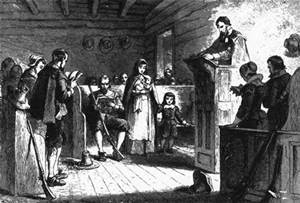
Politics on the Periphery:  Factions and Parties in Georgia, 1783-1806 (University of Delaware Press, 1986)

Posted in "Charley Patton", Age of Jim Crow, B.B. King, Big Bill Broonzy, Delta Blues, History, Interdisciplinary Work, Research, Son House, Southern History, The Blues, Uncategorized | Tagged , , , , , , | 7 Comments

“He Ain’t Heavy, He’s My Brother,” The Writer

A Review of Rick Lamplugh, In the Temple of Wolves: A Winter’s Immersion in Wild Yellowstone. (2014) (available at amazon.com in both paperback and e-book formats)

[Full Disclosure: I’m about to violate the book reviewer’s code of conduct here, which includes somewhere the warning that a reviewer should not write about a book whose author he/she knows well. And, boy, do I know the author of In the Temple of Wolves! He’s my kid brother (a relative term, of course, since we’re both eligible for Social Security and Medicare, though I got there four years ahead of him!). But, seriously, I’ve been watching Rick Lamplugh develop as a writer for almost a quarter of a century now. During that period, he has regaled his family and friends, in a series of privately-printed volumes, with his musings on the joys, frustrations, and lessons of parenthood and, especially, with accounts of the experiences he and his wife shared on what they laughingly refer to as “vacations.” These works revealed a thoughtful, sensitive soul whose summertime experiences as a biker, hiker, climber, and jogger tested him, both physically and mentally, time and again.

Yet, the book under review, which began as his latest “adventure” volume, in 2012, is different from the earlier ones. True, he and his wife Mary had visited Yellowstone before—and written two books about it—but only as visitors and students during winter “courses” offered at the Lamar Buffalo Ranch. Then, however, Rick and Mary volunteered to assist those who taught the Lamar “Wolf Week” course, a task that probably sounds grander than it is. They drove a bus, cleaned and maintained living quarters, helped train students for their encounters in the wilderness, and did anything else the instructors asked of them, all in an effort to ensure that guests experienced Yellowstone, and especially its wildlife, to the fullest. What follows is a “book review,” but with a difference, or at least that’s my hope.]

* * * * *
ITTOW cover

In the Temple of Wolves is a thoroughly entertaining and very thoughtful book. The author, Rick Lamplugh, is an amateur naturalist, but a serious one, as he shows in his account of one winter’s immersion, along with his wife, in Yellowstone National Park. The two of them volunteered, helping visitors who attended the park’s “Wolf Week” seminars. And, for Rick and Mary, the winter’s “immersion” was nothing less than the culmination of a growing interest in the flora, fauna, and ecosystem of Yellowstone, especially the multi-faceted role of the wolf.

The author’s style is clear, forceful, even lyrical at times. He terms his approach “creative non-fiction,” and, while he doesn’t overdo it, he makes the label stick, especially, for example, when he considers the clash between a pack of wolves and a lone elk, from the viewpoint of the elk. He often points out that, no matter how graphic or bloody some of the scenes are that he describes, they are part of the “cycle of life” in the wild, an important concept that not all of the participants in the park’s “Wolf Week” classes seemed to grasp, at least at first. Of course, those who attended the seminar did not have the same opportunities the staff had, as, for example, when the author and a couple of other volunteers assisted in taking a bison, apparently killed by a motor vehicle, on its “last ride,” off the roadway and to a spot where wolves and other predators and scavengers could perform the final rituals of the “cycle of life” on the bison’s carcass.

The author does not spare his own foibles when describing that winter in Yellowstone. See, for instance, the wonderful chapter, “Vanity at Trout Lake,” where what was supposed to be an easy cross-country trip to a quiet place, for a time of reflection about wildlife, takes a nasty turn, thanks to an immovable bison and the author’s stubborn determination not to let the animal keep him from reaching his goal, even if he must do so by choosing an alternate route. And–wait for it–that “Plan B” leads to a lost snowshoe and a lesson in wilderness-induced humility for the abashed writer, which he describes in some detail. While the episode seems sort of funny in retrospect, it clearly did not strike the author as humorous at the time!

Rest assured that this volume is not simply some sort of “how I spent my winter vacation” tome. There are elements of a travelogue here, to be sure, and finely wrought ones at that, but the writer is not afraid to set aside his journals and his camera and to demonstrate a real talent for analysis. For example, he devotes one chapter to a review of theories about the wolf and its place in the ecology of the western United States, and another to assessing the factors that have created what he calls “a world of wolf haters.” His views on these topics are heartfelt, yet, in expressing them, the author also treats fairly a variety of opinions about the wolf with which he disagrees. He is, in other words, an advocate for wolves, but a thoughtful, fair-minded one.

* * * * *

Now, if the author of this book had not been related to me, would I have read In the Temple of Wolves? Don’t think so, because I’m not really a “wilderness” kind of guy. On the other hand, having read it because the author is a relative, I’m awfully glad I did. I learned a lot: about the ecology of a Yellowstone winter, especially the place of the wolf in the grand scheme of things; the experiences of those who go there to observe it; and, not least, the writer’s view of that world and of his place in it. I recommend In the Temple of Wolves without reservations. Moreover, since Rick and Mary are currently doing another “volunteer winter” at the Lamar Buffalo Ranch, I eagerly await the sequel. (No pressure, Rick. . . .)Rick

* * * * * *

For those interested in reading more of my reflections on history, here are links to my books on the subject:

REABP CoverRancorous Enmities and Blind Partialities:  Parties and Factions in Georgia, 1807-1845 (University Press of America, 2015)

Pursuit Cover

In Pursuit of Dead Georgians:  One Historian’s Excursions into the History of His Adopted State (iUniverse, 2015)
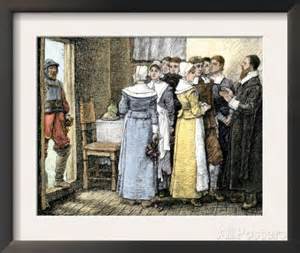
Politics on the Periphery:  Factions and Parties in Georgia, 1783-1806 (University of Delaware Press, 1986)


Posted in "In The Temple of Wolves", Books, Retirement, Rick Lamplugh, Wolves, Yellowstone National Park | Tagged , , , | 6 Comments

The Chitlin’ Circuit: Life, Death, and a Musical Revolution (Blues Stories, 14)

A Review of Preston Lauterbach, The Chitlin’ Circuit and the Road to Rock ‘n’ Roll. New York and London: W.W. Norton & Company, 2011.

[NOTE:  As Blues fans know, the “chitlin’ circuit” kept the Blues alive after World War II and helped ensure that this form of African American music would be available in the small towns and cities of the South. According to Preston Lauterbach, the “chitlin’ circuit” label originated as a pejorative term: “Artists were relegated to the chitlin’ circuit. Working it was a grind. Even its title was depressing, derived from what black people called the hog’s small intestine, the cuisine of relegation.” (9) Yet, it was the chitlin’ circuit, initially developed during the 1930s, that ultimately “nurtured rock ‘n’ roll from the early 1940s to the mid-1950s.” (12)]

* * * * *

Well known black orchestras, like those fronted by Duke Ellington and Count Basie, backed by the white mob (or “syndicate”), performed mainly for white audiences in large venues in Harlem and elsewhere. Less prominent groups, like Walter Barnes’s “Royal Creolians,” played in the black section of town (AKA “Bronzeville”), the center of which was referred to as the “stroll.” Barnes, who was also a columnist for the Chicago Defender, saw an opportunity: using his Defender column to hype his orchestra, the “Midget Maestro” barnstormed throughout the smaller black, southern venues during the Great Depression. Yet, Barnes and other black orchestra leaders were pretty much on their own, as far as publicity went, at least until the arrival of white-controlled juke boxes in every black southern café, which provided “a valuable new outlet for artist promotion, and an overnight pop-culture phenomenon.” (44) Unfortunately, any hope Walter Barnes might have had of revolutionizing black music came to a sudden end when he, members of his orchestra, and more than two hundred customers perished in a fire at the Rhythm Club in Natchez, Mississippi, on April 23, 1940, an event memorialized musically by, among others, John Lee Hooker and Howlin’ Wolf.

The "Midget Maestro"

The “Midget Maestro”

* * * * *

The true pioneers who created the chitlin’ circuit were promoters like Denver Ferguson in Indianapolis, Don Robey in Houston, and Sunbeam Mitchell in Memphis. These men, using money derived from both legal and illegal sources, organized tours by orchestras, comedians, singers, dancers, virtually any performers who might appeal to rural and small town African Americans. Supported by record companies, “shadow promoters” in local communities, and the black press, these musical entrepreneurs created a circuit of endless tours, sending shows on the road for months at a time in a series of one-nighters that operated under very primitive conditions. For example, contracts issued by Denver Ferguson “specified that a [local] promoter provide a public address system but made no mention of modern plumbing,” and, while Ferguson insisted on a “guaranteed fee” for his agency, the talent “operated with little room for error.” (91)

For a variety of reasons, the impact of World War II on the entertainment market seemed to threaten the future of black clubs, at least until the arrival on the scene of Louis Jordan and his Tympany Five. Not only did Jordan emphasize a smaller band than the pre-war aggregations, but he also highlighted his own role as soloist and diminished that of the band. Following in Jordan’s wake came dynamic performers like Joe Turner, Wynonie Harris, T-Bone Walker, Amos Milburn, Lightnin’ Hopkins, and Clarence “Gatemouth” Brown. As a result, the language used to describe their music was altered: what the white press characterized as “rhythm and blues,” black fans increasingly described as “rock.” (118) Moreover, the traditional structure of Blues verses also changed, and songs “took on a hook-heavy narrative quality.” (144)

Louis Jordan

Louis Jordan

By the late 1940s, thanks to the development of the chitlin’ circuit, talented black musicians no longer had to leave the South for Chicago or New York in order to make a name for themselves. In this context, Lauterbach traces the rise of performers like “Little Richard” Penniman, Jimmie Lunceford, and, especially, Roy Brown, who made the “tough, lewd lyrics” that characterized chitlin’ circuit music, staples on Billboard’s charts by 1949, “two years before . . . Alan Freed initiated popular use of the phrase rock ‘n’ roll, four years prior to Bill Haley’s ‘Rock around the Clock,’ and five years before Elvis Presley covered Roy’s composition ‘Good Rockin’ Tonight.” (168)

Roy Brown

Roy Brown

* * * * *

A resident of Memphis, Preston Lauterbach devotes considerable space to the post-World War II musical history of his hometown, especially to the role played by Andrew “Sunbeam” Mitchell and his wife Ernestine, who established the Mitchell Hotel and the Domino Lounge, and sparked a musical renaissance. Mitchell, described by one who knew him as “a nice man, but dangerous” (185), made money at first by arranging to transport into the dry state of Mississippi “sex, gambling, bottled-in-bond booze, and entertainment by the rising stars of black music.” (187) In Memphis, too, radio station WDIA , “the first station entirely committed to programming for the black audience” (197), emerged as a regional powerhouse, as well as the launching pad for Blues legend B.B. King.

When Tennessee’s Democratic U.S. Senator Estes Kefauver investigated the business operations of Indianapolis’s Denver Ferguson in 1949-1950, Ferguson, deciding that discretion was the better part of valor, shut down his booking agency, a decision that, by removing Indianapolis from chitlin’ circuit contention, had the unintended consequence of “blowing Memphis wide open.” (205) A loosely-allied group of Memphis performers, the “Beale Streeters”— B.B. King, Rosco Gordon, Joe Louis Hill, Johnny Ace, and Bobby “Blue” Bland— thought they had seen the future, in the person of Dave Mattis, who had established Duke Records there, but Houston’s Don Robey duped Mattis into a partnership with his own Peacock Records, and then dissolved the agreement with a pistol. Although Robey’s Peacock label signed charismatic performers like Little Richard and Big Mama Thornton, keeping them in line was by no means easy. In fact, according to Lauterbach, Robey’s company “became a dysfunctional family where the stern father was driven to distraction by his gay son and alcoholic, lesbian daughter.” (233)

Another of Robey’s Peacock stars, Johnny Ace, “accidentally” committed suicide on Christmas Day, 1954, which gave Robey the opportunity to show just how much he’d learned about promoting music on the chitlin’ circuit. Ace had been in the process of “crossing over” to broader pop stardom at the time of his death, and Robey promptly offered an eager public a Johnny Ace “greatest hits” album. So popular was Robey’s deceased star that, when Billboard proclaimed 1955 “The Year R&B Took Over Pop Field,” the publication gave the late, great Johnny Ace much of the credit for that development.

Johnny Ace

Johnny Ace

But Robey (and Johnny Ace) had help in pushing R&B over the top, from Macon, Georgia, promoter Clint Brantley, who “groomed not one but two of the most innovative, celebrated artists in American popular music,” Little Richard and James Brown. (242) Although Denver Ferguson was a genius at mass-marketing and Don Robey knew how to make money, only Clint Brantley was able to intuit, at least according to Lauterbach, “what the audience would like before the audience liked it.” (243)

* * * * *

When rock ‘n’ roll took off in the mid-1950s, the record producer and the disc jockey replaced the chitlin’ circuit promoter as the motive force in black music. Although the back-breaking one-night stands on the chitlin’ circuit continued for some (see, for example, the treatment of modern-day chitlin’ circuit road warrior Bobby Rush in Richard Pearce and Robert Kenner’s fine film, The Road to Memphis, in the series Martin Scorsese Presents the Blues [2003]), record sales enabled other performers to make not just money, but a fortune, and without spending three hundred nights a year on the road. As if losing some of its top performers to the recording studio was not bad enough, the chitlin’ circuit also was victimized by what federal and local governments called “urban renewal,” which almost invariably resulted in building interstate highways through those areas in southern towns and cities where juke joints and dance clubs formerly had flourished.

Bobby Rush

Bobby Rush

Yet, although record sales gradually replaced the gates at venues on the chitlin’ circuit as indicators of popularity, the chitlin’ circuit survived, after a fashion. “Sunbeam” Mitchell moved his club from Beale Street to South Memphis, and, years later, a faux version of Beale Street rose from the ashes to draw tourists to an antiseptic recreation of the original that had very little to do with the chitlin’ circuit. Instead, the surviving chitlin’ circuit became “an underground haven for music that evolved the wrong kind of black for the mainstream: bluesy and erotic. Race segregated it in the old days; tastes would segregate it from now on.” (290)

Lauterbach uses the terms “blues,” “rhythm and blues,” and “rock ‘n’ roll” almost indiscriminately, at least until the “Afterword.” There, Lauterbach, apparently reluctant to bring his study to a close, offers brief summaries of the later lives of some of the key figures in the growth, decline, and renewal of the chitlin’ circuit. And, in his treatment of Louis Jordan, whose preference for a smaller band ultimately, in Lauterbach’s view,  paved the way for the rise of rock ‘n’ roll, Lauterbach offers Jordan’s pointed summary of the origins of rock: “Rock-n-roll was not a marriage of rhythm and blues [to] country and western. That’s white publicity. Rock-n-roll was just a white imitation, a white adaptation of Negro rhythm and blues.” (294) Amen, brother!

* * * * *

southernlitreview.com

By the time I finished this beautifully written book, in other words, I realized that the second half of Lauterbach’s title, “the road to rock ‘n’ roll,” was just as important as his emphasis on “the chitlin’ circuit.” Although I was a little disappointed by his sometimes sketchy treatment of the connection between the chitlin’ circuit and the Blues, I still admire the power of Lauterbach’s tale of the origins of rock ‘n’ roll. And the illustrations are striking, especially the cover photo. This book will last. It should appeal to anyone interested in the Blues in general, the “chitlin’ circuit” in particular, or the links between the Blues, the “chitlin’ circuit,” and rock ‘n’ roll.

ADDITIONAL SOURCES

“That’s What They Want”: Jook Joint Blues–Good time Rhythm & Blues, 1943-1956. London: JSP Records, 2010 (JSP7796). This cd helps suggest the atmosphere of many a “juke joint” on the “chitlin’ circuit.”

B.B. King & Bobby Bland–Together for the First Time . . . Live. Universal City, California: MCA Records, 1974 (MCAD-4160).

Lightnin’ Hopkins. Washington, D.C.: Smithsonian Folkways Records, 1990 (CD SF 40019).

The Sky is Crying: The History of Elmore James. Los Angeles: Rhino Records, 1993 (R2 71190).

B.B. King: Live at the Regal. Universal City, California: MCA Records, 1964, 1997 (MCAD-11646).

The Very Best of T-Bone Walker. Los Angeles: Rhino Records, 2000 (R2 79894)

Muddy Waters: The Complete Plantation Recordings. Universal City, Ca.: Chess/MCA, 1993 (CHD-9344). A classic album, both on Southern Blues and on Muddy Waters’ career.

Mississippi Blues: Rare Cuts 1926-1941. London: JSP Records, 2007 (JSP7781). Once more, with feeling–four cds of early Mississippi Blues that will carry you back to the early days of the “chitlin’ circuit” and rural “juke joints.”

Chicago: The Blues Today. Santa Monica, Cal.: Vanguard Records, 1999 (172/74-2).

The Road to Memphis. A Film by Richard Pearce and Robert Kenner. In Martin Scorsese Presents The Blues. (2003).

* * * * * *

For those interested in reading more of my reflections on history, here are links to my books on the subject:

REABP CoverRancorous Enmities and Blind Partialities:  Parties and Factions in Georgia, 1807-1845 (University Press of America, 2015)

Pursuit Cover

In Pursuit of Dead Georgians:  One Historian’s Excursions into the History of His Adopted State (iUniverse, 2015)


Politics on the Periphery:  Factions and Parties in Georgia, 1783-1806 (University of Delaware Press, 1986)

Posted in Age of Jim Crow, American History, B.B. King, Bobby "Blue" Bland, Delta Blues, History, Muddy Waters, Research, Southern History, TBone Walker, The Blues, Uncategorized | Tagged , , , , | Leave a comment