The Little Course That Did–Introduction to History, a Semester Elective for 9th and 10th Graders (History Lesson Plans, 4)

[Note:  Over two decades ago, I was asked to create a one-semester elective History course open to 9th and 10th graders.  It didn’t seem to matter what area(s) of History it covered, so long as the course was rigorous, at least compared to other courses required at that time of freshmen.  The result was “Introduction to History,” which took as its subjects Early Humans, The Rise of Civilization in the Fertile Crescent, Ancient Egypt, the Persian Empire, Early Greece, and Alexander the Great.  I severed these topics from the History Department’s first required course, a one-semester offering that sailed under the titles of Ancient & Medieval History, Origins of Western Society, and History of the Ancient World during my time at the school. This meant that, thanks to the new elective, that first required course subsequently covered only the Roman Republic, the Roman Empire, and the Fall of Rome; the rise of civilization in China, India, and the Middle East; and the so-called “Middle Ages.” (Yeah, it was still a case of “if it’s Tuesday, it must be a new civilization”–but just not as many!)

This new course lasted, and lasted, and lasted, evolving all the while, and in some ways it became my favorite course. “Intro” annually drew about half of the freshman class and perhaps 10% of the sophomores. Keeping in mind that, as the creator and “guru,” of the “Intro” course, I had a vested interest in its survival and success, I still believe that Intro, though an elective, played an important role in our History offerings.  It aimed to build upon the sometimes rather rudimentary skills our students brought with them to high school, and to introduce new ones, so that Intro graduates would carry lots of intellectual ammunition to more demanding offerings, especially Advanced Placement courses, or at least so we hoped.

Finally, I am pleased to note that, following my retirement, Introduction to History ceased to be an elective, becoming instead a course required for graduation from Atlanta’s Finest Prep School.  He said modestly. . . .]

* * * * *

Our freshmen students in Intro came to us from various middle schools, including local public ones, other independent middle schools, and our own junior high. Regardless, the notion of History inculcated at that level usually involved lots of memorization–names, dates, dynasties, etc.–without a whole lot of effort to put this information into any sort of context or make it very engaging. Since I was still trying to resolve what I called the “lecture-discussion conundrum,” one issue I struggled with was how much “reflection” to include in this new elective course. For example, I had begun to experiment with various approaches to encourage my older students to reflect, including a “history journal.” I thought that perhaps Intro students might benefit from such an assignment, but I soon found that ninth-graders were simply not developmentally prepared for reflection of that sort. So, our discussions in Intro would have to originate in other assignments.

One early issue in Intro was what sort of text we would use.  Eventually, we decided to require our students to purchase the college-level text used in the department’s first required course, History of the Ancient World.  The idea was that students in our elective course would cover the earliest civilizations, reading only about 100 pages in the text, then carry it with them to the required sophomore course.  The world history texts we used over the years were accessible to our freshmen and sophomores, with a little help from their teachers.  This also meant, we hoped, that Intro students would begin to learn how to get the most out of a textbook, both on first reading and when reviewing the book for a test, skills that obviously would stand them in good stead in college.

* * * * *

Another important mission for Intro was to present basic historical concepts to young historians.  We began with several definitions of “history,” and we required our students to select and defend one of those definitions closest to their own, in a one-page essay, an assignment dropped on them the very first day of class.

Having established through this assignment that there were many definitions of “history,” we examined how history was understood in books by Herodotus and Plutarch and in a series of videos.  Whether we were considering Herodotus’ treatment of Egyptian culture, Plutarch’s life of Themistocles, or videos by John Romer and Michael Wood on Egypt, for example, we insisted that our students try to grasp how these sources were—or were not—doing what historians should do. We also introduced a series of historical terms (e.g., “fact,” “interpretation”) and did an exercise on “dating the past” (e.g., BC/BCE and AD/CE).  In connection with that assignment, we read and discussed an “op-ed” in Newsweek magazine about the scholarly dispute over the birth date of Jesus of Nazareth, which always elicited lively discussion.

Each new Intro unit opened with a discussion of geographical factors that proved pivotal in the development of that civilization.  In conjunction with this topic, we used maps, either those in the texts or others furnished as handouts, to reinforce the importance of a knowledge of geography to an understanding of history.

* * * * *

In Introduction to History, we probably did more with primary sources than in any other course in the department.  For example, we used the Epic of Gilgamesh, and portions of The Histories of Herodotus, and Plutarch’s The Rise and Fall of Athens:  Nine Greek Lives. To aid our students in understanding the modern translations of these ancient sources, I created a series of “study guides,” which followed the main lines of the story (without worrying about having our students memorize trivia) and emphasized the character of the main actors and how the books did—or did not—represent the practice of “History” as we had discussed it in the introductory unit.  (I especially enjoyed having students wrestle with the cliche that Herodotus was “the Father of History,” which, given how different his work was from any of the other history books they’d ever encountered, led to useful “reflections” and spirited discussions.) In addition to these full-length texts, our students also read shorter primary sources, like Hammurabi’s Law Code; the Mesopotamian creation story, Enuma Elish; the creation stories in Genesis; and the autobiography of King Darius of Persia.

* * * * *

Intro used videos in an effort to develop critical thinking skills.  Every time I showed a documentary, I instructed students to watch for, and take notes on, certain things, or to look for the answers to certain questions.  These critical observations then formed the basis for class discussions.  Furthermore, videos, and the students’ notes on them, frequently became required sources for major writing assignments.

Fortunately for us, there were quite a few informative, engaging videos available.  For example, over the years we used as mainstays documentaries like The Iceman; Legacy:  The Origins of Civilization (Michael Wood); Ancient Lives (John Romer’s take on the history of ancient Egypt); In the Footsteps of Alexander the Great (Michael Wood again, this time channeling the great Macedonian); The Greeks:  Crucible of Civilization (mostly the history of Athens, told through biographies of Cleisthenes, Themistocles, Pericles, and Socrates); and The Spartans (Bettany Hughes. It was fun here to inform my classes that some reviews of this series published in Great Britain took Ms. Hughes to task, not for her approach to the material, but for the clothing she wore on camera—some of my female students were especially vocal during these discussions.)

* * * * *

In Intro, we only had a couple of real “tests” each semester, because I believed that younger students derived more benefit from learning to write historical essays.  In addition to the paper on “What is History?” mentioned previously, I required essays on several other topics, which, I reassured my students, counted as “real” tests, even though they were in essay form.  Sometimes these exercises were straight exposition (e.g., every-day life in Mesopotamia, based on Hammurabi’s Law Code); at other times, they involved comparing and contrasting various sources (e.g., accounts of how Darius became king of Persia by Herodotus, in The Histories, and by Darius himself, in his autobiography).

After a few years, instead of an exam in the course, Intro had an, ahem, “alternative assessment” (which I called the “Big Project,” so as not to confuse my young historians with “educationese”) that was usually a research-based, extended essay.  Required sources included the assigned texts, videos, and selected Internet websites.  We generally spent a week or more in class near the end of the semester working on these projects–researching, planning, and word processing the essay.

Among the “Big Project” topics I devised over the years were “Heroes of the Ancient World” (Sargon of Akkad, Moses, Romulus and Remus, and Cyrus of Persia), and “The Battle of Salamis” (according to our textbook, Aeschylus’ play The Persians, Herodotus, Plutarch’s lives of Themistocles and Aristides, The Greeks:  Crucible of Civilization video, as well as several websites on the battle). My personal favorite among the “Big Project” topics, though, was “(Hi)Story [sic],” which emphasized the idea of history as “story.” It required students to compare and contrast various approaches to the past, ancient and modern, in books (our main text and Herodotus) and on film (at least one of the videos mentioned previously), as well as in the classroom (i.e., they had to decide what my approach to the study of history was and work that into their answers!); then I asked them how their understanding of the nature of History had changed, or remained the same, as a result of the course, and to explain why.

* * * * *

Intro also afforded an opportunity to expose young historians to comparative history.  Every other semester or so, I assigned a group report as a way to introduce the concept.  Under the general title of “The Human Mind in the Axial Age,” for example, groups prepared oral and written reports on the “minds” of ancient civilizations (e.g., China, Israel, Greece, India, and Persia), based on the textbook and on primary and secondary research in the library and online.  These projects also consumed a couple of weeks of class time, and student presentations of the results counted as a major test grade.

Thanks to President George W. Bush’s penchant for intervening in the affairs of the Middle East, Intro also allowed us to introduce students to the historical roots of current events.  This gave heightened significance to, for example, Michael Wood’s film, “Legacy:  Iraq,” and his visit to Afghanistan in another series, In the Footsteps of Alexander the Great.

I offered occasional “mini-lectures” to my young historians. These usually lasted no more than fifteen to twenty minutes and were intended to fill in the background for major topics like archaeology, the Epic of Gilgamesh, Hammurabi’s Law Code, Greek drama, or the life of Plutarch. Nevertheless, such interludes, featuring their teacher as the “fount of all wisdom,” did not alleviate the disorientation most of the young scholars felt once they realize that I was serious when I said that our course relied heavily on discussion. Oh, I might break the class into groups to share information but, once the discussion commenced, no student was safe from my “inquiring mind”!

There also was an intangible aspect of Introduction to History that made it fun to teach:  I felt no compunction to “cover” a set amount of material each semester.  (OK, perhaps I should have, but I didn’t.)  If I decided that we needed to slow down and smell the coffee while studying Egypt, the Persians, or whatever, then we did so.  And, since the course had only “light” homework, students were expected to start on their next day’s assignment during the latter part of each day’s class, so there was no need to flog a dying discussion simply to fill in the time before the bell rang.

* * * * *

In short, Introduction to History actually “introduced” our students to quite a lot that proved valuable for later departmental offerings, not to mention courses they might encounter on the college level.  When I saw some of my former Intro students later, in my Advanced Placement United States or Modern European courses, I never worried about whether they’d “get” doing history at that rarefied level–I knew from experience that they already were familiar with the skills they’d need.  Teachers of our other required courses felt the same way when they found Intro alums in their classes, and they continued to call upon–and reinforce–the skills their students first learned as freshmen and sophomores in Introduction to History.

* * * * * *

For those interested in reading more of my reflections on history, here are links to my books on the subject:

REABP CoverRancorous Enmities and Blind Partialities:  Parties and Factions in Georgia, 1807-1845 (University Press of America, 2015)

Pursuit Cover

In Pursuit of Dead Georgians:  One Historian’s Excursions into the History of His Adopted State (iUniverse, 2015)

Politics on the Periphery:  Factions and Parties in Georgia, 1783-1806 (University of Delaware Press, 1986)

Posted in Historical Reflection, History, History Curriculum, Retirement, Teaching, Uncategorized | Tagged , , , , , | 4 Comments

The Voice of the Urban Blues–Bobby “Blue” Bland,1930-2013 (Blues Stories, 13)

A Review of Charles Farley, Soul of the Man: Bobby “Blue” Bland. Jackson: University Press of Mississippi, 2011.

Throughout his long career, Bobby Bland was introduced as “the world’s greatest blues singer,” and, according to biographer Charles Farley, this was no exaggeration. Farley admits that Bland played no instrument (unless one considers his voice an instrument, as Farley does); wrote few songs; and hardly moved on the stage while performing. And yet, he recorded over 60 Blues, Rhythm & Blues, and Soul hits, more than 40 of which “crossed over” to pop charts, and for much of his career he and his band were on the road for 300 shows annually. Farley contends that Bland’s popularity was not merely the result of his bluesy, soulful voice: he also “had an impeccable ear for what was the right way to sing a song.” (4)

* * * * *

According to Farley, Bobby Bland was born Robert Calvin Brooks on January 27, 1930, in Rosemark, Tennessee, to I.J. and Mary Lee Brooks, but an obituary published in The New York Times in June of this year insists that his birthplace was nearby Millington. After I.J. Brooks deserted the family, Mary Lee married Leroy Bridgeforth, Jr., who also went by the name of Bland. Bobby admired his stepfather and eventually changed his last name to Bland to show that. Raised in an agricultural area, young Bobby grew up surrounded by music: gospel in church, blues in the community, country music on the radio; and he early demonstrated a talent for singing. Bland later said that, while he wasn’t allowed to sing the Blues (“the Devil’s music”) around adults, he could do so in the cotton fields.

When he was a teenager, Bobby moved to Memphis with his mother, who hoped both to escape the harsh Jim Crow system of her rural home and provide her son with a better chance to pursue the music he loved. Young Bobby’s education in rural Tennessee had been so sporadic that he did not learn to read or write. He abandoned school once he arrived in the big city and worked delivering groceries, parking cars, and transporting laborers from Memphis to the Delta cotton fields, while his mother ran a soul food restaurant. Bland strove to excel in music, but he started at the bottom, driving local performers like B.B. King, Rosco Gordon, and Junior Parker to gigs out of town.

* * * * *

Mr. Bland’s recording career began in the early 1950s, but was interrupted by military service. The Memphis label that had signed Bland, Duke Records, had been sold to Peacock Records and moved to Houston by the time he was released from the army in 1955. Assigned by his Duke bosses to the “Junior Parker Revue,” Bland found himself on an endless tour of the “chitlin’ circuit.” Attempting to develop a singing style of his own, Bland abandoned his falsetto and adopted a growl (or “squall,” as he termed it) that he had picked up from listening to The Rev. C.L. Franklin, father of Soul goddess Aretha Franklin. While developing his chops as a blues singer, though, Bland continued to admire balladeers like Andy Williams and Perry Como.

By the late 1950s, Bland had his own band, led by talented arranger Joe Scott. His first album, Two Steps from the Blues, combined the Blues, Gospel, and Soul into “a distinctly Southern sound where . . . these styles blended so thoroughly it was impossible to tell where one began and one ended.” (98) In a broader sense, Mr. Bland’s new style “supplanted for black people the down-home country blues and electric Chicago blues now so popular with white audiences and created a sophisticated, urban blues genre that reflected and spoke more directly to the tastes, self-image, and aspirations of the emerging postwar African American middle class.” (154)

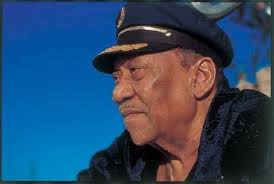
The Pride of Duke Records

The Pride of Duke Records

The brutal touring schedule of Bobby Bland and his band took a toll on all of them. Over his career, Bland was married three times and struggled with alcohol addiction, which in turn wreaked havoc on his personal relationships, including with some members of his band. His bosses at Duke/Peacock pressed him to “cross over,” and develop songs that would appeal to broader audiences, whether R&B (which would appeal to blacks and some whites) or “folk blues” (which would draw young, affluent whites). Bland tried to do as he was asked, but with minimal success; despite the urging of his bosses and his own efforts, his audience remained largely black and fairly traditional. ABC bought the Duke/Peacock label in 1973, and MCA purchased ABC Records in 1979. In 1984, MCA released Bland from his contract, and the following year he signed with a new label, Malaco Records in Jackson, Mississippi, where he would remain for the rest of his career, this time as an unapologetic Blues singer.

* * * * *

Bobby “Blue” Bland disappears periodically in this biography, as Farley meanders through discussions of Jim Crow in Memphis and Houston; changes in the personnel of Bland’s studio and touring bands; and detailed treatments of each Bland album. Unfortunately, there are so many mini-biographies of those associated with Mr. Bland that some readers will probably be confused. Only a handful of the individuals sketched by author Charles Farley actually played significant roles in shaping Mr. Bland’s career: Don Robey, the controversial owner of the Duke/Peacock label in Houston; Evelyn Thompson, who ran Robey’s company day-to-day and became a sort of mother figure to the artists; Joe Scott, the arranger and band leader who helped create the “Bobby Blue Bland sound”; Dave Clark, the dedicated promotions director at Duke/Peacock; and Wayne Bennett, Bland’s longtime lead guitarist.

Yet, Farley occasionally tries his hand at analysis. Considering why Bobby Bland made scarcely a dent in the white record-buying market, Farley points out that Bland played no instrument, when the “folk blues” movement was hung up on guitar players; he was not an exceptional showman; his material seemed oriented towards an older African American generation; he was “too ‘uptown’ for white Blues fans and too laid back for white Soul fans of the era”; he didn’t identify with rock audiences and was considered too unsophisticated for jazz audiences; and he lacked “adequate promotion to the wider record-buying public.” (192-193) Or, as Bland himself once put it, “A Black man still has to do twice what the white man does [to be recognized in the music business]. You got to turn flips or hang off the rafters.” (194)

In effect, though Charles Farley titles his work “Soul of the Man,” he really doesn’t plumb Mr. Bland’s “soul.” Apparently, Mr. Bland did not cooperate with Farley on the biography, for reasons left unexplained. A better title might have been “The Life and Times of Bobby ‘Blue’ Bland,” for the reader learns as much about the popular music business during Bland’s lifetime as about the singer himself, and this is no small achievement. For instance, Farley pauses periodically to explain the cultural significance of Billboard magazine’s changing categories for best-selling songs by black artists: from “Race Records” to “Harlem Hit Parade”; from “Hot Rhythm & Blues Singles” to “Best Selling Soul Singles”; from “Hot Soul Singles” to “Hot Black Singles”; and from “Black Albums” to “Top R&B/Hip-Hop Albums.” I found these digressions more interesting than many of Farley’s mini-biographies of members of Bland’s band.

A clear picture of Bobby “Blue” Bland really doesn’t emerge in this work, but this might not be the author’s fault. Mr. Bland seemed content to sing “his music” to “his people”; efforts by his various labels to get him to try different musical styles in order to attract a wider audience almost invariably failed. Bland also comes across as a rather complacent performer. He “never became directly involved in the civil rights movement or any other form of politics,” for example. (136) Both of the labels with which he was associated longest, Duke/Peacock and Malaco, “took care of” Mr. Bland. According to Farley, Bland’s situation with Malaco Records replicated what he had experienced at Duke/Peacock: “Bobby had somehow arranged it so that all he had to do was be charming and sing–two things that by now he was a master of.” (207-208) Bland’s third wife, Willie Mae Martin, became his de facto manager and provided an additional element of stability for his career. Yet, the “family atmosphere” he seemed to crave did not protect Bland from the perils of life in the real world: Mr. Bland was plagued throughout his career by tax disputes with the Internal Revenue Service, and Farley does not make clear whether the fault lay with Mr. Bland himself or with his managers.

* * * * *

Bobby Bland said that he did not want to be classified as a “blues singer”; rather he described himself as “a smooth and melancholy kind of singer.” (209) He saw himself as a balladeer, a lounge singer along the lines of Nat “King” Cole or Tony Bennett. (Mr. Bennett, when told of this, said he did not know who Bobby Bland was. [151]) Bobby Bland believed that Blues and Soul were “just one and the same,” and that “[e]verybody has the blues but they don’t want to admit that.” (224-225) One critic termed Bland’s music “the gospel of bad news, the tales of choices made and the consequences of those decisions.” (227)

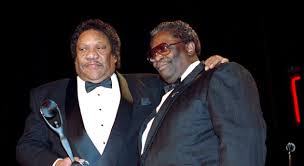
Bobby and BB

Bobby and BB

One of the things that stands out in Farley’s treatment of Bland’s career is his effort to trace the evolution of African American music in the first half of the twentieth century, from Blues to Rhythm & Blues, from Rhythm & Blues to Soul. He makes a strong case that performers like B.B. King and Bobby Bland altered the subject matter and musical arrangements of “Urban Blues” to appeal to blacks who had made the trek from the Jim Crow South as part of the Great Migration. According to Farley, while traditional Blues appealed to blacks in the rural, small-town South, “the emerging African American middle class [in the North and Midwest] began to disassociate itself with anything it deemed lower class, including the blues, viewing it as ‘country’ or ‘slave music’ or just ‘too ethnic.'” (225)

The Old Lion

The Old Lion

Frankly, all of this probably would have gone over Bobby “Blue” Bland’s head. He was a talented singer with a killer voice who knew what he wanted to sing–and to whom. His bosses did not always agree with him, but Bland stubbornly persisted in trying to reach his target audience. Yet, he did change over the years, moving back and forth from Blues to Rhythm & Blues, from Rhythm & Blues to Soul (and even a brief, ill-advised detour into Disco), and, finally, during the Malaco years, back to the Blues. If you had asked Mr. Bland to comment on his career, he probably would have replied that he sang his music to his people over five decades, and he did not care what anyone called it. In sum, although Charles Farley set out to write about the “Soul” of Bobby “Blue” Bland, he never really delved that deeply, perhaps for reasons beyond his control. He has, on the whole, nevertheless produced an engaging biography of Mr. Bland and his times, even if the man himself is frequently missing.

ADDITIONAL SOURCES

Bland, Bobby. Two Steps from the Blues. MCA [Duke/Peacock] 088 112 516-2 (2001). Bland’s first Duke album, considered a classic.
King, B.B., and Bobby Bland. B.B. King and Bobby Bland Together for the First Time . . . Live. MCA Records MCAD-4160, 1974. A terrific live album, in my view, though Farley disagrees.
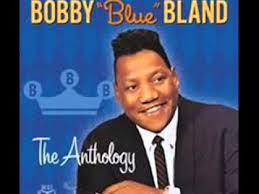
Bland, Bobby “Blue.” The Anthology. MCA [Duke/Peacock] 088 112 596-2 (2001). Bland’s early hits.
Bland, Bobby “Blue.” Memphis Monday Morning. Malaco MCD 7495 (1998). A fine example of Bland’s late, Blues-centric, recordings at Malaco Records, in Jackson, Mississippi.
Friskics-Warren, Bill. “Bobby (Blue) Bland, Soul and Blues Balladeer, Dies at 83.” New York Times, June 24, 2013.

* * * * * *

For those interested in reading more of my reflections on history, here are links to my books on the subject:

REABP CoverRancorous Enmities and Blind Partialities:  Parties and Factions in Georgia, 1807-1845 (University Press of America, 2015)

Pursuit Cover

In Pursuit of Dead Georgians:  One Historian’s Excursions into the History of His Adopted State (iUniverse, 2015)

Politics on the Periphery:  Factions and Parties in Georgia, 1783-1806 (University of Delaware Press, 1986)

Posted in Age of Jim Crow, B.B. King, Bobby "Blue" Bland, Civil Rights Movement, Delta Blues, History, Research, Retirement, Southern History, The Blues, Uncategorized, Urban Blues | Tagged , , , , , | 8 Comments

Reflecting in History’s Mirror (History Lesson Plans, 3)

[NOTE: In a previous post, I introduced the “Lecture-Discussion” conundrum, the pedagogical approach favored by the prep school history department that had hired me. What did “Lecture-Discussion” mean, as a way to impart information to adolescents? I firmly believed, as I told my classes every year, that “History was a subject for thinking people,” so “discussion” must encourage my students to develop the skill of historical reflection, not simply privilege the facility to provide rote answers to leading questions.]

* * * * *

One “invitation to reflection” I began using was a “History Journal.”  At first, I required journals in all my classes, but eventually I only used them regularly with my seniors. [I’ll discuss efforts to encourage reflection in younger students in another post.] About once a week, I put a topic—titled, numbered, and dated—on the board.  The question could be directly related to the assigned reading; use the material as a springboard for something more imaginative; or perhaps trace a “current event” over several months.

The seniors in Advanced Placement United States History proved capable of writing a pretty thoughtful page or so on most occasions, and our discussions as a result could be quite interesting.  I even discovered that they did not mind doing more than one journal entry a week, if the topics were provocative.  I kept a record of the topics assigned and noted any that worked particularly well.  I allowed between 15 and 20 minutes to write, wrote along with my APUSH students, and then we discussed the topic.  Once every five weeks or so, I had them select what they thought were their best three entries (i.e., the most complete, most reflective, or, in some cases, admittedly, the only ones they had), and turn them in for a grade.  Besides affording the obvious opportunity to hone writing skills, these assignments also served to build more time into our courses for reflection. Here are a few examples:

AP U.S. History (Grade 12)

1.  “Bias”—what biases do you bring to the study of American History?

2.  “A Sin of Omission?”—our text’s only reference to the Salem witchcraft trials is in the chapter-ending chronology (p.146).  Why do you suppose the authors chose to give only minimal attention to the events at Salem, while the authors of our supplementary text [Davidson and Lytle, After the Fact] devoted a long chapter to them?

3.  “Photo Op”—according to After the Fact, photographs “must be read by historians as they do all evidence—appreciating the messages that may be simple and obvious or complex and elusive.”  Keeping this in mind, “read” the photo on the cover of Volume II of our main text [Bernard Bailyn, et al., The Great Republic].  HINT:  the picture was selected for the cover of a book treating American History from the end of the Civil War through the 1980s.

4.  “Imperialism—Dewey or Don’t We?”— discuss the nature and sources of American imperialism, using the excerpts from Sen. Albert Beveridge’s speech, “The March of the Flag.”

5.  “Picturing 1950s Culture”—using one of the pictures on pp.482, 483, 484, 488 of our main text, reflect in your journal on what the photo shows or suggests about the culture of the 1950s.

* * * * *

When I revamped a one-semester senior elective course, The History of the Modern American Civil Rights Movement, I assigned, not a journal, but a series of “reflection” assignments based on reading, videos, or current events.  These, too, proved to be quite useful in stimulating the habit of historical reflections in my students. Consider the following examples:

Selected Civil Rights Reflections (Grades 11-12)

1.  “Jim Crow Blues”—according to Leon Litwack [in an article, “Jim Crow Blues,” published in The Organization of American Historians Magazine of History], what were the “rules” of Jim Crow, and how were those rules enforced by whites?

2.  “What’s in a Name?”—read Leon Litwack’s analysis of the debate among African Americans in the late 19th and early 20th centuries over what to call themselves [in Trouble in Mind: Black Southerners in the Age of Jim Crow, pp.457-463], then reflect on why that issue seemed so important at the time.

3.  “Betty Jo”—on p.65, Melton McLaurin [in Separate Pasts: Growing Up White in the Segregated South] refers to interracial sex as “both the ultimate temptation and the ultimate taboo, a symbol of both the reality and the futility of segregation.”  How does this chapter support that description?

4.  “Exiles”—read “Exiles from a city and from a nation” [an op-ed]. In Cornell West’s opinion, what has Hurricane Katrina revealed about the current state of civil rights in the U.S.?  Do you agree with him?  Why or why not?

5.  “Going to Chicago”—when African Americans began leaving Mississippi during and after World War I, why did they go in such large numbers to Chicago? 

* * * * *

Another technique I trotted out, and used only with seniors, was one I observed a colleague use several times during my years as department head.  I called it a “Quaker meeting discussion,” because students were encouraged to speak only “when the spirit moved them,” at least in theory.   I wrote a question on the board related to the day’s reading; then I told the class that I wanted them to discuss it, without any help from me—and contribute only when and if they felt they had anything to say.  I generally gave each class 10-15 minutes to review the reading and think about how they might respond to the question.

Once the discussion began, my only task was to listen—hard!—taking notes all along.  (Not surprisingly, this was the most difficult part for me—why couldn’t I simply be the “Sage on the Stage”?)  After the kids had their say and things began to flag, or if the discussion either went nowhere or headed off in the “wrong” direction, I called time.  Next, I commented on what I’d heard, tried to point out any egregious errors of fact, and attempted either to bring closure or come up with a segue that got us back into the “normal” discussion mode.

The seniors seemed to take to this approach readily, and the discussions they conducted were fun to watch and to critique.  The topic was key here, but so, too, were the ground rules I insisted upon:  civility; the need for as many people as possible to contribute (I told them I hoped everyone would feel moved to participate at least once during each discussion); and, especially, the importance of having someone who was willing to intervene, to pull a meandering discussion back on track or if one student seemed to be dominating the proceedings.  This last rule caused far less trouble than I had expected; in fact, in each of my classes it produced an ad hoc discussion “leader/guide” who usually was a surprise to me, based on that person’s theretofore minimal contributions to our more run-of-the-mill discussions.  I kept a record of the topics selected for these discussions and noted in some detail how things went in each class. Here are some of the questions I used:

Selected “Quaker Meeting Discussion Topics” (AP U.S. History, Grade 12)

1.  According to After the Fact, “To live in society means to exist under the domination of society’s logic.”  1) What does this mean?  2) How does it apply to: a) the study of History in general; and b) the study of the history of colonial Virginia in particular?

2.  To what extent does the following dictionary definition accurately describe the Declaration of Independence?  “Propaganda—any systematic, widespread dissemination or promotion of particular ideas, doctrines, practices, etc., to further one’s own cause or to damage an opposing one.”

3.  “If [Benjamin] Franklin had never existed, it would have been necessary for the philosophers of the Enlightenment to invent him.”  (Great Republic, I, p.204)  Comment.

4.  To what extent did the “search for order” affect American politics (local, state, national) in the late 19th century?

5.  “Reel Life v. Real Life”—according to After the Fact, p.427, the “myth of American exceptionalism” is the idea that “Americans are more virtuous, thanks to their special circumstances.”  How—and how well—do the authors link this myth to a) films about the Vietnam War; and b) to the real-life events at My Lai?

* * * * *

In addition to these methods for stimulating student reflection and class discussion, I listed on the board key names, dates, and events important in the assigned reading. This was a daily practice in APUSH (which, of course, ended in a standardized exam supposedly modeled on the sort of comprehensive test used in college courses).  I also tried to make videos a more interactive teaching tool, linking them to journal or “Quaker Meeting” discussion topics or perhaps asking a class to look for, and take notes on, what they were viewing, then be prepared to discuss specific things at the end of the video.

I still did some “lecturing” in my senior classes, but these sops to the “Sage on the Stage” mentality were infrequent.  In APUSH, for instance, I held forth on the concept of “republicanism” in the first semester.  Moreover, no year was complete without talks on the “Birth of the Blues,” as a manifestation of African American culture during the “Age of Jim Crow,” and “Growing Up With Vietnam” as a way to tie together several important threads in post-World War II America. I also employed the “Birth of the Blues” and “Age of Jim Crow” talks in the Civil Rights course, along with an analysis of “The New South Creed” [Paul Gaston]; a broad treatment of the period between the end of Reconstruction and the imposition of “Jim Crow”; and an interpretation of the modern Civil Rights Movement as “The Second Reconstruction.”

Not only did this emphasis on discussion and reflection, supported when necessary by some form of “lecture,” buttress the History Department’s insistence that discussion should be central to all of our courses, but it also required students to take a more active part in class by listening, taking notes, answering (and asking) questions, and making comments.  Once the students realized that I meant what I said, they adjusted, and I believe they derived more benefit from both written reflection and active participation in class discussions than from the passive approach many of them might initially have expected.

* * * * * *

For those interested in reading more of my reflections on history, here are links to my books on the subject:

REABP CoverRancorous Enmities and Blind Partialities:  Parties and Factions in Georgia, 1807-1845 (University Press of America, 2015)

Pursuit Cover

In Pursuit of Dead Georgians:  One Historian’s Excursions into the History of His Adopted State (iUniverse, 2015)
Politics on the Periphery:  Factions and Parties in Georgia, 1783-1806 (University of Delaware Press, 1986)

Posted in American History, Civil Rights Movement, Historical Reflection, History, History Curriculum, Interdisciplinary Work, prep school teaching with a PhD, Retirement, Southern History, Teaching, Uncategorized | Tagged , , , , | 2 Comments

B.B. King, “King of the Blues” (Blues Stories, 12)

[NOTE:  There is a generic career arc for many twentieth-century Blues performers: a poverty-stricken background in the Jim Crow South, especially the Mississippi Delta; “escape” to the “land of opportunity” somewhere in the North or Midwest; early career success, followed by a reversal of fortune as rock ‘n’ roll attracted the attention–and the money–of American teenagers in the 1950s; salvation, rediscovery, and resurrection in the 1960s, thanks either to switching from the Blues to the “real folk blues” to attract a younger, whiter audience, or to the arrival of the “British invasion” rock bands in the ’60s, who declared various older Blues men their “idols” and lauded their impact on the development of rock ‘n’ roll. B.B. King’s career fits snugly within this stereotypical career pattern in some ways, but, as always, the devil is in the details.]

* * * * *

Riley B. King was born on a plantation between Itta Bena and Berclair, Mississippi, near the Delta town of Indianola, on September 16, 1925. His mother, Nora Ella, had moved to the Delta from the hill country village of Kilmichael four years earlier, looking for work, and had married a local farmhand, Albert King. When Riley was about four years old, Nora Ella left Albert and took her young son back to Kilmichael to live with her mother, Elnora Farr. After Nora Ella’s death in 1935, Riley worked in the fields for which his grandmother was responsible to a white landowner, received a spotty education at a local Baptist church school, and learned about the Blues from his great aunt Jemimah, who owned a phonograph and a collection of Blues records.

Yet, according to biographer Sebastian Danchin, Riley King’s early musical education focused on Gospel music rather than the Blues. He attended a Pentecostal church where instrumental music, especially the guitar, played a key role in worship. Young King watched the pastor play the guitar, was smitten, and promptly organized a Gospel group. Following his grandmother’s death in 1940, Riley was taken back to the Delta by his father, but that arrangement lasted only a brief time before the teenager made his way once more to Kilmichael, where he settled on a farm owned by a white man, Flake Cartledge, who, according to King’s biographer, “symbolized justice and generosity, and perhaps also fatherhood.” (Danchin, p.8) Cartledge bought King his first guitar and allowed him to repay the cost in installments.

Ironically, King’s mastery of that first guitar led him to leave Cartledge’s farm and return to the Delta, where he drove a tractor, a relatively good-paying job, for planter Johnson Barrett, and in his off hours accompanied a vocal Blues group organized by a cousin. World War II turned out to be only a blip on King’s career radar, because, the Delta being the Delta, Riley was allowed by local officials to perform his “military service” by continuing to drive a tractor for Johnson Barrett.

In 1946, King left the Barrett place (and his wife, Martha) and headed for Memphis, where he hoped to find a career in music. He located a cousin, noted Blues man Bukka White, who found him a day job and bought him a Gibson guitar and an amp. King placed his hopes for success on winning the amateur night competition at the Palace Theater, and, when that didn’t pan out, he pulled up stakes and returned to the Delta, where he got his old job back, as well as his wife, at least for a while.

* * * * *

Still, the desire for a musical career proved to be an itch King had to scratch, especially after he began listening to Sonny Boy Williamson’s radio broadcasts from West Memphis, Arkansas. Abandoning the Delta (and his wife) again in 1948, Riley King returned to Memphis, where he wangled a job at radio station WDIA, selling a heavily alcoholic “tonic” called Pepticon over the airwaves, while singing a few songs. This proved to be the break he had been waiting for. King parlayed his fame as the “Pepticon Boy,” and then as the “Beale Street Blues Boy” (eventually shortened to “B.B.”), into regular Blues gigs in Tennessee, Arkansas, and Mississippi.

King convinced his employers to let him put out a couple of records in 1949, sides on which he was a crooner and his guitar was in the background, but they went nowhere. It wasn’t until he signed with the Bihari brothers in Los Angeles that King found success, with “Three O’ Clock Blues” in December 1951. The Biharis began to push B.B. away from ballads and back towards the Blues. King featured his guitar, which he named “Lucille,” more prominently as he modernized the Delta Blues, incorporating “big band jazz” sounds that took his music in the direction of Rhythm & Blues. (Danchin, pp. 36-37) And, in a sense, Lucille became almost as famous as B.B.; listen, for example, to his long, loving, and informative homage to “Lucille” (recorded live in 1967, released on Bluesway in 1968, and included on disc 2 of B.B. King: King of the Blues).

B.B. King became a mainstay on the so-called “Chitlin’ Circuit” in the 1950s. This kept him, his band, and their bus on the road constantly (in 1956, for example, he made 342 appearances in 366 days [Danchin, p.43]). In other words, his musical success came at a cost. He gave up his disk jockey gig at WDIA in mid-1953, only a few months after his wife Martha sued him for divorce. For the next two decades, he did some three hundred one-night stands a year, as well as occasional week-long engagements in larger urban theaters. Along the way, King had a second failed marriage, and he fathered fifteen children by a number of women, according to his biographer.

By the mid-1950s, the Biharis began to push King toward recording ballads, only to see his sales drop steadily. By the end of the decade, they changed course again, urging him once more to record Blues songs. One result of this shift was “Sweet Sixteen,” which climbed to number 2 on the charts and became one of B.B. King’s signature tunes.

* * * * *

In the early 1960s, King signed with ABC Records, a “major” label hoping to expand into the Rhythm & Blues market. As had been the case with the Biharis, however, ABC’s effort to push King into the pop field backfired when his usual audience refused to follow him there. Moreover, while some of King’s Blues contemporaries were exchanging electric guitars for acoustic ones and dressing down as a way to appeal to white “folkies,” King clung tenaciously to his electric guitar “Lucille,” his traditional stage costumes, and the “urban blues” that had brought him this far. As a result, by the mid-1960s B.B. King was, according to his biographer, “the only straight blues singer in America with a large, adult, nation-wide, and almost entirely Negro audience.” (Danchin, p.66; see also Escott, pp. 17, 21) Yet, that was not necessarily a bad thing, as one can hear on King’s Live at the Regal album, released in 1967–listen, for example, to “Sweet Little Angel,” which illustrates, in the words of his biographer, the singer’s “unmatched mastery of three instruments: his voice, his guitar, and his audience.” (Danchin, p.69)

While one commentator smugly asserted that King usually avoided “the temptation to be socially significant”(Escott, p.29), there were exceptions, though mildly phrased ones: listen, for instance, to “Why I Sing the Blues” (1969) and “Ghetto Woman” (1971). [But, in the “what were they thinking?” category, there also were “Help the Poor” (1964), in which “poor” B.B. asks his “girl” to “help him” by giving him her love; and 1963’s “I’m Gonna Sit In ‘Til You Give In (and “give me all of your love”).] According to his biographer, however, King’s “fundamentally activist nature” was evident in his work with organizations trying to rehabilitate prisoners (Danchin, p.87). A fine example of this is his powerful performance on Live in Cook County Jail (1971), especially, given the concert’s overwhelmingly male inmate audience, “Every Day I Have the Blues.”

A turning point in King’s career was his decision in 1968 to hire accountant Sidney Seidenberg as his manager. Seidenberg apparently had an instinctive feel for King’s strengths and for what he could do to capitalize on them. With his new manager’s guidance, King reached out to college students; “crossed over” into pop music with “The Thrill is Gone” (1969), earning his first Grammy; and launched a career abroad that eventually made him the icon of American culture in general, not just of the Blues.

B.B. King’s place in the pantheon of American music was solidified further over the next two decades, especially after he began to produce albums featuring duets with other noted performers. For example, Blues Summit (1993) paired King with, among others, John Lee Hooker, in a dynamite version of “You Shook Me”; four years later, Deuces Wild united King with stars from the Blues, Rock ‘n’ Roll, and Rap–listen, for example, to B.B.’s duet with Rap’s Heavy D., “Keep It Coming,” which features the rapper’s very interesting take on King’s guitar, Lucille; in 2000, King and British “guitar god” Eric Clapton joined for Riding With the King, the title track on which is simply a lot of fun to listen to. By the turn of the twenty-first century, according to his biographer, B.B. King had “come to mean ‘blues guitarist’ in the same way that ‘Hoover’ means vacuum cleaner.” (Danchin, p. 103)

bb and lucille

* * * * *

“I scuffle just as hard now as back when I started. Because when you get there, you know, you want to stay there, and that means you still got to scuffle.” (B.B. King, interview, late 1970s, cited in McKee and Chisenhall, Beale Black & Blue, pp.246-247.)

This quotation comes from a performer who, as of 2013, had been elected to both the Blues and Rock & Roll halls of fame (1980, 1987, respectively); earned perhaps fifteen Grammys; received two honorary doctorates in music; had his name attached to a string of Blues clubs; become the subject of a multi-million dollar, state-of-the-art museum in Indianola, Mississippi; been awarded the Grammy Lifetime Achievement Award (1987), National Medal of Arts (1990), Kennedy Center Honors (1995), Polar Music Prize from the Royal Swedish Academy of Music for “significant contributions to the blues” (2004), and Presidential Medal of Freedom (2006).

Granted, the quote is from almost four decades ago, and B.B. King could not have known then what he-and we–know now: That, to many folks around the world, B.B. King means “the Blues.” Yet, what he said then in some ways encapsulated his personality–warm, modest, self-effacing; aware both of his own skill and of the needs of his audience; and willing to try new things to keep his fans–and his record labels–satisfied. B.B. has never taken either himself or his fans for granted. Even today, in his late 80s, he continues to tour, to record, and to promote the Blues in any way he can. We should all still be “scuffling” like B.B. King if we reach his age!

* * * * *

B.B. King died at his Las Vegas home on May 14, 2015, at the age of 89.  “Another Blues stringer called home.”

SOURCES

Bill Dahl, “B.B. King (Riley B. King),” in Michael Erlewine, et al., eds., All Music Guide to the Blues (San Francisco, 1996), pp. 149-151.

Sebastian Danchin, “Blues Boy”: The Life and Music of B.B. King (Jackson, Mississippi,1998).

Colin Escott, booklet accompanying boxed set, B.B. King: King of the Blues. MCA, 1992 (MCAD4-10677).

William Ferriss, “King, B.B.,” in Charles Reagan Wilson and William Ferriss, co-eds., Encyclopedia of Southern Culture (Chapel Hill, N.C., 1989), pp. 1067-1068.

Ted Gioia, Delta Blues (New York, 2008).

Margaret McKee and Fred Chisenhall, Beale Street Black & Blue: Life and Music on Black America’s Main Street (Baton Rouge, La., 1981).

Richard Pearce and Robert Kenner, The Road to Memphis. Part of Martin Scorsese Presents the Blues. Vulcan Productions, Inc., and Road Movies Filmproduction, GMBH (2003); Columbia DVD (CVD 55935). Excellent production, framed as an homage to King but also considers the “Memphis Blues” in a broader context, including juxtaposing King’s career with that of “Chitlin’ Circuit” veteran Bobby Rush.

DISCOGRAPHY

B.B. King: King of the Blues. MCA, 1992 (MCAD4-10677)–this four-compact disc set includes B.B. King’s most important songs issued between 1949 and 1991, showing clearly how King–and his bosses–struggled, with mixed success, to keep him “relevant” over four decades.

B.B. King Live. A Dollarhide Film Production. Geffen Records DVD, 2008 (B0010362-09)–like King’s Live at the Regal album, but featuring an older B.B. doing a few of his “greatest hits” and quite a few songs apparently reserved for live performances.

“Sweet Little Angel.” B.B. King: Live at the Regal. MCA, 1997, 1964 (MCAD-11646).

“Every Day I Have the Blues.” B.B King: Live in Cook County Jail. MCA, 1971 (MCAD-11769).

“You Shook Me.” B.B. King and John Lee Hooker. Blues Summit. MCA, 1993 (MCAD-10710).

“Keep It Coming.” B.B. King and Heavy D. Deuces Wild. MCA, 1997 (MCAD-11711).

“Riding with the King.” B.B. King and Eric Clapton. Riding With the King. Reprise Records, 2000 (9 47612-2).

* * * * * *

For those interested in reading more of my reflections on history, here are links to my books on the subject:

REABP CoverRancorous Enmities and Blind Partialities:  Parties and Factions in Georgia, 1807-1845 (University Press of America, 2015)

Pursuit Cover

In Pursuit of Dead Georgians:  One Historian’s Excursions into the History of His Adopted State (iUniverse, 2015)

Politics on the Periphery:  Factions and Parties in Georgia, 1783-1806 (University of Delaware Press, 1986)

Posted in American History, B.B. King, Books, Civil Rights Movement, Delta Blues, Historical Reflection, History, Interdisciplinary Work, John Lee Hooker, Research, Retirement, Southern (Georgia) History, Southern History, Teaching, The Blues, Urban Blues | Tagged , , , , , | Leave a comment

2013 in review

The WordPress.com stats helper monkeys prepared a 2013 annual report for this blog.

Here’s an excerpt:

A San Francisco cable car holds 60 people. This blog was viewed about 2,500 times in 2013. If it were a cable car, it would take about 42 trips to carry that many people.

Click here to see the complete report.

* * * * * *

For those interested in reading more of my reflections on history, here are links to my books on the subject:

REABP CoverRancorous Enmities and Blind Partialities:  Parties and Factions in Georgia, 1807-1845 (University Press of America, 2015)

Pursuit Cover

In Pursuit of Dead Georgians:  One Historian’s Excursions into the History of His Adopted State (iUniverse, 2015)
Politics on the Periphery:  Factions and Parties in Georgia, 1783-1806 (University of Delaware Press, 1986)

Posted in Uncategorized | 2 Comments

The Lecture-Discussion Conundrum (History Lesson Plans, 2)

By the time I signed on to teach History at a prep school, I had spent five years learning to be a college professor; in my new job, I was expected to be a teacher. I was informed by my department head that we in the History Department were supposed to rely on the “lecture-discussion method” of imparting knowledge of our subject to our students. While I nodded dumbly when the term was mentioned, it didn’t make a whole lot of sense to me at the time.

In my high school History classes, “discussion,” to the extent we had any, seemed to entail a top-down, formulaic excursion into the questions at the end of the chapter assigned for the day. Then, in college, introductory History courses involved the dreaded “quiz section”: we listened to lectures from our professor for several classes each week, then, broken into smaller groups, gathered in a “discussion”—or “quiz”—section, led by one of the professor’s graduate assistants, for the final class of the week. Usually, these sessions were scheduled at an ungodly hour like 8:00 am, Saturday, so you can imagine how much we anticipated each meeting. In other words, through the end of my undergraduate education, the notion of “discussion” was anathema to me.

Based on my experience in graduate school, I saw “lecture” and “discussion” as very different approaches to History. Most of my grad school professors lectured, with discussion kept to a minimum. In one of my favorite courses, The Civil War, which was open to both undergraduate and graduate students, the professor sat the grad students up front and picked on us regularly, testing our grasp of Civil War “trivia.” (Want to know who President Lincoln’s balloonist was? Just ask me, because I still remember!) In courses required strictly of grad students, AKA “seminars,” on the other hand, such “discussion” as occurred usually featured attention-hungry grad students, each eager to show off for the professor, playing “can you top this?” by boning up on “conflicting interpretations” before each class, always keeping in mind which of said interpretations the professor seemed to favor. (Do I sound cynical? I’m sorry. . .)

As a graduate teaching assistant in the American History survey course, I taught classes of my own. To prepare for that experience, I naturally drew on my college and grad school background. The result, not surprisingly, was that I created lectures that formed my own personal American History textbook, and then I proceeded to deliver those lectures to my students. The bell rang to start the class; I lectured for the next hour or so; the closing bell sounded, and I stopped talking. “Discussion”? Not really.

* * * * *

So, back to my perplexity when told by my new department head that I should use the “lecture/discussion method” in my History classes: What exactly did that mean, in the context of a high-powered independent (or “prep”) school? That question turned out to be a key one as I adjusted to the demands of my new job, and I spent several years trying to answer it. By the time I did so, I had, probably without realizing it, made the transition from being a “professor” to being a “teacher.”

In American History, this conundrum was not really a problem, at least at first, because I used my graduate school lectures in both my “Regular” and “Advanced Placement” American History courses. It was familiar, comfortable even, for me, though from the beginning I detected resistance from at least some of my students (e.g., those who were awake). Oh, each day I did put on the board a list of important names, dates, and events, telling my students that they would be held responsible for knowing the significance of those items on tests, and that, if they didn’t recognize one or more of the terms on the board, even after my no doubt illuminating lecture, they should ask me about them. And, God help me, it actually worked, for a while.

Then came the day when things began to turn around. My AP seniors staggered into class in a zombie-like state, took their seats, and did their best to seem excited about the day’s lecture—or so I thought. However, I hadn’t more than begun my presentation when one brave lad raised his hand to ask me if I “really” intended to lecture. Why is whether I plan to lecture even an issue, I asked. Well, he explained, most members of the class had just come from a heavy-duty Calculus lecture laid on them by a very demanding math teacher, and they were in no shape to follow where I hoped to lead them with my lecture.

In other words, I was getting resistance from my oldest students, the ones who were best equipped to benefit from my lectures—because they were closest to being in college—or at least so I believed. As a result, I began to re-think my approach to the American History course. OK, so I was relying almost exclusively on lectures, with very little discussion. What could I do to remedy the situation?

* * * * *

As far as the other courses assigned to me were concerned, a full run of lectures was out of the question—there wasn’t enough time in the day for me to create comprehensive lectures for Modern European and for Ancient and Medieval History. I had only written one—count it, one!—lecture for Modern European History, on Napoleon, if memory serves. That was my “Introduction to College Teaching” debut in grad school, a sort of “guest lecture” on which I was graded, but I spent the next two years teaching only American History (and writing all those American History lectures!).

Yet, I still ended up with Modern European classes, both AP and “regular,” in my new school. As I slogged through them, I was forced to rely more on discussion, because, in the absence of a full sheaf of lectures, what else could I do? And, as time went on, I did write a number of lectures for my MEH classes, but, because this had not been my major “area of concentration” in graduate school (though it was a “minor” concentration), I tried not to hand them down as “received wisdom,” even leaving room for questions—imagine that!

* * * * *

The real challenge as a new teacher came in my dealings with younger students. For the first few years I was on the faculty, the initial high school History course was Ancient and Medieval History, a one-semester course required for sophomores. Eventually, though, in response to a request from the school’s “Director of Studies,” I created an elective one-semester course open to freshmen and sophomores, called “Introduction to History.”  This offering rapidly became my “baby”; in fact, it wouldn’t be much of an exaggeration to say that I was perhaps the only member of my department who enjoyed teaching it! The course opened with a unit on “doing History,” including a lot of “historian’s vocabulary,” then moved into pre-history and archaeology, followed by a study of the early civilizations in the Near East and Greece, and culminating in a study of the Persian War, using Herodotus, The Histories, as a primary text. The scope of this elective course, which attracted perhaps half of each year’s freshmen class, effectively reduced coverage in the department’s first required course, History of the Ancient World, for sophomores, to Rome and the Middle Ages.

And yet—let’s get serious for a moment, shall we? I had a PhD., and few “Education” courses, but I understood instinctively that high school students were not nearly as adept as college students when it came to grasping the essentials of History courses. In fact, first-semester freshmen, who were only about three months removed from middle school, were practically worthless when it came to grasping “college-level” concepts, let alone actually discussing them, especially the boys, many of whom seemed to be stuck in eighth grade. Some of the girls, on the other hand, arrived in ninth grade seemingly on the brink of college!  By the second semester each year (and remember that Introduction to History was a one-semester course) some of the boys had begun to pull themselves together and could actually participate constructively in class discussions; some of the freshmen girls by that point, however, had begun dating older boys and so were often less interested in academics than they had been in the first semester (now, there’s a surprise!).

In short, the problem was that my department’s notion of “lecture-discussion” classes ran up against the reality of adolescent intellectual development, such as it was. I saw this quite early in my career, but it took me a while to come up with possible solutions to this particular problem. And, of course, my notion of a solution might—or might not—be realistic. Obviously, I was in search of a mixture of lecture and discussion that would vary for freshmen and sophomores, juniors, and seniors.

As I struggled with this conundrum, however, I came to realize something else: regardless of what combination of lecture and discussion I devised for each of my courses, none of them would mean a hill of beans unless they also involved reflection. As I told my students each year, I firmly believed that History was a discipline for “thinking people,” so, unless my attempts to use lecture and discussion offered opportunities for reflection as well, they wouldn’t amount to much. Put another way, merely “answering the questions at the end of the chapter” or working through a list of “important” items on the board probably were not encouraging my students to think!

* * * * * *

For those interested in reading more of my reflections on history, here are links to my books on the subject:

REABP CoverRancorous Enmities and Blind Partialities:  Parties and Factions in Georgia, 1807-1845 (University Press of America, 2015)

Pursuit Cover

In Pursuit of Dead Georgians:  One Historian’s Excursions into the History of His Adopted State (iUniverse, 2015)

Politics on the Periphery:  Factions and Parties in Georgia, 1783-1806 (University of Delaware Press, 1986)

Posted in "Education Courses", American History, Historical Reflection, History, History Curriculum, History graduate school, prep school teaching with a PhD, Research, Retirement, Southern (Georgia) History, Southern History, Teaching, Uncategorized | Tagged , , , , , | 4 Comments

Teaching Prep School With a PhD, 2–Survival Skills

john-quincy-adams-picture [NOTE: In 1973, I earned a PhD in American History. Then, given the grim realities of the job market for a would-be college professor, I made a leap in the dark, signing on at a “prep school” until “something better came along,” but it turned out that I remained there for thirty-seven years. This career trajectory has been of interest to others on the verge of earning a PhD, whose college job prospects are just as bleak–if not bleaker–than mine were. On several occasions, I have been asked by My Old Graduate School (MOGS) to speak to some of these folks. A year or so ago, I posted here the substance of one such talk, which quickly became the most popular destination on the site. This time, I would like to examine the topic from a slightly different angle.

Assuming that you manage to secure a prep school teaching position because of, or perhaps despite, your doctorate, are there skills you can bring to the job that might ensure that you survive on the secondary level until you find that alluring “something better” in the college ranks (though I never achieved that elusive goal)?

Naturally, much of what follows is autobiographical, but the advice also reflects experience working with teachers as a department head, as well as time spent mentoring new teachers before and after my term in the department chair.]

* * * * *

Although you may hope to land a college job as soon as possible, it is crucial that you not emphasize this to the prep school that’s paying your salary. And, realistically, you will be busy preparing for the courses you’ve been assigned and adjusting to myriad other demands of the new job so, if you are conscientious, you won’t have time to search for an ivory tower position, at least at first.

It also helps to have a broad background in your discipline. The “bread and butter” prep school courses, the kind that new faculty tend to inherit, are of the survey variety, rather than narrowly specialized (e.g., AP U.S. History, rather than the history of, say, political parties in the state of Georgia between 1776 and 1806–an inside joke, the topic of my dissertation). For reasons detailed elsewhere, I chose to pursue a liberal arts-oriented undergraduate education, rather than remain a “History Education” major. (I would eventually pay for neglecting “Education” courses as an undergraduate; my “penance” would be that, once I began working at a prep school, I was required to take two “Ed. courses” a year for five years in order to earn state certification. I survived, none the worse for wear; at least a couple of the Education courses I took actually proved useful–but that’s two out of ten.)

My grad school required a major in one area (in my case, American History), as well as a minor field (I chose Modern European). Thus, I was not deterred (though perhaps I should have been) when told, during an interview at the prep school that eventually hired me, that, in addition to American History, I might be asked to teach Ancient and Medieval. And, sure enough, I spent the summer before I began working there reading a survey textbook and “Penguin Classics” translations of Greek and Roman historical works, preparing to teach Ancient History. It was a great experience, which I’ve never forgotten!

Given my graduate training, I believed I was well-equipped to “profess” on the secondary level, especially since I had been assured that my new school was “like a little college.” For the first couple of years, I lectured in the classroom almost exclusively. (Indeed, I had been required to take a grad school course, “Introduction to College Teaching,” which might as well have been entitled “How to Lecture About History for Fun and Profit.”) That I was hired and stayed so long, I attribute at least partly to the influence of several influential teachers from my past. So, I arrived at my new job with a broad background in the subject matter, the support of examples set by a few great teachers, and loads of enthusiasm, none of which, by the way, actually guaranteed that I’d make a go of it in a high-powered prep school.

* * * * *

In grad school, one’s narrowly specialized “field” sometimes seems the be-all and end-all. In my new job, however, although I taught some version of American History annually, I also had the opportunity over the years to prepare and teach a number of courses outside of my “area of specialization.” Moreover, as a department chair hoping to broaden our “Euro-centric” curriculum (still another idea beyond the pale when I was in grad school), I created several offerings in “World History.” Despite veering so far off the narrow path dictated by my graduate training, in other words, I could draw on a broad background in History when dealing with curriculum, and this proved quite an asset.

One of my early tasks was to discern what the difference was between being a “professor,” the job I had trained for at MOGS, and a “teacher,” the position I had wound up in at the secondary level. In addition to taking “Introduction to College Teaching” as a grad student, as a teaching assistant in the American History survey course I also had prepared lectures that essentially amounted to my own personal American History “textbook,” and of course I was going to use those lectures in my new job!

Yet, my prep school students, especially the seniors, made it clear early on that constantly talking at them, being the “Sage on the Stage” four classes a week, would not be sufficient. So, I began to re-think my teaching strategy. One of the first things I did was stop “lecturing” so often, which took real will power, given my grad school experience. I still lectured occasionally, especially in Advanced Placement classes, which were supposed to be taught at the “college level.” Over time, however, I also incorporated into my classes both teacher- and student-led discussions, exercises in historical reflection, music, film, and the occasional “alternative assessment” instead of a final exam (topics for another time, perhaps).

In grad school, I had held my students “accountable” a few times a semester (e.g. mid-term, book review, final exam). Yet, while most prep schools boast that they “prepare” students for college by offering demanding courses, taught by well-qualified instructors, accountability in those courses is usually on a daily, not an occasional, basis. This, it seems to me, is one of the major difference between being a “professor” and being a “teacher.”

* * * * *

Educational technology can change with almost shattering swiftness. Affluent institutions, like mine, purchased the latest technology, and teachers were expected to master it quickly and effectively, even if, as happened occasionally, no one “in authority” seemed sure why we “had to have it.” When I began my prep school teaching career, we used typewriters to prepare “spirit masters” (“dittos”), which we then “ran off” to produce syllabi, tests, and quizzes. It was a smelly, messy process, but it was the best we could do, at least until the “Xerox” machine came along.

Boards in our classrooms in the early days were either black or green. Eventually, however, they were white, at first simply surfaces on which teachers wrote with liquid markers, but ultimately linked to computers, and, thus, able to play compact discs or project DVDs and Power Point presentations for, and increasingly by, our students. We also “progressed” from writing comments about students by hand, to word processing them and entering grades into the computer. My handwriting had deteriorated rapidly over the years, so word processing definitely was a step in the right direction for me.

Using all of this new–and costly–technology became the rule, rather than the exception. Naturally, in the brave new teaching world of the twenty-first century, technological challenges will continue to come at you thick and fast, whether you understand them initially (or perhaps even wonder if they’re really necessary), and you need to be ready to throw yourselves into the battle with all the energy you can muster. In short, you need to be ready to “roll with the punches” in this and other areas, even if, by doing so, you find yourself reeling about the ring, head throbbing, looking for a place to collapse. While this might seem to be a “no brainer” to some of you, trust me: as you age, you will probably find yourself grappling with new technology less enthusiastically than in your younger days.

* * * * *

One thing grad school had not prepared me for was working closely with students outside the classroom. When my future principal interviewed me and mentioned “coaching assignments,” I thought he was kidding–he wasn’t! Whatever my actual merits as a “coach” (and they were few), I still contributed to the extracurricular side of things, because prep schools usually do not hire staff members whose only responsibility is to coach, especially on the lower levels (junior varsity and middle school, for example). Therefore, most teachers are expected to “coach” something and do the best they can.

But, in prep schools, “coaching” is not limited to the athletic field. For instance, one might “coach (or advise)” band, drama, or debate; a newspaper, literary magazine, or yearbook; a community outreach organization, robotics team, gourmet cooking club, or student government; and the list goes on. For a new teacher, the key is to let the school know which area(s) you believe yourself qualified to “coach.” (NOTE: This is the great exception to a rule I learned in my Army days: “never volunteer for anything”!) Like “showing the flag” by occasionally attending school activities even though you don’t have to be there, coaching, whatever form it takes, provides an opportunity to see students in a different light and can help make you a more effective teacher.

Prep schools today are not staffed by characters from “Goodbye, Mr./Ms. Chips” (though there are a few). Over my tenure there, my school became less of a “laid-back” institution and more of a “business,” with a stronger emphasis on “accountability” and the “bottom line.” It also was much more bureaucratic by the time I retired than it had been when I signed on. Teachers gradually were loaded with more “administrivia” (my term for paperwork requirements that inevitably seemed to generate additional paperwork), though surely not as much as weighed down teachers in public schools.

Prep schools also do not do “publish or perish.” What I discovered was that, so long as I harbored dreams of teaching on the college level, I needed to carve out for myself time to do what my grad school mentors had taught me, in order to make myself an attractive candidate to a departmental search committee.

My understanding spouse and our children did not always enjoy watching me work on “my stuff”–articles, papers, book reviews–but they realized that it “kept me off the streets and out of pool halls,” even if it did not, in the end, land me a college job. Yet, the school’s rather expansive understanding of “professional development” proved a boon in the long run, subsidizing my participation in a four-year theology program (because I worked in a “Christian school”) and awarding a sabbatical that immeasurably aided the historical research project that ultimately (in 2015) produced my second book.

* * * * *

For nearly forty years, I left my house each morning but never really “went to work;” instead, I “went to school.” I enjoyed it all, whether or not I was ever actually paid the “Big Bucks,” as I liked to brag to my classes.  The decision to inform my dissertation director that I wished to stop looking for a college teaching job was one of the hardest things I had to do. Although I never got close to the collegiate “ivory tower” position I originally had hoped to secure in my grad school fantasies, I do not regret the choice I made, and, forty years on, I’d do it again in a heartbeat.

* * * * * *

For those interested in reading more of my reflections on history, here are links to my books on the subject:

REABP CoverRancorous Enmities and Blind Partialities:  Parties and Factions in Georgia, 1807-1845 (University Press of America, 2015)

Pursuit Cover

In Pursuit of Dead Georgians:  One Historian’s Excursions into the History of His Adopted State (iUniverse, 2015)

Politics on the Periphery:  Factions and Parties in Georgia, 1783-1806 (University of Delaware Press, 1986)

Posted in "Education Courses", American History, Current Events, History, History graduate school, prep school teaching with a PhD, Research, Retirement, Teaching | Tagged , , , | 3 Comments

“The Thrill of the Hunt”: Arthur M. Schlesinger, Jr. (1917-2007), On History

[Note: One of the things I tried to do while editor of the History Department Newsletter (1999-2000; 2006-2010) was to keep my colleagues informed of the passing of various noted historians. Usually, I could find an obituary in a historical journal and extract a paragraph from it for the newsletter, but, in the case of Arthur M. Schlesinger, Jr., I felt compelled to add my two-cents worth. To me, Arthur Schlesinger, Jr., was a historian who mattered. What follows is a revised and expanded version of that obituary.]

For those of us of a certain age, the recent passing of Arthur M. Schlesinger, Jr., was the end of an era. He wrote history and, in a modest way, helped to make it, too. Somehow, this Ivy League-trained historian had wound up in the inner circle of the Kennedy Administration. Not that any of the rest of us could hope to emulate him, but still. . . .

AMS5

I heard of Schlesinger’s first book, The Age of Jackson (1945), while in college and of course had to read it in grad school. I also was drawn to Schlesinger’s hefty, semi-official history of JFK’s presidency, A Thousand Days (1965), which had both the strengths and the weaknesses associated with “court history,” as did his biography, Robert Kennedy and His Times (1978), produced in the wake of yet another horrific assassination. In more recent years, I was enthralled by Schlesinger’s autobiographical work, A Life in the 20th Century (2000), which covers his life and times through 1950. (Of course, I must admit that, as a historian, I am easily “enthralled” by any historian’s autobiography!)

Author of The Vital Center (1949), Arthur M. Schlesinger, Jr., was an architect of “liberal anticommunism” after World War II (with more emphasis on the second of those terms than on the first), and one of the founders of the liberal, anticommunist pressure group, Americans for Democratic Action. His assault on The Imperial Presidency (1973) placed much of the blame for that lamentable development on President Richard M. Nixon, while downplaying the roles of Nixon’s Democratic predecessors in the process.

Never one to hide his ideology under a bushel, Schlesinger spent a lot of time (way too much time, he sometimes thought–and some of us who admired him might have agreed) as what we now call being a “public intellectual,” regularly cranking out essays, speeches, and book reviews offering his “liberal” slant on current affairs. Not an important election, the passing of a significant figure in American politics, or coverage of a generational commemoration of some person or event in a national news magazine or The New York Times was complete without an op-ed from Professor Schlesinger. He was, in essence, a blogger, even though he never had a blog of his own.

Schlesinger2

And, whether they agreed with his views or not, most people who read anything by Schlesinger came away admiring his writing style. In an obituary in the online magazine Slate, Rutgers University historian David Greenberg quoted with approval Schlesinger’s own explanation of his approach to writing history:

[I]t has always seemed to me that the trick of writing history is to fuse narrative and analysis in a consistent literary texture. The history which is purely narrative . . . I find ultimately unsatisfactory. It’s not enough to describe the events. . . without giving some indication why they were happening. . . . Purely analytical history . . . , by leaving out the emotions and the color and the atmosphere, . . . is dehydrated history. . . . [I]t doesn’t recreate the mood in which the choices were made. [What] one must try to do . . . is to write a combination of narrative and analytical history.

In one of his last published essays, an op-ed piece in The New York Times, “Folly’s Antidote,” in which he castigated President George W. Bush’s administration for its alleged ignorance of “the lessons of history,” Schlesinger offered a stirring definition of the value of studying the past:

The great strength of history in a free society is its capacity for self-correction. This is the endless excitement of historical writing–the search to reconstruct what went before, a quest illuminated by those ever-changing prisms that continually place old questions in a new light. History is a doomed enterprise that we happily pursue because of the thrill of the hunt, because exploring the past is such fun, because of the intellectual challenges involved, because a nation needs to know its own history. Or so we historians insist. Because in the end, a nation’s history must be both the guide and the domain not so much of its historians as its citizens.

In other words, to Schlesinger, the key is that a historian presents his interpretation of an issue, event, person, or period in the nation’s past that he believes is worthy of consideration by educated citizens. Those readers, in turn, consider what they have been offered by the historian, then make their decision, based on their educated–not necessarily ideological–view of the historian’s argument. What a concept! Arthur M. Schlesinger, Jr., if only he were with us now. . . . I would love to see his informed take on the Internet and blogging. But, alas, no!

* * * * * *

For those interested in reading more of my reflections on history, here are links to my books on the subject:

REABP CoverRancorous Enmities and Blind Partialities:  Parties and Factions in Georgia, 1807-1845 (University Press of America, 2015)

Pursuit Cover

In Pursuit of Dead Georgians:  One Historian’s Excursions into the History of His Adopted State (iUniverse, 2015)
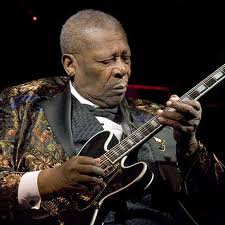
Politics on the Periphery:  Factions and Parties in Georgia, 1783-1806 (University of Delaware Press, 1986)

Posted in American History, Cold War, History, History graduate school, Research, Retirement, Uncategorized | Tagged , , , , | 4 Comments

Mississippi John Hurt, The Yoda of the Blues (Blues Stories, 11)

A Review of Philip R. Ratcliffe, Mississippi John Hurt: His Life, His Times, His Blues. Jackson: University Press of Mississippi, 2011.

This entry in the University Press of Mississippi’s “American Made Music” series is very interesting, for several reasons. The author, Philip Ratcliffe, a native of Great Britain, encountered jazz and folk Blues in the 1950s and the music of Mississippi John Hurt around 1970, four years after Hurt’s death. So interested did he become in his music that Ratcliffe began to collect Hurt’s records. A musician himself, Ratcliffe eventually (2003) made his way to the Mississippi John Hurt Festival in Avalon, where he met Hurt’s granddaughter, Mary Frances Hurt Wright, an organizer and leader of the foundation named after her grandfather, and received her blessing to pursue research for a biography of Mississippi John Hurt.

Mary Frances Wright considers her grandfather someone who “had a supernatural spirit that had a far greater effect on people than his music alone.” (x) Ratcliffe contends that Hurt is “one of the most influential and underrated American folk musicians,” but he is reluctant to label him a Delta Blues man, as some critics have. The author points out that Hurt was not actually from the Mississippi Delta and that “much of his music was not blues at all.” (xix) To Ratcliffe, Mississippi John Hurt had “a great deal more to offer the world than just his music”: he was “an incredibly warm, friendly, and spiritual man whose personal philosophy was a model that many of us today could wisely take a lesson from.” (xix) Another observer actually called Hurt a “saint,” while one of his managers, Dick Spottswood, described his personality as “understated, complex, and, behind a convenient rural black accommodating veneer, infinitely subtle.” (xix)

In a sense, then, Mississippi John Hurt comes across as a sort of “Yoda of the Blues,” a warm, gentle personality who imparted wisdom to all who would listen. Ratcliffe’s biography is a labor of love, but the author strives mightily to remain objective, and he succeeds, at least some of the time. Like a number of recent biographies of Blues performers, Ratcliffe’s study of Hurt compensates for the relative lack of primary sources by adopting a “life and times approach” and examining Hurt’s music in some detail. The results of his inquiries are uneven, but, overall, certainly worth reading.

The Delta's Yoda

The Delta’s Yoda

His Life

John Smith Hurt was born in Teoc, Mississippi, probably on March 8, 1892, and died in Grenada, Mississippi, on November 2, 1966. For much of his life, he lived in the vicinity of Avalon, which was just beyond the eastern edge of the Delta. His father, Isom Hurt, disappeared from John’s life perhaps six months after his birth, and his mother, Mary Jane, moved her family to Avalon, where she had acquired land. John’s mother bought him his first guitar around 1901, and he learned to play the instrument with help from a neighbor, William Henry Carson. Young Hurt dropped out of school after the fifth grade, at about age 13, to help on his mother’s farm, and he played guitar at local gatherings in his spare time.

In 1916, John Hurt married Gertrude Hoskins, the daughter of his brother Hardy’s wife. Their marriage lasted only until about 1922, when they separated, though without legally divorcing, which would cause problems later. In 1927, Hurt wed Jessie Lee Cole Nelson, and this union lasted until his death, although not without problems. Hurt was “discovered” in 1928, thanks to a recommendation from a white fiddle player with whom he had performed periodically; the results of this “discovery” were twelve sides recorded for the OKeh label. Hurt was paid the grand sum of $240 for his work, a lot of money for a Mississippi farmhand in those days.

As was the case for virtually every African American performer, the Great Depression blighted John Hurt’s prospects. Unlike many of his contemporaries, who joined the “Great Migration” out of the South, Hurt was content to remain in the Avalon area, doing farm work and other types of manual labor, including a stint with the Works Progress Administration (WPA), part of Franklin Roosevelt’s New Deal. Then, in 1963, again like other surviving black performers from the 1920s and 1930s, John Hurt was “rediscovered,” by a pair of white northerners. Tom Hoskins and Dick Spottswood made it their mission to ensure that Hurt had his chance to shine in the spotlight of the nation’s cultural “rediscovery” of the Blues.

Mississippi John Hurt enjoyed a brief bout of success, travelling to the Newport Folk Festival in 1963, 1964, and 1965, and recording albums for several labels. Meanwhile, his managers fell out, and, Ratcliffe suggests, this dealt the gentle Hurt a blow from which he never recovered; he died of heart problems in 1966.

His Times

Like other Blues biographers, Philip Ratcliffe adopts a “life and times” approach. In Hurt’s case, Ratcliffe really had little choice, for his subject was essentially “off the grid” between 1928, when he recorded his OKeh sides, and 1963, when he was “rediscovered.” To fill in this generation-wide gap, Ratcliffe pursues two different, but convergent, paths: he offers a skeletal chronology of events, both nationally and in and around Avalon, from the 1920s through the early 1960s (the Age of Jim Crow, the Great Mississippi River Flood of 1927, and the modern Civil Rights Movement, for example); and he uses census data, interviews, personal reminiscences, and even the Sears, Roebuck catalog to try to place Hurt, his family, and the village of Avalon in a larger context.

The results reminded me of the “community studies” of colonial New England towns being produced by historians like Philip Greven and John Demos when I entered grad school back in the late 1960s–interesting enough at first blush, but including way too much information once you had slogged through to the end. For instance, despite Ratcliffe’s treatment of it, the 1927 Mississippi Flood did not affect Avalon or John Hurt that much. As for the impact of Jim Crow, Ratcliffe insists, with minimal support from the sources, that in rural areas like Avalon, “race was a less immediate problem than poverty”; life in the hill country was “a little less harsh and confrontational than down in the Delta.” (37) (Which hardly made it a Garden of Eden.) John Hurt lived under the iron hand of Jim Crow for the first seventy years of his life, and he certainly did not survive for that long, let alone become well thought of by his neighbors, black and white, by being outspoken on African American civil rights. Even after his “rediscovery,” Hurt usually remained silent on that thorny issue.

Like a number of other recent studies on the Blues, Ratcliffe’s biography of Hurt offers a fascinating look at some of the whites behind the “Blues Revival” of the 1960s. Tom Hoskins, for example, was “a likable hippie with no permanent job, and a fondness for girls, alcohol, and drugs in no particular order” (121), yet he comes off better at Ratcliffe’s hands than do Dick Spottswood and Dick Waterman, both of whom, in Ratcliffe’s telling, were more instrumental than Hoskins in destroying the cocoon of support that had enabled Hurt to enjoy three years of fame following his “rediscovery.” This turmoil was increased even more when it was discovered after Hurt’s death that he had never legally divorced his first wife; this meant that the children of both his wives were eligible for royalties from sales of his albums. How all of this discord played out is the theme of the final chapter, which, while interesting in a voyeuristic sort of way, adds little to the reader’s understanding of Hurt or his career.

JMH2

His Blues

Any Blues fan who has listened closely either to his 1928 OKeh recordings or to the three albums from the 1960s that Vanguard released must wonder how much Mississippi John Hurt actually deserves to be called a “Blues man.” In wrestling with this question Philip Ratcliffe makes an important contribution, because one of the biography’s unifying themes concerns the type(s) of music Hurt played. Ratcliffe argues that, while ragtime was an important influence on the musical development of the young John Hurt, he “obviously was not concerned with classifying musical types.” (21) He liked to play what he knew and what was popular with folks in the neighborhood. According to Ratcliffe, some of Hurt’s repertoire, including his early Blues pieces, dated back to the early 1900s, or even before. A number of his songs were violent ones, which leads Ratcliffe to speculate on the sources of these pieces. (24-26) Still, an African American friend of Hurt’s, Jerry Ricks, probably put it best when he declared that many Blues lyrics, including those sung by Mississippi John Hurt, were “Fuck you music,” expressions “of suppressed anger at white domination.” (26)

Most importantly, Ratcliffe believes that Hurt’s guitar-playing style and his choice of songs had been determined by the time he was in his teens and “would never significantly change.” (26) Hurt “played what he liked; this comprised traditional secular and sacred music, popular tunes, ragtime, and blues.” (29) Hurt also apparently was not bothered by the charge that the Blues was the “Devil’s music.” According to Ratcliffe, Hurt easily reconciled the purported distinction between Gospel and Blues music, believing that they need not be mutually exclusive. The key, his biographer argues, was that, while Hurt played Blues music, he avoided living the Blues “lifestyle.”

According to Ratcliffe, while John Hurt was certainly aware of the emergence of modern Delta Blues, he “was not sufficiently taken with it” to “include it in his repertoire, sticking to the old timey tunes and his ragtime interpretations of other tunes that he liked.” (79) In fact, Ratcliffe points out that OKeh Records originally had planned to release Hurt’s 1928 recordings in their “Old Time Music” series, not their “race records [i.e., Blues]” releases, but then had a corporate change of mind. Following his “rediscovery,” Hurt was considered by the “Friends of Old Time Music” as a key force in bringing “traditional music to a wider audience.” (158)

In other words, Mississippi John Hurt, like a number of the other “rediscovered” Blues performers (e.g., Son House, Skip James), did not deviate from his earlier play list once he began performing again. He “danced with the girl that brung him,” out of the Jim Crow South and into the brave new world of the “Blues Revival” of the 1960s. What Blues fans heard at Hurt’s live performances between 1963 and 1966, and can still hear today on vinyl, compact discs, or downloads, is a varied collection of Blues, ragtime, Gospel, and popular tunes, performed on acoustic guitar, in a soft Mississippi accent wizened by decades of experience. Not for Hurt the pragmatic flexibility demonstrated by the likes of Big Bill Broonzy, Muddy Waters, and John Lee Hooker, who had escaped from the Delta earlier, during the Great Migration, and become “Blues men,” but, once the popularity of the Blues waned, had transformed themselves into “R & B Artists,” purveyors of the “Real Folk Blues,” whatever they believed would prolong their careers.

MJH3

So, was Mississippi John Hurt a “Blues man”? A Gospel singer? A master at playing whatever sort of music his audience liked? The answer to each question has to be “yes.” Perhaps the most accurate description of Hurt is that he was a “songster,” a singer of many kinds of songs, a term not usually associated with hard-core “Blues men,” but applicable in Hurt’s case. Anyone interested in the Blues in general; the life and music of Mississippi John Hurt in particular; the “Blues Revival” of the 1960s; or an “up-close and personal” look at life in the backwater Mississippi community of Avalon during the Age of Jim Crow, should read Philip Ratcliffe’s book. It is much needed, well executed, and definitive.

DISCOGRAPHY

Those interested in Mississippi John Hurt’s music can conveniently sample his performances before and after his “rediscovery”:

Mississippi John Hurt, Avalon Blues: The Complete 1928 Okeh Recordings. Sony Music Entertainment Inc., 1996. (CK 64986) The clarity of these 1928 recordings in Columbia’s fine “Roots ‘n’ Blues” series is amazing, as is the variety of musical genres represented.

Mississippi John Hurt: The Complete Studio Recordings. Vanguard Records, 2000. (181/83-2) The three albums in this collection, recorded by Hurt following his “rediscovery,” include new versions of about half the songs on the Okeh sides. Despite the improved recording technology available by the mid-1960s, the acoustic guitar-powered Hurt sounds about as he did in 1928, largely because, unlike Skip James or Son House, a powerful, distinctive singing voice had never been central to Hurt’s reputation. The advantage of this multi-disc set is that it reveals an even broader variety of tunes performed by Hurt throughout his career.

* * * * * *

For those interested in reading more of my reflections on history, here are links to my books on the subject:

REABP CoverRancorous Enmities and Blind Partialities:  Parties and Factions in Georgia, 1807-1845 (University Press of America, 2015)

Pursuit Cover

In Pursuit of Dead Georgians:  One Historian’s Excursions into the History of His Adopted State (iUniverse, 2015)

Politics on the Periphery:  Factions and Parties in Georgia, 1783-1806 (University of Delaware Press, 1986)

Posted in Age of Jim Crow, Big Bill Broonzy, Civil Rights Movement, Delta Blues, History, John Lee Hooker, Mississippi John Hurt, Muddy Waters, Son House, Southern History, The Blues | Tagged , , , , , , | 5 Comments

Teaching History “Backwards” (History Lesson Plans, 1)

[NOTE: Sometimes teaching ideas come from odd sources. In 2007, for example, I asked the principals of our elementary, junior high, and high schools to reflect in the columns of Atlanta’s Finest Prep School’s (AFPS’s) History Department newsletter on the place of History in their school’s curriculum. One of these responses struck a chord with me, though I could not act on it for a year or so.  This was my response.]

* * * * *

Ever since our junior high school principal, a member of the History Department but not a historian (he taught Economics), wondered, in the September 2007 issue of the department newsletter, what it might be like “to teach U.S. history backwards,” I’d been tempted to try it. Now, messing with chronology in a senior Advanced Placement course would surely be frowned upon, so using my AP U.S. History curriculum to test his idea was out of the question. And, doing so in the required freshmen and sophomore History offerings might miss the point altogether, since the importance of chronology was one of the essentials of the study of History that the courses was supposed to inculcate. The solution seemed to lie in an elective course for juniors and seniors, The History of the Modern American Civil Rights Movement, that I taught every other year of so.

I finally got my chance in the Spring semester, 2009. I had already taught Civil Rights several times, but I had never been able to move beyond the assassination of The Reverend Doctor Martin Luther King, Jr., in Memphis in 1968, for reasons both personal and related to the fact Civil Rights was a one-semester course. One of the first decisions I made after inheriting the Civil Rights course was that I would spend a lot of time with the “Age of Jim Crow.” I was convinced that, unless modern Americans, like my junior and senior students, understood the depth and breadth of the system of racial segregation imposed upon African Americans from the late nineteenth century through the mid-1960s, they could not truly grasp the significance of the accomplishments of King and others in the Movement.

Absent a thorough grasp of the historical context, in other words, King’s career could be–and sometimes had been–reduced to little more than a picture of the man on a postage stamp, one of his slogans on a bumper sticker, or a boiler plate, full-page ad for a retail sale on his national holiday. In the aftermath of the election of Barack Obama to the Presidency in 2008, however, members of the “Commentariat,” purveyors of opinion pieces in the local, regional, and national press, had a field day trying to explain how the mixed-raced Senator from Illinois had managed to secure election to the nation’s highest office and what that meant in the context of the nation’s long struggle to secure civil rights for all its citizens. Moreover, these questions would be even more important in January 2009, when Obama took the oath to defend the Constitution as President of the United States.

* * * * *

So, I wondered, what if we began our course, in January 2009, not in the post-Civil War South but with a unit on the significance of Obama’s victory in November 2008? We might consider reactions to Obama’s election from several politically-savvy journalists across the ideological spectrum, paying close attention to the historical forces they cited to explain the outcome, as well as how they interpreted the significance of his inauguration. Then–and only then–would we turn to the late nineteenth century, to examine the creation of the Jim Crow system, how it was enforced, and why it lasted so long. Grounding the study of the Modern Civil Rights Movement between the election of Barack Obama and the origins and development of Jim Crow, in other words, might enable my students better to appreciate the achievements of the Movement, its leaders, and its thousands of heroic “foot soldiers.”

The op-eds my students read, while focusing on Obama’s campaign and its triumphant outcome, also discussed the historical context of those events, especially the achievements of the Civil Rights Movement over the last half century, in some detail, but references to the pre-1960s system of segregation tended to be pretty vague. Consequently, although my charges grasped that the new President’s skin color was at the core of the excitement, and that he was in some way an “heir of the Civil Rights Movement,” exactly what that meant was far from clear to them.

Still, we did have stimulating discussions about the op-eds, even–especially–after every student in the class rolled his/her eyes while evaluating one dewy-eyed columnist’s description of Obama’s election as proof that we were living in “a post-racial America.” Call them cynical, but apparently none of my Civil Rights students bought into that particular thesis (and, in view of what has happened since, this restores my faith in the wisdom of at least some of the nation’s future leaders).  Well, if Barack Obama’s election did not herald an America in which race made no difference, why were so many people so excited?  Rather than provide an answer at the beginning of the course, I was content when my students formulated the question.

* * * * *

With the op-ed exercise as background, the focus of the course shifted to the Jim Crow era, in order to establish the post-Civil War context of the race issue. To begin, we looked at what, in my opinion, is one of the best efforts by Hollywood so far to examine the burden of race from the Civil War through the early 1960s, “The Autobiography of Miss Jane Pittman” (1974), based on the novel by Ernest J. Gaines. In doing this, I hoped both to provide an engaging, if “Hollywood-ish,” overview of what the rest of the course would cover and encourage the students to consider how white and Black characters were portrayed in the movie, with an eye towards examining stereotypes. These goals were encapsulated in an essay that served as the “test” for that unit.

After finishing “Miss Jane Pittman,” we spent several weeks in the Jim Crow South, using the first chapter in our primary text, Harvard Sitkoff’s The Struggle for Black Equality, and episodes from several video series, including “The Rise and Fall of Jim Crow,” “Promised Land,” and “Eyes on the Prize,” further to establish the historical context of the “Age of Jim Crow.” We also read and discussed two memoirs, Melton McLaurin’s Separate Pasts: Growing Up White in the Segregated South, and Anne Moody’s Coming of Age in Mississippi, to see how Jim Crow operated at ground level, from both white and Black perspectives. Finally, as part of this unit, I introduced my students to the Blues, a genre of African American music that illuminates, sometimes in garish ways, the social and economic situations of those who did the “heavy lifting” in the late-nineteenth century South.

* * * * *

Thereafter, I tried to work my way as far forward as I could, to show my students just how powerful a factor race has been in American history. By the time we reached the Brown v. Board of Education of Topeka decision (1954) and the subsequent Montgomery Bus Boycott, the class seemed to understand more clearly the obstacles faced by African Americans before the Civil Rights Movement began. Given that background, they found it almost incredible that Barack Obama could have been elected President only a half century later.

We next examined events from the Montgomery bus boycott through the assassination of Dr. King, using the Sitkoff text, Moody’s memoir, and “Eyes on the Prize.” My students were impressed by King’s powerful rhetoric; stunned by the courage of Anne Moody and other Movement activists; and, by turns, speechless and infuriated by the violence routinely meted out to demonstrators by southern whites and the pronouncements by local officials attempting to justify it.  Some of this anger was reflected in my students’ desire to learn more about Malcolm X, whose fiery rhetoric seemed to touch something deep within them; I was able to oblige, using another fine PBS documentary, “Malcolm X: Make it Plain,” thus digging still another “post-hole” in our quest to come to terms with the burden of race in American history.

* * * * *

The climax of this attempt to teach the history of the Civil Rights Movement “backwards” came with the term project (the substitute for the final exam).  First, I had each student interview an older family member about a) his or her memories of the Civil Rights Movement and b) views on the importance of the issue of race in modern times. One thing that became obvious as we discussed these interviews was the difference between the perceptions of grandparents and parents about the Civil Rights Movement. Most of my students’ parents were born in the early 1960s, which meant that their memories of the Movement ranged from vague to non-existent. On the other hand, their parents, my students’ grandparents, had lived through those stormy times; had much more vivid memories and impressions of the Movement and its struggles; and passed those on to their children, who, in turn, conveyed them to their children, my students.

Building on this “oral history research project,” I then had the students incorporate what they had learned during the semester, asking them to comment critically on their sources’ reflections on the significance of race in modern America, as part of their own, separate analysis. The most interesting outcome of this segment of the term project was how students were able to understand the responses of those they’d interviewed in the context of the long struggle for African American civil rights. The issue was no longer dry and abstract; instead, it had become immediate and personal.

The results suggested that, despite my decision to entitle the initial unit, on the election of Barack Obama, as “The End, for Now,” interest in the Civil Rights Movement, and the issue of race, was going to be with us for a while. And I have seen nothing since I retired in May 2010 to change my mind. In fact, with the outrage of the “birthers,” the rise of the so-called “Tea Party,” and all those not so subtle slurs about President Obama being some sort of wild-eyed Kenyan Socialist, I am even more convinced that understanding the burden of race is essential if one hopes to come to terms with American history over the last century and a half.

SUGGESTED READING

Branch, Taylor. America in the King Years (3 vols.). New York: Simon & Schuster, 1988-2006.

Chafe, William, et al. Remembering Jim Crow. New York: The New Press, 2001.

Egerton, John. Speak Now Against the Day: The Generation Before the Civil Rights Movement in the South. New York: Alfred A. Knopf, 1994.

Lemann, Nicholas. The Promised Land: The Great Black Migration and How It Changed America. New York: Vintage Books, 1991.

McLaurin, Melton A. Separate Pasts: Growing Up White in the Segregated South (2nd ed.) Athens, Ga.: University of Georgia Press, 1998.

Moody, Anne. Coming of Age in Mississippi. New York: Dell Publishing, 1968.
Sitkoff, Harvard. The Struggle for Black Equality. New York: Hill and Wang, 2008.

Wilkerson, Isabel. The Warmth of Other Suns: The Epic Story of America’s Great Migration. New York: Random House, 2010.

* * * * * *

For those interested in reading more of my reflections on history, here are links to my books on the subject:

REABP CoverRancorous Enmities and Blind Partialities:  Parties and Factions in Georgia, 1807-1845 (University Press of America, 2015)

Pursuit Cover

In Pursuit of Dead Georgians:  One Historian’s Excursions into the History of His Adopted State (iUniverse, 2015)

Politics on the Periphery:  Factions and Parties in Georgia, 1783-1806 (University of Delaware Press, 1986)

Posted in Age of Jim Crow, American History, Books, Civil Rights Movement, History, Research, Southern History, Taylor Branch, Teaching, Uncategorized | Tagged , , , , , , | 8 Comments