Georgia and the American Revolution, V: The Divided Whigs of Revolutionary Georgia, 1775-1783 (In Pursuit of Dead Georgians, 16)

[Note: This  is the final post in a series on the American Revolution in Georgia.  For earlier ones–Part I; Part II; Part III; Part IV.  A list of suggested readings follows the end of this post.  

What follows is the substance of a lecture delivered at Oxford College of Emory University in Covington, Georgia, at the behest of my best friend in graduate school, the late Dr. Arnold M.  Shankman, who had fetched up there after earning his doctorate.  It is based on the first chapter in my 1973 dissertation.]

* * * * *

In 1763, Georgia hardly seemed ripe for revolution.  The colony depended on British troops to control the Creek Indians on its western frontier. The youngest colony in British North America had no long tradition of self-government. Crown officials in Georgia were paid directly by Parliament, so the colony’s House of Assembly lacked leverage that control of the purse strings provided lower houses in other British colonies. Finally, the colony’s royal governor, Sir James Wright, was a popular, conscientious public servant who owned 24,000 acres of land there.  Wright understood Georgia’s problems, took an interest in her welfare, and had a stake in her future.

Yet, even a colony as seemingly insulated as Georgia could not remain oblivious to repercussions of British imperial policy after 1763. The House of Assembly protested the Sugar and Stamp acts, but, unlike other colonies, did not question Parliament’s power to levy taxes; rather, the Assembly claimed that the colony’s meager resources could not support the additional financial burden. Aided by “outside agitators” from Charles Town, friends of colonial liberty gradually increased their influence in Georgia until, by September 1775, the Whig faction had taken over most of the functions of the provincial government.  Governor Wright departed in March 1776.

The initial success of Georgia’s revolutionary movement resulted from efforts by a number of individuals working together in uneasy harness. Even before Wright sailed for Britain, events had been set in motion that would put Georgia’s new “governors” at each other’s throats. It is but slight exaggeration to say that, in Georgia during the American Revolution, Whigs devoted more time to squabbling among themselves than to battling the forces of King George III.

* * * * *

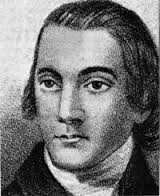
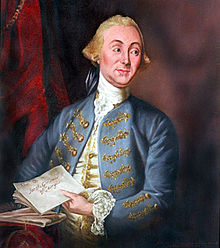
Georgia’s new leaders were inexperienced, but supremely confident about being able to guide the colony until independence was attained.  Georgia Whigs also were ambitious, which created problems, especially for two men:   Button Gwinnett, leader of the more radical faction,  a planter from St. John’s Parish with a talent for shady financial practices and political maneuvering; and Gwinnett’s main rival, Lachlan McIntosh, a Scot from St. Andrew’s Parish, an early adherent to the patriot ranks who attracted more conservative Whigs to his support.

Button Gwinnett (New Georgia Encyclopedia)

Button Gwinnett (New Georgia Encyclopedia)

In 1775, Gwinnett organized a radical pressure group, the Liberty Society, to rouse outlying districts against obstructionists in and around Savannah.  Gwinnett’s actions to prod the Provincial Congress and whip up public opinion on behalf of the patriot cause angered more cautious Georgians, who believed the radicals were motivated by “Ambition Avarice & their own circumstances.”

In January 1776, Gwinnett was appointed commander of Georgia’s first Continental battalion. No sooner had he been named colonel than he resigned and was promptly elected to the Continental Congress. Lachlan McIntosh was chosen to replace Gwinnett as colonel of the Georgia Continentals.

Six months later, having signed the Declaration of Independence–and thereby attaining immortality, at least among collectors–Button Gwinnett returned to Georgia, bringing word that the state’s Continental contingent was to be expanded to a brigade, so a brigadier general must be chosen.  Before leaving Philadelphia, Gwinnett had been maneuvering to secure the post for himself, and, even if unaware of this ploy, more conservative Whigs still suspected he was seeking some form of political or military preferment.
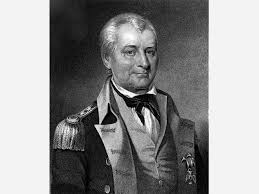
Gen. Lachlan McIntosh (New Georgia Encyclopedia)

Gen. Lachlan McIntosh (New Georgia Encyclopedia)

Regardless of Gwinnett’s machinations, Colonel McIntosh was promoted to brigadier of the Georgia Continentals. Relations between the two men deteriorated rapidly following McIntosh’s promotion.  Yet, Gwinnett’s frustrated military ambition was not the sole cause of this.

The conduct of two of the General’s brothers also was at issue.  Lieutenant-Colonel William McIntosh commanded a troop of horse tasked to protect the colony’s frontiers against Tories and Native Americans. Following complaints from frontier settlers that his cavalry was not doing its job, William McIntosh took a leave of absence from his command and eventually resigned.

Another of the General’s siblings, George McIntosh, a member of the Georgia Council of Safety, became involved with a shipment of rice that was sold for supplies that eventually wound up in St. Augustine, headquarters of the British garrison in East Florida, though McIntosh denied any part in the affair.

In February 1777, Button Gwinnett was elected president of the Council of Safety, but George McIntosh refused to sign his commission.  Later that month, Gwinnett, acting on an intercepted letter implicating George McIntosh in shipping  supplies to St. Augustine, ordered his arrest.

Not surprisingly, General Lachlan McIntosh viewed the charges against his brothers as part of a plot by Gwinnett to discredit him. Unfortunately, the bad feelings between the colony’s political and military leaders ratcheted up when they were compelled to work together to plan an invasion of Florida, and they were asked to return to Savannah.

* * * * *

In 1777, Georgia adopted a new constitution providing for election of a Governor by the legislature; Button Gwinnett offered for the post but was not chosen. Yet, the same session of the Assembly that had rebuffed Gwinnett’s gubernatorial aspirations supported him in his festering dispute with General McIntosh.

During an investigation of the East Florida fiasco, Lachlan McIntosh reportedly called Button Gwinnett “A Scoundrel & Lying Rascal.” Gwinnett challenged the General to a duel; they  met on May 16, 1777.  Both men fell, and Gwinnett’s wound proved mortal.

After Gwinnett’s death, the Liberty Society launched a coordinated campaign to have Lachlan McIntosh removed from command of Georgia’s Continental forces. The Society was supported by the Assembly, which also chose two of the Society’s members, Joseph Wood and Edward Langworthy, to represent Georgia in the Continental Congress.
George Walton (New Georgia Encyclopedia)

George Walton (New Georgia Encyclopedia)

General McIntosh was ably defended in Georgia by John Wereat and in Congress by George Walton of Georgia and Henry Laurens of South Carolina. Mainly through the efforts of Walton, General Washington agreed to transfer McIntosh northward in the summer of 1777.

Although factional strife subsided following McIntosh’s departure, the fortunes of war began to run against the state.  Savannah was captured by the British in 1778, and Governor Wright returned, re-establishing royal government in Georgia. The state’s Whig government found itself on the run, and by mid-1779, the patriot cause was at low ebb.

General McIntosh was ordered back to Georgia, where he found his enemies waiting. In a stunning reversal, the Liberty Society had a new leader, George Walton, formerly one of General McIntosh’s most effective defenders in Congress.
John Wereat (New Georgia Encyclopedia)

John Wereat (New Georgia Encyclopedia)

By the end of 1779, two extra-legal bodies competed for the dubious distinction of “governing” the small portion of Georgia (Augusta and vicinity) remaining under Whig control. One, the “Supreme Executive Council,” was presided over by John Wereat,  staunch supporter of General McIntosh and leader of the state’s conservative Whig faction. The other was a rump Assembly that elected George Walton as both Governor and delegate to Congress.

Governor Walton, Council president Richard Howley, and George Wells, upcountry leader of the Liberty Society (and Gwinnett’s second during his fatal encounter with McIntosh), did all they could to undermine public confidence in Wereat’s Supreme Executive Council, charging that it was an illegal body composed of Tories. They also sent documents to Congress calling for McIntosh’s removal from command, claiming that state and Continental troops in Georgia were dissatisfied and refused to continue serving under him. On the strength of this “evidence,” including an address from the Georgia Assembly supposedly signed by Speaker of the House William Glascock, Congress relieved General McIntosh from command in February 1780.

For the next three years, McIntosh strove to clear himself of the charges in Walton’s letter to Congress. Speaker Glascock denied signing the Assembly address, labeling his purported “signature”a flagrant forgery. While a prisoner of war at Charles Town, McIntosh collected affidavits from other officers refuting charges against him.  Freed in an exchange of prisoners in the summer of 1781, McIntosh carried the affidavits to Philadelphia, where, despite the presence of George Walton and Richard Howley in Congress, he was reinstated  on active duty.

McIntosh next shifted his efforts for vindication to Georgia.  On February 1, 1783, the Assembly, acting on evidence compiled by an investigating committee, declared that Speaker Glascock’s signature on the Assembly’s anti-McIntosh petition had been a forgery and that charges brought against the General by Walton in 1779 had been without foundation.

The Assembly also instructed the attorney-general to take legal action against those involved in defaming General McIntosh’s character, but no prosecution was undertaken.  One day before the issuance of these instructions, the Assembly had elected as Chief Justice of Georgia, and the jurist who would preside over legal action on McIntosh’s behalf, none other than George Walton!

* * * * *

The clashes between Button Gwinnett and Lachlan McIntosh and between George Walton and McIntosh were only the most spectacular in a long string of incidents during the Revolution in Georgia. Naturally, Whigs seldom lost sight of the goal all claimed to seek, independence. In trying to explain their inability to unite to prosecute the war effort, however, factional leaders arrived at strikingly different conclusions.

Gwinnett and his supporters asserted that one of the principles for which patriots were fighting was civilian control over the military; soldiers like McIntosh claimed civilians were attempting to hamstring the army. Radical Whigs accused conservatives of toryism, while conservatives charged that radicals were more interested in securing property confiscated from Tories than in defeating the British.

The opposing Whig factions also used different weapons. The radicals, who believed they were in tune with “the people,” made their case against conservatives like Lachlan McIntosh and John Wereat primarily through petitions signed by “respectable” citizens or military units whose commanders supported the radicals, which led McIntosh to claim that Gwinnett and his supporters were undermining army morale.  Conservative Whigs sought shelter in the state judiciary, using grand jury presentments to denounce the “greed” of radicals towards lands and other possessions of more affluent Loyalists and moderate Whigs.

When the last British transports sailed from Savannah in July 1782, the future of Georgia seemed bright. All good Whigs could now join ranks to solve common problems.  Yet, wartime factional strife had been bitter; postwar co-operation would depend on how quickly they resolved issues that divided them during the war.

The only question settled by the termination of hostilities was control of the military.  Other sources of wartime friction remained: the fate of Loyalists; the disposition of their property; and the Constitution of 1777, which conservative Whigs felt vested too much power in Georgia’s one-house legislature.

Many of the principal Whig leaders had passed from the scene by 1783, but there would be no shortage of younger men hoping to replace them. When this new generation turned to the problems of a war-shattered frontier state, they adopted many tactics developed and tested by the factious Whigs of the Revolutionary era.

SUGGESTED READING (Series)

Abbot, William W.  The Royal Governors of Georgia (Chapel Hill, 1959).

Cashin, Edward J.  “‘The Famous Colonel Wells’:  Factionalism in Revolutionary Georgia,” Georgia Historical Quarterly 58 (Supplement, 1974):  137-156.

Coleman, Kenneth, General Editor.  A History of Georgia, 2nd edition (Athens, Ga., 1991).

_____________.  Colonial Georgia (New York, 1976).

_____________.  The American Revolution in Georgia, 1763-1789 (Athens, Ga., 1958).

Davis, Harold E.  The Fledgling Province:  A Social and Cultural History of Colonial Georgia (Chapel Hill, 1976).

Jackson, Harvey H. “Consensus and Conflict:  Factional Politics in Revolutionary Georgia, 1774-1777,” Georgia Historical Quarterly 59 (Winter, 1975):  388-401.

_____________. Lachlan McIntosh and the Politics of Revolutionary Georgia (Athens, Ga., 1979).

Killion, Ronald G., and Charles T. Waller.  Georgia and the Revolution (Atlanta, 1975).

Lamplugh, George R.  “‘To Check and Discourage the Wicked and Designing’: John Wereat and the Revolution in Georgia,” Georgia Historical Quarterly 61 (Winter, 1977): 295-307.

_______________

For those interested in reading more about Georgia History, here are links to my books on the subject:

REABP CoverRancorous Enmities and Blind Partialities:  Parties and Factions in Georgia, 1807-1845 (University Press of America, 2015)

Pursuit Cover

In Pursuit of Dead Georgians:  One Historian’s Excursions into the History of His Adopted State (iUniverse, 2015)
Politics on the Periphery:  Factions and Parties in Georgia, 1783-1806 (University of Delaware Press, 1986)

Posted in American History, American Revolution, Georgia History, Historical Reflection, History, Research, Southern (Georgia) History, Southern History, Teaching, Uncategorized | Tagged , , , , , , , | 2 Comments

Testifyin’ at the PDC (Be True to Your School, 2)

[NOTE:  Whether a teacher wishes it or not, the longer one remains at a school, the more he or she is viewed as a representative of the institution. Obviously, faculty members are expected to support the school and its mission, at least in general, but longevity can place special burdens on some of them. This is the second of two posts illustrating public occasions where I attempted to describe the arc of my almost forty year career at the same school (for the first, go here).

This time, the venue was the yearly dinner for the school’s “big givers” to both the Annual and Capital funds, held at “the PDC,” a plush “town club.”  My role in the festivities had an odd origin: our president included a query in his “welcome back letter” at the opening of the school year, asking interested faculty members to respond to the question, “Why am I a Teacher [at this school]?”, ostensibly because he needed the information as part of a presentation to the Board of Trustees.  I e-mailed him a couple of paragraphs, then forgot about it.  A few weeks later, though, I learned that the president would like me and a representative from the junior high school faculty to give brief talks on that same subject at the dinner.

The PDC was a wonderful venue for such an event, and a place that was well beyond my financial reach. But, with retirement staring me in the face and with the opportunity on offer for the Willowy Bride and me to dine at the PDC, I agreed to speak. In the following version of that presentation, I refer to the institution where I taught under its “nom de blog,” “Atlanta’s Finest Prep School” (AFPS), and the university where I earned my PhD as “My Old Graduate School.”  I also have removed the names of colleagues referred to in the original talk, except for one, designated here as “DTL,” whose identity will be obvious to all long-time members of the AFPS family.]

* * * * *

I was thinking just the other day that I have now been on the AFPS faculty for more than a generation. I was one of, if not the, last teacher hired by our founding president, in whose honor tonight’s dinner is named, signing on the dotted line in the spring of 1973, just before he retired. I joined the Boys School faculty, where my colleagues included a number of legendary teachers, many of whom have by now retired (and some have died), along with up-and-coming “youngsters” who, it’s hard to believe, are today eligible for membership in AARP and are, like me, contemplating retirement.

The only academic department teaching co-ed classes in the fall of 1973 was History, where I was the newest member.  I’m sure lots of folks were holding their breath to see if that “radical experiment” would work. After all, the English Department had already tried it, only to see the project crash and burn. There was no junior high building: 7th and 8th grade boys were housed in the basement of the “Boys School”, while their female counterparts resided on the top floor of–wait for it–the “Girls School.”  As for the 6th grade, it was still part of the Elementary School.

Obviously, that was a long time ago. How long ago, you ask? Well, I now regularly teach the children of my former students. And, those of you who were at this affair last year might remember one of the speakers, a member of our high school English Department–he had been in my AP American History class during his senior year at AFPS! So, despite my Delaware roots and lack of a southern accent, I am from around here, at least in AFPS terms.

But, as DTL, one of the “Boys School’s” legendary teachers, used to say, I digress.  I’ve been asked to speak to you about what it’s been like to teach at AFPS for so long, and I am very glad to do that. Simply put, I am a “teacher” because I wound up at a school that values teaching and finds ways to encourage and recognize those who pursue it.  I had just completed five years of study to become a History “professor,” but, alas, there were no “History professor” jobs available when I finished my degree.  Hence, I signed on at AFPS as a stop-gap measure until, as I reminded myself frequently, “something better comes along.” Here it is, thirty-five years later, and I’m still waiting for that elusive “something better” to show up.  It had better hurry!

Having trained as a “professor,” I was well equipped to “profess,” especially in American History, for, while serving as a teaching assistant at My Old Graduate School, I had written a textbook (actually, many separate lectures, but “textbook” sounds more impressive) and even taken a course called “Introduction to College Teaching.”  Thus, for my first couple of years here, I pretty much lectured, or “professed,” in the classroom exclusively.

The transition from “professor” to “teacher” took several years, but a “teacher” I became–and a teacher I remain. Now, there is lots more to the job than what I “teach” in the classroom, and that part of the transition also proved challenging.  It’s learning who the kids are in each of my classes, putting names and faces together (a task that has become increasingly difficult as I’ve gotten older, but the less said about that, the better); establishing positive relationships with parents; meeting classes four days a week and holding them accountable, all the while trying not to become boring or predictable; getting to know my charges outside the classroom; fulfilling various extracurricular responsibilities; and working with colleagues to put the best interests of the students, and of the school, ahead of our own, sometimes narrower, ones.

There is no question that AFPS values teaching.  I don’t mean simply that the school has worked diligently over the years to ensure that its faculty is adequately compensated, although it has.  AFPS also values teaching in the sense that it hires good people and encourages them to develop their gifts as teachers, in the classroom and out. In recent years we have built an impressive mentoring program for new teachers, combining “education course” work with practical guidance from experienced AFPS teachers. One of the aspects of my job I’ve enjoyed most has been the chance to work with young teachers, some of whom might, if they stay long enough, represent the future of the school.

This school enables teachers to grow in many ways. In my own case, for example, funds from the school’s professional development budget allowed me to study theology for four years, which gave me the opportunity to teach some freshman Old Testament (not something, I might add, for which there was a lot of competition). Our sabbatical program was the envy of many independent schools, and not a few small colleges. When I decided to undertake research on a book, the school awarded me a sabbatical to help support the project.

I’ve always been interested in curriculum, and over the years I’ve been encouraged to develop new courses and to refurbish established ones. The only other administrative position I ever actually wanted during my time here was head of the History Department, and I eventually got the chance to do that.  One of my goals while department chair was to broaden our curriculum, to introduce more extensive coverage of non-western history and better reflect the increasingly multicultural world in which our graduates would live.

Think about this: what makes a great school? Is it able students, impressive buildings, a supportive administration, a wide range of available educational technology?  To some extent, sure, and this school certainly has all of those. But how many of you have fond memories of particular buildings on campus? Can you recall the make and model of the computer or calculator you used?

I’ll bet that, when you think about your years at AFPS, among the things you remember are at least a few of your teachers, those you recall fondly and, who knows, perhaps some of the other sort. Think about the magnitude of the task ahead, when the time comes, as it will all too soon, to replace faculty members of my generation with younger folks willing to enlist for the long haul (something that our president has said several times is at the top of his to-do list).

This is where all of you–all of us really–come in. I want to thank you for all you have done, for all you are doing, and, most importantly, for all I trust you will do to help continue the tradition of faculty excellence that has characterized this school since its inception.

Looking back on it, I wouldn’t trade my time at AFPS for a career at any other institution I can think of, even a college. This is indeed a special place.

* * * * * *

For those interested in reading more of my reflections on history, here are links to my books on the subject:

REABP CoverRancorous Enmities and Blind Partialities:  Parties and Factions in Georgia, 1807-1845 (University Press of America, 2015)

Pursuit Cover

In Pursuit of Dead Georgians:  One Historian’s Excursions into the History of His Adopted State (iUniverse, 2015)

Politics on the Periphery:  Factions and Parties in Georgia, 1783-1806 (University of Delaware Press, 1986)

Posted in Education, Historical Reflection, History, Prep School, prep school teaching with a PhD, Teaching, WP Long Read | Tagged , , , | 4 Comments

“The Blues Had a Baby” (Blues Stories, 18)

A Review of John Milward, Crossroads: How the Blues Shaped Rock ‘n’ Roll (And Rock Saved the Blues). Boston: Northeastern University Press, 2013.

“’The blues had a baby,’ Muddy Waters sang, ‘and they called it rock and roll.’ Yeah, and once the brat began bringing home a paycheck, it looked as though he’d boot the old man out of the house.” (Francis Davis, The History of the Blues, p.209)

[Northeastern UP]

[Northeastern UP]

[NOTE:  It turns out that, while I’ve been writing about the history of the Blues over the past few years, I’ve also been circling around the rise of rock ‘n’ roll. I can’t say that I’m surprised, because early on I ran across the Muddy Waters quote cited above. But the question has always been, for me at least, what does it mean to say that rock ‘n’ roll was a “baby” of the blues: Are we talking “founding fathers,” a paternity suit, or some combination of the two? That’s what journalist and music critic John Milward seeks to answer in this volume.]

* * * * *

Milward begins with a scene in his living room in 1967, when he and a friend put B.B. King’s album, Live at the Regal, on the turntable and discovered the blues, which, he assumes, is the way numerous denizens of the ’60s were introduced to that musical genre. This introduction is typical of the book—anecdotal, light on analysis, but still interesting, not least because Milward never loses sight of how the “blues revival” of the 1960s affected old blues men, how those veteran performers helped shape the future of rock ‘n’ roll, and how their careers were reborn, and briefly prolonged, as a result.

Columbia Records

Columbia Records

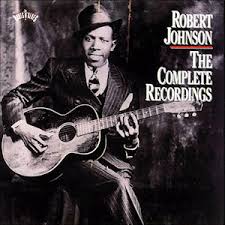
For example, in his “Prelude,” Milward traces the career of Robert Johnson from his reputed meeting with the Devil “at the Crossroads” near Clarksdale, Mississippi, through the release by Columbia of Robert Johnson: The Complete Recordings (1990), which transformed him, retrospectively to be sure, “into both the last of the great Delta bluesmen and America’s first rock star.” (xv) While Milward discusses many later “rock stars,” he repeatedly emphasizes that their success—and the “benefits” it brought (celebrity, of course, but let’s not forget “sex, drugs, and rock ‘n’ roll”)—consumed them, whereas Johnson had been dead for over half a century when his epochal box set was released and made him “rock star.” As the Rolling Stones put it, “You can’t always get what you want, but you get what you need”–or maybe not.

* * * * *

After World War II, the efforts of folklorist/musicologists like John Lomax and his son Alan, and of dedicated record collectors like the so-called “Blues Mafia,” who scoured homes and shops in small southern towns in search of blues records, kept a fading musical form alive. Moreover, in the late 1940s and early ‘50s, records by blues performers like Muddy Waters, Howlin’ Wolf, B.B. King, and John Lee Hooker made their way to England, where they attracted young fans who, in a grim postwar world, were looking for music that “spoke to their condition,” seeking a way up and out.

These youngsters, attracted by the music, lyrics, and performance styles of American blues artists, did their best to re-shape songs by African American musicians to attract European teenagers—and, subsequently, during the so-called “British Invasion” of the U.S. in the 1960s, American teens as well, during a prosperous postwar period that made affluent adolescents objects of desire for American corporations. And, at least in Milward’s view, this came at a propitious moment, because American teens were largely being exposed to “neutered” versions of rhythm and blues songs performed by white singers. By the late ’50s, Milward argues, rock had already lost much of its vigor, with Elvis in the Army; Buddy Holly the victim of a plane crash; Chuck Berry and Jerry Lee Lewis caught up in sex scandals. Moreover, the blues was becoming less popular, with both blacks and whites. (39)

Most of those young Brits were attracted by the guitar skills of American blues men, especially the modifications made when guitars were electrified as part of the post-World War II “Chicago Blues.” These adaptations came to characterize groups like the Rolling Stones, the Yardbirds, and Cream. More importantly, at least one member of each group became a “guitar hero” whose skill and charisma attracted huge numbers of American teenagers to rock concerts and record stores.

* * * * *

Milward makes an important distinction early on concerning race as the impetus for much of postwar blues music and its blues/rock successor: “In the United States, issues of race inevitably challenged white musicians who chose to play the blues. In Britain, the blues was a musical choice that, like folk music in the States, owed more to bohemian instincts and adolescent rebellion than race.” Milward cites in support of this distinction Eric Clapton’s (to me, dubious) claim that he “didn’t even recognize the racial aspect of the blues.” (40)

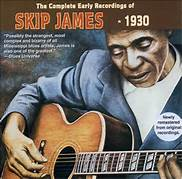
Skip James

In Milward’s view, two things had occurred simultaneously by the early 1960s: American fans “rediscovered” elderly blues men, mostly off the grid since the 1930s, but their “rediscovery” occurred in the context of what was called “folk music,” not the blues; and, in Britain, young musicians organized bands that recognized how skillful those old performers had been, especially on the guitar. As a result, numerous ancient bluesmen, like Skip James, Mississippi John Hurt, and Son House, were being steered, usually by youthful white managers, to the Newport Folk Festival and, ultimately, to college campuses, recording studios, and television shows. At the same time, neophyte “guitar heroes” from Britain were headlining so-called “British Invasion” groups in American concert venues, and devoting their spare time to locating older blues men, praising them as “role models,” and arranging to have them open for them, either in this country, in Europe, or both.

Bob Dylan [Columbia Records]

Bob Dylan [Columbia Records]

Although Robert Johnson’s music supposedly taught Bob Dylan that the blues and folk music were “undistinguishable” and “both genres embraced a tradition in which one song was built upon another,” (30) Dylan still had a single rule for guitarists in his band: “I don’t want any of the B.B. King shit, man.” (69) Milward accepts Geoff Muldaur’s exaggerated assertion that the Paul Butterfield Blues band was more important than Dylan’s controversial appearance with an electric guitar at Newport in 1965, because, thanks to the stellar talent of Butterfield’s lead guitarist, Michael Bloomfield, “there would be two hundred thousand blues bands in the world based on that model”— can you say, “Guitar Hero, the Sequel”? (73)

* * * * *

Eric Clapton [amazon.com]

Eric Clapton [amazon.com]

After bringing old blues performers, folkies, “British Invasion Bands,” and American blues/rock groups together, Milward turns to their achievements—and their excesses—which gives some of his later chapters a strongly elegiac quality, as one stellar blues/rock performer after another learned the tragic lesson, “be careful what you wish for.” Even those who didn’t die from it experienced the perils of addiction (Eric Clapton, Gregg Allman, Keith Richards, Peter Green), while others were unable to stop themselves from falling over the cliff of rock ‘n’ roll fame into musical martyrdom (Brian Jones, Janis Joplin, Jimi Hendrix, Stevie Ray Vaughan, Duane Allman, Paul Butterfield, Michael Bloomfield). Once more, we get a hard-to-swallow rationalization from Eric Clapton: “We’re all hooked on something. We need the drugs to help us, to free our minds and our imaginations from the prejudices and snobbery that have been bred into us.” (162) Or, perhaps more honestly, as the blunt-spoken Keith Richards of the Rolling Stones–no neophyte to substance abuse–phrased it, when using drugs, “You don’t need a chick, you don’t need music, you don’t need nothing. It doesn’t get you anywhere. It’s not called junk for nothing.” (167)

Ironically, the elderly blues men whose careers were “resurrected” during the ‘60s function here as a kind of “Greek Chorus,” as Milward examines the excesses of the young, mostly white, “guitar heroes” whose careers make up much of the volume. While managers of blues/rock bands took issue with their clients’ excesses for financial reasons, older blues men criticized the behavior of their younger white contemporaries based on their own long experience with drugs and those who used them. For example, responding to pleas from Michael Bloomfield’s mother, B.B. King did his best to convince the young white guitar hero that, “You can’t let what you’ve got go to hell like that.” (175) But in the end, that’s what Bloomfield did. And Muddy Waters predicted, accurately as it turned out, though not for the reasons he feared, that if Stevie Ray Vaughan didn’t abandon his fondness for a mixture of liquor, speed, and cocaine, he wouldn’t “live to get forty years old. . . . You just don’t get over that.” (188)

For a blues fan, seeing how the white blues/rock performers treated the surviving blues men during the ‘60s “blues revival” is heartening. Most of the old guys were well beyond their “use-by” date as far as skills were concerned, yet being praised as “role models” by the younger players and opening for various groups here and abroad brought them increased attention—and financial rewards—as did the willingness of the younger groups to “cover” songs by their elders.

Moreover, the albums the older performers released at the end of their careers almost always included duets with younger stars, who, despite their egos, were usually content to stay in the background: Listen, for example, to Albert King with Stevie Ray Vaughan; Bonnie Raitt with John Lee Hooker, “In the Mood,” on his Grammy-winning, The Healer; Don’t Look Back (Hooker and Van Morrison); Hooker’s wonderful last album, Face to Face; any number of “duets” between the still musically prolific B.B. King and his “fans” (the Clapton-King collaboration, Riding with the King; Blues Summit; and Deuces Wild, to name a few); the marvelous Chess double album Fathers and Sons (1969), featuring Muddy Waters and Otis Spann with the likes of Michael Bloomfield and Paul Butterfield; and Johnny Winter’s successful one-man crusade to ensure that Muddy Waters’ legacy was preserved—Hard Again (1977).

* * * * *

Milward concludes with two interesting statements. First, summarizing the careers of older performers who lived through the ‘60s blues revival and beyond, Geoff Muldaur contends that, “When B.B. King dies, every major inventor of the [blues] form will have passed. So from that point on, it really becomes like a classical music form.” (220) To which one should add that, unlike most classical composers, once King ascends to that Great Blues Club in the Sky, blues fans will still be able to procure many examples of his work with his famous guitar “Lucille,” as well as listen to the singing and playing of earlier blues men, thanks to advances in recording technology. And this persistent interest in early blues performers can be traced directly to the ’60s “Blues Revival” and the fondness of blues/rock stars for the work of these musical pioneers.

The other quote comes from one of my favorite blues men, David “Honeyboy” Edwards, who, in the twilight of his long career, claimed that “Musicians have plenty of fun. My God, the world don’t owe me nothing [the title of his autobiography].” (220) And, yet, Honeyboy, like most other blues musicians “rediscovered” in the 1960s, never had to deal with the sheer magnitude of fame encountered by the white blues/rockers of that era–all that money, along with “sex, drugs, and rock ‘n’ roll.” In the words of Robert Frost, perhaps “That made all the difference.”

* * * * * *

For those interested in reading more of my reflections on history, here are links to my books on the subject:

REABP CoverRancorous Enmities and Blind Partialities:  Parties and Factions in Georgia, 1807-1845 (University Press of America, 2015)

Pursuit Cover

In Pursuit of Dead Georgians:  One Historian’s Excursions into the History of His Adopted State (iUniverse, 2015)

Politics on the Periphery:  Factions and Parties in Georgia, 1783-1806 (University of Delaware Press, 1986)

Posted in Alan Lomax, American History, B.B. King, Big Bill Broonzy, Books, Chicago Blues, David "Honeyboy" Edwards, Delta Blues, Historical Reflection, History, History of Rock and Roll, Howlin' Wolf, John Lee Hooker, Leadbelly, Mississippi John Hurt, Muddy Waters, Popular Culture, Research, Retirement, Robert Johnson, Son House, Southern History, Teaching, The Blues, Uncategorized | Tagged , , , , | Leave a comment

Is Wolf Hatred Really “Wolfism”? by Rick Lamplugh and George Lamplugh (Adventures in Interdisciplinary Land, 8)

[NOTE: The following, a collaborative (or even interdisciplinary!) effort by my brother and me, is cross-posted from “Rick Lamplugh’s Blog.” I hope you enjoy this very different post on “Retired But Not Shy.”]

* * * * *
three wolves

For the last three years I have concentrated on reading and writing about the times and troubles of wolves. Early on I became interested in the worldwide hatred of these essential predators and the myths, folklore, and lies that feed it. My interest grew to the point that I devoted a chapter of my book, In the Temple of Wolves, to the topic.

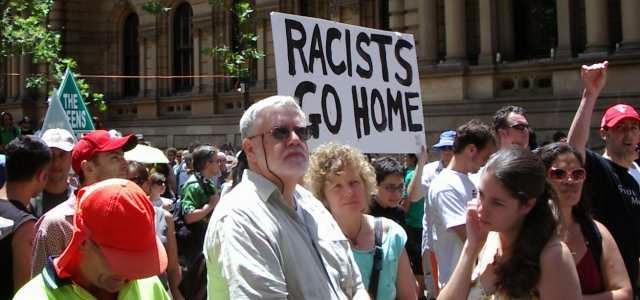
Recently, I found myself writing about wolf hatred and thinking about racism. I wondered whether the attitudes and beliefs that foster racism are similar to the those that fuel wolf hatred. If so, perhaps wolf hatred should be called “wolfism.” In comparing wolf hatred and racism, I do not want to demean any person or group that has been the target of discrimination. But if wolfism and racism are comparable, then perhaps the types of social, legislative, and cultural changes that helped races coexist could reveal tools that could help humans and wolves coexist.

After sitting on this idea for a few months, I decided to call my brother George and discuss it. He is a historian who lives in and has studied and written about the American South. Surely he would have insight into racism. Over the course of a couple of months, we had phone and email conversations comparing racism and wolfism. The more I described wolf hatred and the more he talked about racism, the more commonalities we saw, the more wolfism seemed to fit.

This blog post distills hours of those conversations between my brother the historian and me the wolf advocate into just a couple of pages of core ideas. This post marks a trailhead from which to explore wolfism further. These core ideas are areas to investigate along the trail. The post begins with a brief timeline of racism and wolfism in America.

protest

Historian: In this country, racism started with both slavery and initial colonial-Native American encounters. By the mid-nineteenth century, white Americans, many of them descended from northern European Protestants, developed what historians call nativism, a dislike, distrust, or fear of various ethnic groups they regarded as strange, exotic, or threatening —for example, Irish Catholics, Chinese, Japanese, and eastern Europeans—who had been entering the US in waves that would not crest until World War I. Stereotyping obviously is part of the process of nursing racial or nativist antagonisms.

Wolf Advocate: Like racism, wolfism appeared early in American history; it arrived with the initial settlers of North America. Soon after founding the first colony, settlers began persecuting and killing wolves—just as they would do to Native Americans and slaves.

The colonial government and citizens promoted a stereotype of the wolf as a heartless monster to fear, one who kills livestock and humans. Bounties were offered, and settlers declared war against wolves. They did not just take the enemy’s life; settlers viciously attacked and brutalized wolves in ways much worse than those used on other predators. Eventually, the only wolves left in the lower 48 states were hiding in the remote northern part of Minnesota.

Historian: After the Civil War, three–count ’em, three–constitutional amendments (13th, 14th, 15th) were adopted to free the slaves and to protect their civil and political rights. Yet, over the next generation, states gradually stripped away these rights: the Southern states through so-called “Jim Crow” laws (“legalized” racial segregation), states in other regions mainly through custom and tradition. Meanwhile, the federal government did next to nothing, and, at the end of the nineteenth century, the Supreme Court actually accepted legalized racial segregation in social and political relations in the South in two key decisions, the best-known of which, Plessy v. Ferguson (1896), would be the law of the land until the Court reversed it in 1954.

wolf in snow

Wolf Advocate: While attempts to protect the civil rights of Americans started after the Civil War, it took much longer before any attempt was made to protect wolves. In 1973 the federal government passed the Endangered Species Act, and wolves were listed as endangered. The ESA requires every state with wolves to have a wolf management plan. The US Fish and Wildlife Service reviews and approves each plan.

While that sounds like solid protection, protection for wolves was stripped away just as rights of American citizens had been slowly stripped away. State wolf management plans vary widely, and many are corrupted by special interest groups such as associations representing livestock raisers. These powerful groups are always looking for ways to strip away protection for wolves. Too often they succeed.

In Idaho, for example, the wolf management plan is to kill all wolves except the minimum number the plan requires kept alive. In Oregon, wolves are currently offered more protection. Oregon ranchers, for example, are required by law to use non-lethal means to keep wolves and livestock separate. In Idaho, wolves are killed to keep them away from livestock and elk. Perhaps Idaho’s wolfism could be compared to the racism of one of the states in the deep South, and Oregon’s to that of a Northern state.

Just as Southern states stripped away rights with Jim Crow laws, the protection of wolves will be reduced—and many more wolves will be killed—if the animal is removed from the overarching protection of the federal Endangered Species Act.

Historian: Recent developments seem to parallel in some ways what you think could happen if wolves are removed from the protection of the Endangered Species Act. The Supreme Court, which had accepted Jim Crow at the end of the nineteenth century and ordered integration of public schools in 1954, recently gutted some of the provisions of the Voting Rights Act of 1965. The result? Some states are busily passing laws that make it more difficult for minorities and the poor to vote, on the unproven ground that there has been lots of “illegal” voting.

Wolf Advocate: Neither the federal Endangered Species Act nor any state plans that I know of promote specific ways to change the attitude toward wolves from one of hatred to one of respect. A benefit of framing wolf hatred as wolfism—and similar to racism—is that we can then study the social, cultural, and legislative changes that helped reduce racism, and perhaps find ways to reduce wolfism. This might make advocating for wolves–the process of changing attitudes–more effective and less frustrating.

Historian: Part of changing attitudes is educational and can involve circulating pieces (in books and on blogs, perhaps articles in the press, even commissioning children’s books) that counter the arguments and rationalizations of folks who believe that “the only good wolf is a dead wolf.”

protest2

Another part of this process is cultural, and this is where I think you might have trouble, unless you, and those who think as you do about wolves, can find ways to present the wolf in a positive light. And even that will not be a slam dunk: consider how many movies Sidney Poitier made to push the process of recognizing African Americans as people, not stereotypes; how much time gays have spent working to achieve the same civil rights as straights, including the sanctity of marriage; how long the Women’s Movement had to educate and propagandize before their members and their concerns were taken seriously.

Wolf Advocate: In terms of the educational part of the process of changing attitudes, I know of several authors who have written children’s books that aim to improve the negative stereotype of wolves. To have a strong impact, those books need to reach a large audience.

In terms of cultural change, a tactic similar to the one used in 2006 to reduce the killing of sharks—another unloved predator–might work. A conservation organization, WildAid, enlisted Yao Ming, a Chinese professional basketball player, to front a public awareness campaign aimed at reducing the demand for shark fin soup, a delicacy so popular in China it was pushing some shark species toward extinction. The campaign had a simple and clear message: stop eating shark fins. It took six years and the help of many people and organizations, but the campaign succeeded. Could a campaign with the message “Stop killing wolves” succeed if a known and loved celebrity backed it? Is there a better message?

Historian: The only possible “cure” for racism is when white adults engage with other races in meaningful interactions that at least challenge and, ultimately, perhaps overturn negative stereotypes. When children grow up in close relationships with kids of different races, they are more likely to accept what we now call diversity, and as a result less likely to pay attention to things like skin color.

Wolf Advocate: So a possible path to reducing wolfism is to find ways that today’s younger generation can grow up in a closer relationship with wolves and accept wolves as an essential part of nature’s diversity.

wolf advocates

There are wolf sanctuaries around the US that educate the public about wolves, while providing wolves a safe haven. Many sanctuaries have “ambassador wolves” that handlers take to schools so kids can see, touch, hear, smell, and feel a real wolf. They can learn how wolves fill essential roles in nature, that wolves are not the monsters portrayed by myths and lies. Those kids will one day be voters and may even be advocates fighting for wolves.

Historian: Yes, but on that second point, note that, while the US Supreme Court seemed to buy into the concept of starting social change with children, ordering school integration to begin at the elementary level in implementing the historic 1954 Brown v. Board of Education of Topeka decision, it has taken several additional generations even to begin to come close to what the Warren Court had initially hoped to achieve. And, as current headlines remind us, we are not there yet.

Wolf Advocate: The earlier reference to the long struggle of blacks, gays, and women is an important reminder to all wolf advocates. Wolves were only reintroduced into Yellowstone and Idaho in 1995, just coming on twenty years ago. Two decades is not very long in terms of creating cultural change.

rick book cover

Rick Lamplugh is
the author of
In the Temple of Wolves
150 Five-Star reviews
eBook or paperback, which may be
ordered from amazon.com

Rick

To order a signed paperback
from the author
CLICK HERE

* * * * * *

For those interested in reading more of my reflections on history, here are links to my books on the subject:

REABP CoverRancorous Enmities and Blind Partialities:  Parties and Factions in Georgia, 1807-1845 (University Press of America, 2015)

Pursuit Cover

In Pursuit of Dead Georgians:  One Historian’s Excursions into the History of His Adopted State (iUniverse, 2015)

Politics on the Periphery:  Factions and Parties in Georgia, 1783-1806 (University of Delaware Press, 1986)

Posted in "In The Temple of Wolves", Age of Jim Crow, American History, Books, Civil Rights Movement, Current Events, Historical Reflection, History, Interdisciplinary Work, Popular Culture, Research, Rick Lamplugh, Southern History, Uncategorized, Wolves, WP Long Form | Tagged , , , , , , , , , , | 2 Comments

Muchas Gracias: Responding to a “Thankfulness Challenge”

[NOTE: Much of this post originated as a series of “status updates” on Facebook.  I have made a few minor revisions and appended some comments.]

* * * * *                          

Day 1:  A friend nominated me to undertake a ten-day “challenge,” listing three things each day for which I am thankful. So, here goes nothin’:

1. I’m thankful to be alive–now there’s a surprise!
2. I’m thankful to be a (more or less–it’s complicated) “cradle Episcopalian,” thanks to my mother, who, though not particularly religious herself, thought that, if one had to be religious, then the Episcopal Church was the way to go.
3. No surprise here–I’m thankful for Faith–not the religious kind, but my Willowy Bride for more than 47 years. I just cannot imagine my life without her!

Day 2:
1. I’m thankful for my parents, Ben and Betts, who between them held down three blue/pink-collar jobs (one for each kid!) for most of my childhood, ensuring that we got everything we really needed but not much else. Still, good job!   (Too bad the marriage only lasted twenty years.)
2. Two people who were “like parents” to me, at a time when I needed that:  Jim and Bert, my future in-laws. I’ve never forgotten their support and generosity.
3. My siblings, Judy and Rick. We went through a lot together “back in the day” (good and bad); went off in very different directions as adults; settled about as far apart as physically possible in the continental U.S. (Del., Ore., Ga.); but remain as close today as the phone and the Internet allow. Love you guys!

Day 3:
1) Our “boys”–in Memphis and Austin. Financially independent (most of the time!) and, while they’ll probably never make piles of money, they seem to be doing what they like–and it’s legal!
2) My nephews and niece–again, financially independent (most of the time!), two with families of their own. They’ve done their parents proud and made me a grateful uncle!
3) Believe it or not, I’m thankful for the U.S. Army–an ROTC stipend helped pay for the last two years of college; active duty (1966-1968) gave me some “real world” experience and, more importantly, showed me three (count ’em, three) career paths I did not want to pursue; and the GI Bill helped pay for a couple years of grad school.

Day 4: In honor of the Sabbath, here are three religious things I’m thankful for:
1. The Episcopal Church of the United States–resting as it does on the “three-legged stool” of Scripture, Tradition, and Reason, the Episcopal Church doesn’t require you to check your mind at the door. I’ve always been grateful for that!
2. St. Jude’s Episcopal Church, Smyrna, Ga.–a wonderful, small church in which to raise a family, teach adult Sunday school, and make friends for a lifetime!
3. St. James’ Episcopal Church, Marietta, Ga.–our church home since 1990; allowed me to serve as Clerk of the Vestry for thirteen years. Being a Vestry member is at times like touring a sausage factory, but I’ve always liked sausage, so. . . .

Day 5: Half-way there!
1. Clio, the Muse of History–still alluring after all these years; you go, Girl!
2. My maternal grandparents, Ike and Isabel–a marriage of the taciturn and the talkative that lasted for the long-run. They put up with me for a couple of weeks every summer when I was young and let me live with them full-time for my senior year in high school and the first part of freshman year in college.
3. Archbishop Thomas Cranmer and the Book of Common Prayer–almost five centuries later, the BCP remains the essential compendium of liturgy, Scripture, prayers, church history, and traditions for the Worldwide Anglican Communion.

Day 6: circling back to clarify some things:
1. My Mom, Betts–loved us unconditionally; encouraged us to read; supported us in whatever we hoped to do in life; and provided an unforgettable example of a strong, independent woman.
2. My Dad, Ben–loved us according to his lights; worked two jobs to try to keep the family together, which made him an absentee father much of the time; was a reluctant disciplinarian (whew!); and taught me important lessons, including some about how not to be a father (and, in my experience, negative lessons can be as powerful as positive ones).
3. Newark, Delaware–certainly not Mayberry, but a great small town to visit (as I did every summer as a kid) and, eventually, to live in (through high school and college). Everybody in the neighborhood knew your name (both an advantage and a disadvantage!), and most of what a kid wanted to do was within walking distance.  Like many such places, though, Newark has since outgrown its “small town” vibe.

Day 7:
1. The Blues–I came to this music late in life, but I won’t let it go. Especially in the recordings from the late 1920s through the end of World War II (many of which are still available via cd and download), the Blues offers a powerful witness to the struggles of a long-suffering people to escape the effects of slavery and discrimination.  Also an effective way to encourage modern students to view the nation’s past through African American eyes.
2. Mrs. Osborne and Mr. Talbott–my 5th and 6th-grade teachers, respectively, who engaged in a determined (and, I swear, coordinated), rather successful, campaign to “encourage” me to control my sometimes volcanic temper and, as we might say now, “build up my self-esteem.”  (To those who know me: surprise!)
3. Education for Ministry (EFM)–a four-year extension course in theology, created by the School of Theology at the University of the South; offered, in my case, under the auspices of the Episcopal Diocese of Atlanta. Completing EFM (in 1987) clarified, and strengthened, my faith; provided fodder for adult Sunday school classes on theology and church history; gave me the “opportunity” to teach freshman Old Testament at my school for a few years; and even allowed me to co-teach an EFM evening class at my school for four years.

Day 8:
1. Newark (Delaware) High School–at the time, the sole high school in a small-college town, NHS did a fine job preparing lots of people (only a minority of whom went on to college) for the “real world,” including me.
2. Miss Gertrude Weaver–Modern European History teacher at NHS, and the best teacher I’ve ever had–at any level. Sure, I learned some History from her, but, more importantly, Miss Weaver taught me that knowledge, enthusiasm, energy, and just enough personality quirks could make an unbeatable combination in a classroom teacher.
3. University of Delaware–the only college I ever wanted to attend. Once I got out of its School of Education and into the School of Arts and Sciences, I acquired a solid liberal arts background that has stood me in good stead ever since.

Day 9:
1. Professor David Healy–my favorite teacher at Delaware, Dr. Healy allowed me, as an undergraduate, to take his year-long graduate-level course in the History of American Foreign Policy, thereby helping to implant in me the idea that I could handle grad school work in History.
2. Emory University–I attended Emory, B.C.M. (“Before the Coke Money”), and before all those aspirations. Emory provided fellowship support for all five years, and the History faculty, while hardly famous, knew their business and taught it with determination.
3. Professor James Z. Rabun–the best teacher I had in college or grad school. Dr. Rabun was my dissertation director at Emory, but, more than that, he was a Southern gentleman, dedicated scholar, mentor, and friend.

Day 10: Thanks to Atlanta’s The Westminster Schools for, among other things:
1. Being willing to hire me, a newly-minted PhD. whose teaching experience was all on the college level, then give me time–and room–to transition from “professor” to “teacher.”
2. A first-rate faculty and dedicated staff–the faces changed over the years, but the new folks were usually as talented and dedicated as the older ones had been, if not more so.
3. The generations of students it was my pleasure to teach there–and, as any teacher will tell you, what they taught me!

* * * * *

Having completed this “challenge,” I think I’m supposed to “tag” a few other folks to do the same, but I’m going to pass. Instead, let me recommend the “thankfulness challenge,” especially to my retired friends (whether “shy” or “not shy”). It alleviates cynicism, at least for a while; I reckon “looking on the bright side” never hurt anyone, as long as you don’t get carried away!

* * * * *

I have always been cynical–I think it comes with studying the past.  Still, my cynicism in recent years makes my earlier views almost pollyanna-ish by comparison.  So, this “thankfulness challenge” came along at the right time.  Trying to compile a list of thirty things for which I am thankful truly was a challenge.  Some comments on the results:

1. The number of entries involving religion initially surprised me. The school at which I worked proudly advertises itself as “A Christian Preparatory School for Boys and Girls,” so it was impossible for me to duck the “religious angle” even had I wished to.  When my family attended church during my childhood, which wasn’t often (we had one car, Sunday was Dad’s only day off, and Mom didn’t drive), we usually went to an Episcopal service. I did not go to church between starting college and leaving the Army.  Once we arrived in Atlanta for graduate school, my wife and I tried to re-connect with organized religion, occasionally attending the Methodist church on the Emory campus, but without much luck.  After we had our first child and I began working at that “Christian Preparatory School,” we wound up in the Episcopal Church and have stayed there ever since. A colleague introduced me to the writings of C.S. Lewis, and I soon found myself reading everything by Lewis that I could lay my hands on. As I taught History, especially to my younger students, I incorporated aspects of religious history into my Ancient and Medieval History course and, eventually, into Modern European History and American History as well. After a decade at the school, I found out about Education for Ministry (EFM) and pursued it for four years, with the school picking up the tab, and that helped me, in ways noted above.

2. The things related to education for which I am thankful also struck me, but there’s a simple explanation: Between the ages of 6 (when I began elementary school) and 66 (when I retired,) I spent 58 years in one school or another, either as a student (21 years) or teacher (37 years).  Simply put, I’ve always loved school! So it certainly shouldn’t be surprising that so many of the things I’m thankful for occurred in an educational setting.

3. Those of you who have followed this blog know that it has a definite retrospective cast. I taught History, after all; began my blog in retirement, as a way of “doing History after leaving the classroom”; and have often found myself waxing autobiographical. This “thankfulness challenge” also afforded me a chance to head down “memory lane.” I’m grateful for that, because it allowed me to dredge up recollections of Mrs. Osborne, Mr. Talbott, and Dr. Healy, all of whom I had not thought about very often, and enabled me to reconnect with better-remembered figures from my past, like Miss Weaver and Dr. Rabun. So, I guess “looking on the bright side” didn’t kill me; perhaps it even made me stronger, who knows?

* * * * * *

For those interested in reading more of my reflections on history, here are links to my books on the subject:

REABP CoverRancorous Enmities and Blind Partialities:  Parties and Factions in Georgia, 1807-1845 (University Press of America, 2015)

Pursuit Cover

In Pursuit of Dead Georgians:  One Historian’s Excursions into the History of His Adopted State (iUniverse, 2015)


Politics on the Periphery:  Factions and Parties in Georgia, 1783-1806 (University of Delaware Press, 1986)

Posted in Episcopal Church, Historical Reflection, History, History graduate school, Newark (Del.) High School Class of 1962, Prep School, Retirement, Rick Lamplugh, Teaching, The Blues, Uncategorized, WP Long Form | Tagged , , , , , , , , , , | 6 Comments

Georgia and the American Revolution, IV: From Colony to State, 1774-1776 (In Pursuit of Dead Georgians, 15)

[This is the fourth post in a series.  For earlier ones:  Part I; Part II; Part III.]

* * * * *

The reaction of the North Ministry to the destruction of tea in Boston Harbor in 1774 was swift. Aided by British public opinion hostile to the actions of the Bostonians and the desire of King George III to make an example of Massachusetts, Parliament passed the Coercive (or “Intolerable”) Acts: The port of Boston was closed, pending restitution for the water-logged tea; the Massachusetts government was reorganized, removing it from popular control; British officials or soldiers were to be tried outside the colony, to prevent their prosecution by local juries for enforcing customs laws; and a new quartering act was passed to clear the way for support of British troops stationed in the colonies.

Gen. Thomas Gage (Wikipedia)

Gen. Thomas Gage (Wikipedia)

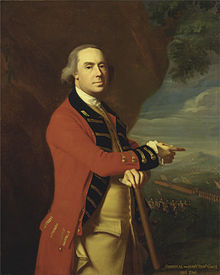
In May 1774, General Thomas Gage, appointed acting governor, arrived in Boston with additional British troops and proceeded to implement the Coercive Acts. The colony’s legislature responded by calling for a provincial congress that would govern until “constitutional rule” had been restored. Other colonies rallied to the aid of Boston, shipping supplies overland. The legislature also denounced the Coercive Acts as threats not only to Massachusetts but to the rest of the colonies. Finally, legislators called for a general American congress at which they would air grievances and decide upon a plan of action.

That congress met in Philadelphia in the autumn of 1774, and it soon became clear that, while the anger of delegates over British actions gave colonial radicals considerable leverage, the majority viewed a settlement of the dispute short of American independence as both possible and desirable. By a 6-5 vote, the First Continental Congress defeated a moderate plan that would have given the colonies quasi-independent “dominion” status within the British Empire. The Congress also endorsed a set of radical resolves, demanding repeal of the Coercive Acts; threatened resistance if the British government tried to enforce them; and adopted the Continental Association, a boycott of British goods that eventually cut British imports to the colonies by 97%.

The First Continental Congress also adopted a Declaration of Rights and Grievances containing ideas developed over the past decade. For instance, the Declaration listed thirteen acts (“misdeeds of King and Parliament”) that must be repealed before harmony could be restored; attacked the Coercive Acts; argued that the rights of Britain’s American colonists were secured by both the British constitution and natural law; asserted that the colonies could only be represented in local assemblies, where exclusive powers must reside; and pledged that the colonies would go along with British regulation of external trade, so long as the duties were not taxation.

* * * * *

Tensions mounted during the winter of 1774-1775, and British attitudes toward the colonies hardened. Parliament cut off trade with every colony except Georgia and New York, the only colonies that had refused formal endorsement of the Continental Association. Moreover, additional troops were dispatched to America, along with a fleet, but arrived only after the outbreak of fighting in the spring of 1775, when General Gage, having learned that large quantities of supplies and arms were stored at the villages of Lexington and Concord, dispatched troops to confiscate them. British troops met resistance from colonial militia, and casualties were 90 Americans and 250 British killed and wounded.

The First Continental Congress had provided that a successor body would hammer out a settlement between the colonies and the mother country. Yet, the Second Continental Congress did not assemble in Philadelphia until May 10, 1775, after the outbreak of hostilities at Lexington and Concord, so its options seemed limited. Over the next year, the Second Continental Congress came to realize that a formal declaration of colonial independence was unavoidable, because Congress already had taken a series of actions usually performed only by formal governments—for example, authorizing American privateers to attack British shipping and opening American ports to trade with all nations except Britain and her subjects.

* * * * *

Thomas Paine (Wikipedia)

Thomas Paine (Wikipedia)

During that same period, colonial public opinion grew increasingly favorable to American independence, especially because of the British government’s intransigence. This opinion was solidified following the January 1776 appearance of Thomas Paine’s pamphlet, Common Sense.

Richard Henry Lee (Wikipedia)

Richard Henry Lee (Wikipedia)

On June 7, 1776, Richard Henry Lee of Virginia introduced a resolution calling for colonial independence, and a committee was appointed to draft a formal declaration. Lee’s resolution was adopted on July 2, and the Declaration of Independence, largely drafted by delegate Thomas Jefferson of Virginia, was adopted two days later.

* * * * *

After mid-July 1774, when news of Parliament’s passage of the Coercive Acts reached Georgia, the situation was very confused. Opinions in the colony were bitterly divided—ominously, even those who opposed British policy could seldom agree among themselves on a unified plan of action. Nevertheless, this division played into the hands of the radicals.

By the summer of 1774, Whigs in the House of Assembly were frustrated at the success of the Governor and Council in preventing them from acting. As a result, legislators began to look outside the system for ways to register their protest. The Assembly was controlled by representatives from Christ Church Parish (Savannah and vicinity), which early assumed leadership of Georgians who came to be called Whigs. Yet, in terms of social position, family background, and wealth, these delegates were almost as much a part of the “colonial establishment” as the Governor and his Council, which suggests that the aims of the Christ Church faction were fairly moderate.

On the other hand, transplanted New England Congregationalists in St. John’s Parish, home of the colony’s second largest port, Sunbury, were as upset by the Governor’s use of executive power as the Christ Church group, but their leaders were blocked from achieving political gains because representatives from Savannah and environs dominated the Assembly. So, the furor aroused by British policies could be used by the St. John’s radicals as a way to achieve two related goals, attacking the royal government and challenging the existing colonial power structure.

In August 1774, at a meeting held in Savannah to protest the Coercive Acts, the St. John’s faction made its first overt move in a power struggle that was to last until the end of the American Revolution. Those present protested British measures as loyal subjects, appealing to the British constitution against the “unconstitutional” actions of the British government. Unsatisfied with this lukewarm response, delegates from St. John’s tried, and failed, to have the meeting authorize sending delegates to the First Continental Congress in Philadelphia. Even the moderate tone of the resolutions adopted at Savannah upset many Georgians who opposed British policy. Feelings were especially strong in outlying parishes, which feared that the tone of the address might cause the British government to refuse to send troops to protect the colony’s frontiers against Indian attacks.

* * * * *

Governor Wright and his supporters attempted to use the situation to drive a wedge among the colony’s Whigs, organizing a petitioning movement objecting to the actions of the Savannah meeting. Signers of the petition from Savannah included colonial officials and wealthier merchants. Signers from the upper part of St. Paul’s Parish, around Augusta, included several Georgians who would later became prominent in the revolutionary movement, including George Wells, Edward Langworthy, William Few, and Elijah Clarke. These petitions in turn called forth a series of objections published in the Savannah Georgia Gazette.

Lyman Hall (Wikipedia)

Lyman Hall (Wikipedia)

Meanwhile, angry St. John’s Parish radicals held two meetings, electing their own delegate to the Continental Congress, Lyman Hall, and raising fifty pounds and two hundred barrels of rice for the suffering residents of Boston. Probably because the proceedings at Midway were approved by only four parishes, Hall chose not to go to Philadelphia. And so it was that, when the First Continental Congress met in September 1774, delegates had to “lament Georgia with resentment” because it was the only established mainland colony unrepresented.

In Georgia, when the Continental Congress convened, the Assembly adjourned until mid-November, and Governor Wright, fearing new unrest when word of the Congress’s deliberations reached the colony, used his authority to extend legislative adjournment until mid-January 1775. To counter this, conservative Whigs proposed that a provincial congress be elected, to meet in Savannah in January at the same time as the House of Assembly, an extra-legal maneuver, but, since the provincial congress would meet under the watchful eyes of the Christ Church-dominated Assembly, it hardly posed a threat to the status quo.

* * * * *

Georgia’s radical Whigs responded by endorsing the election of a provincial congress and urging adoption of the Continental Association before the congress convened, thereby presenting Christ Church conservatives with a fait accompli. St. John’s Parish adopted the Continental Association but refused to attend the provincial congress—St. John’s leaders were content to let the congress serve as a precedent for organized protest outside of the established governmental system, but unwilling to place themselves under domination of the conservatives from Christ Church Parish.

The provincial congress met but delegates represented only five of the colony’s parishes. It adopted the Continental Association, with numerous modifications, elected three men from Christ Church Parish to attend the Continental Congress, and called upon the Assembly to approve its actions. Governor Wright adjourned the Assembly before it could act, the last session of Georgia’s colonial Assembly before the outbreak of fighting. The three men chosen by the provincial congress to represent Georgia in Philadelphia declined to serve because they represented only a minority of the colony’s parishes.

Governor Wright’s actions showed conservative Whigs that the attainment of their goals would be possible only outside the system, where they must deal with the radicals. Radicals from St. John’s Parish promptly sent Lyman Hall to Philadelphia to represent them in the Continental Congress. This move forced the Christ Church faction either to act or be left behind. Wright’s actions and the arrival in Georgia of news of fighting in Massachusetts finally created a colony-wide Whig movement.

When a second provincial congress met in Savannah on July 4, 1775, delegates represented all but two isolated, almost unpopulated parishes. This gathering marked the formation of Georgia’s first revolutionary consensus, an agreement that Governor Wright’s executive authority had to be minimized. There was no consensus, as yet, however, on the long-range goals of the resistance movement.

The Christ Church conservatives dominated the second provincial congress, yet, seeking harmony, agreed to distribute representation more equitably at future meetings and give the right to vote to more citizens, which ultimately worked to the advantage of the radicals. This provincial congress also created a series of general and local committees to direct affairs in different towns and a council of safety to act as a colonial executive body during congress’s recess. These various Whig bodies began, gradually at first but more rapidly later, to usurp the functions of governing Georgia that had once been exercised by Governor Wright, his Council, and the House of Assembly.

* * * * *

As Georgia’s royal government was being dismantled, the upper-class nature of the revolutionary movement began to change. Radicals sought to increase the “popular” base of their movement, but the “people,” were suspicious even of radical leaders, many themselves upper-class, and who had little in common with them. A single common denominator unified the radical wing of the movement, at least temporarily: “All saw the conservatives as perpetuators of the system from which they had been excluded. . . . [B]reaking the power of the conservatives was to be the goal of the ‘popular party.’” (Jackson, p.8) Nevertheless, until the summer of 1776, when Georgia learned of the Declaration of Independence, radicals had to maintain their alliance of convenience with conservatives to prevent mass defections of conservatives that might bring the revolutionary movement to a halt.

As early as July 1775, Governor Wright had concluded that Georgia was lost to the British cause. For the next six months, however, he was forced to stand by helplessly and watch the growing revolutionary movement strip him of his powers, culminating in January 1776 when, upon the approach of several British ships seeking to procure supplies in Savannah, the council of safety arrested Wright, his Council, and other royal officials. Two days later, those officers were released upon giving their words not to leave Savannah or attempt to communicate with the British.

On the night of February 11, 1776, Wright and several Councilors broke their paroles and fled to the coast, where they boarded a British vessel. The ships did not leave until early March, after they had defeated efforts by Georgia Whigs to prevent them from seizing a number of rice boats anchored in the river outside town. Wright and his associates sailed away with the British, a step that had already occurred in most of the other colonies. Unlike other governors, however, Sir James Wright would one day return and re-establish the colonial regime. Ironically, divisions among Georgia Whigs would help to make this possible.

[End of Part IV]

_______________

For those interested in reading more about Georgia History, here are links to my books on the subject:

REABP CoverRancorous Enmities and Blind Partialities:  Parties and Factions in Georgia, 1807-1845 (University Press of America, 2015)

Pursuit Cover

In Pursuit of Dead Georgians:  One Historian’s Excursions into the History of His Adopted State (iUniverse, 2015)

Politics on the Periphery:  Factions and Parties in Georgia, 1783-1806 (University of Delaware Press, 1986)

Posted in American History, American Revolution, Colonial Georgia, Georgia History, Historical Reflection, History, History Curriculum, Prep School, prep school teaching with a PhD, Research, Retirement, Southern (Georgia) History, Southern History, Teaching, Uncategorized, WP Long Form | Tagged , , , | Leave a comment

Evolution of a Blog: “Retired But Not Shy” at Four

[NOTE: If I had not edited my school’s “History Department Newsletter” over the last few years of my teaching career, I might never have become a blogger.

Using a template provided by Microsoft, I planned each bi-monthly issue, parceled out “article” assignments to my colleagues, and did the rest of the writing myself. I loved the format: planning “thematic” issues; writing “editorials”; compiling lists of history-related events in the area; reviewing a book now and then; even producing occasional obituaries, or “appreciations,” of deceased historians I had come to respect in grad school.

As retirement loomed, I knew that writing, much of it scholarly, would be an important part of my post-classroom life but hoped there also might be room for a less formal approach. At first, I thought that Facebook might fill the bill and opened an account. Shows you what I knew! After a few posts, I realized that, compared to the sort of stuff I wanted to write, Facebook was little more than “short attention span theatre.” And then, while doing research online, I followed a link to a blog at wordpress.com.

It wasn’t that particular blog that charmed me but just the idea of creating a forum which I could design and control and through which I could write about virtually anything I wanted, in any way I wished. I found that setting up a blog of my own would be fairly easy–and free! Thus, after I retired in May 2010, was born “Retired But Not Shy: Doing History After Leaving the Classroom,” which recently celebrated its fourth birthday.]

* * * * *

As I began, “Retired But Not Shy” (with John Quincy Adams as the avatar) denoted my new status, and “Doing History After Leaving the Classroom” referred to my post-retirement “project,” completion of a manuscript on the development of political parties in Georgia after 1806, the sequel to my dissertation (which had become my first book).

Initially, in other words, I planned to use the blog to publicize my work on the second part of the magnum opus, but I suspected there had to be more to it than that, though at first I wasn’t certain what “more” might be. The key was how I defined “doing history after leaving the classroom.” I knew that, at least at first, I didn’t want to put up a post more than once a month (which, I eventually learned, set me apart from bloggers with more ambitious goals), but that still left unanswered the question of what I could produce over twelve installments that would  a) be worth sending into cyberspace; and b) attract readers.

I hoped to pursue a less formal brand of history through the blog, supplementing my current research efforts by putting up posts on related topics that would not fit into the manuscript, and “piloting” others that might eventually appear there, though in a different guise. I also vowed that I would not be bashful about treating in the blog other, usually history-related, topics that interested me.

Early in my retirement, I was completing work on an article for the Georgia Historical Quarterly, the second–and final–installment of a biography of James Gunn, one of Georgia’s first United States Senators and prime mover of the infamous Yazoo Land Fraud. Since part one had appeared in the same journal way back in the Summer of 1996, you can see how little importance the “prep school” where I worked placed on “publish or perish” (which I rather selfishly believe was to its great credit)!

As the months rolled by, I began to develop an approach to the blog that felt more and more comfortable. First, I decided that I would try to make each post between fifteen hundred and two thousand words, an arbitrary goal admittedly, but one that struck me as about right for a “serious,” thoughtful post without all the scholarly detritus (footnotes, bibliography, etc.). Then, too, I began to see that, while a blog devoted to my “project” probably would not have wide appeal (I know, I know–ya think!), I did have other interests that might fit under the blog’s rubric and draw some readers who were not all that interested in antebellum Georgia.

So, I gradually created a number of other categories that I hoped reflected “doing History after leaving the classroom”: discussions of books I’d read; things I’d learned about teaching History, both in general and as a PhD. employed by a “prep school”; current events; the “History Wars” raging in American culture; the history of the Blues; and Civil Rights, both historical and contemporary. My older son, who also has a blog, had begun publishing excerpts from his journals occasionally, and I thought I might do that too, when it seemed appropriate.

As I began to look for blog topics, I realized that I had a “pack rat gene” in my makeup (must help explain how I became a historian)–I seldom threw away anything I’d written (that’s not to say that I shouldn’t have thrown some stuff away–just that I didn’t!). I decided that at least some of this material–short papers, reviews, lectures, essays, even a few “editorials” from the History Department Newsletter–might provide fodder for the blog, if revised, updated and, in some cases, condensed (or, if that wasn’t practical, then published serially).

“In Pursuit of Dead Georgians” became the category for (almost) all things Georgia, including several posts about topics that I also treated in my “project” but wanted to look at in a different way in the blog.

The “Blues Stories” series originated in several “mini-courses” on the Blues I created for my school’s annual “Alumni Back-to-School Night,” but I also decided I would not limit the blog’s treatment of the Blues to those lectures. Soon I began to read, and write about, biographies of other Blues performers and works on other aspects of the history of the Blues that had begun to appear in heartening numbers in recent years.

During my teaching career, I had participated in a number of interdisciplinary projects, and out of these lectures I devised several “Adventures in Interdisciplinary Land” posts.

Of late, I have begun to deal more explicitly with historical pedagogy, in a series I’ve designated “History Lesson Plans”.

The blog has become a part of my life in retirement. I’ve managed to spend enough time writing–and revising–posts that I have a sufficient backlog to move to a twice-a-month publishing schedule, at least for the foreseeable future, in hopes of continuing to please my existing audience and (perhaps) attract additional visitors to the site.

* * * * *

I thought I’d include in this excursion down memory lane a “top ten list.” What follows are the ten posts at “Retired But Not Shy” that have drawn the most interest from visitors over the past four years. [NOTE: I have eliminated from this list three generic topics: Homepage/Archives; “About”; and my introductory post, “We’ve All Got to Start Somewhere, I Suppose.”]

Teaching Prep School With a PhD: Is It For You?

Civil Rights–And Wrongs: Personal Reflections on Dr. King and His Legacy

History Lesson Plans, 1: Teaching History “Backwards”

In Pursuit of Dead Georgians, 4: Getting Reacquainted With Georgia Governor Wilson Lumpkin (1831-1835)

High School, Now–and Then: Reflections on a 50th Reunion

Blues Stories, 6: The Mississippi Delta and the Blues

Getting Right With Spielberg’s “Lincoln”

Growing Up With Vietnam (IV): Paying the Cost to be the Boss (apologies to B.B. King)

In Pursuit of Dead Georgians, 5: Governor George R. Gilmer (1829-1831, 1837-1839) and the Cherokees

Blues Stories, 4: 20th-Century Blues Women

* * * * *

While I certainly appreciate each and every click that has brought a visitor to “Retired But Not Shy,” I’d be less than honest if I did not admit that there are a few posts I wish more people had read.  So what follows is a personal “Best of the Rest List”:

Several are on Vietnam, and the difficulty of teaching about it because it had been a part of my life, a theme that ran through a number of early posts. For example, the concluding part of my “Growing Up With Vietnam” series made the top ten list, but what about the others? (Part I; Part II; Part III) And then there was a talk I gave to a group of historians about teaching that war as “history.”

One post combined two of my favorite topics, History and Civil Rights: “Race–and History–Matter”

While the posts on antebellum Georgia governors Wilson Lumpkin and George R. Gilmer aroused a surprising amount of interest (to me, at any rate), the final post in the series, comparing and contrasting the careers and ideas of the two men, failed to make the cut, and I wish it had.

I was also pleased with the two-part story of Editor Elias Boudinot and the Cherokee Phoenix, “News From Indian Country.”(Part I; and Part II).

I’ve enjoyed putting together all of the Blues posts, but perhaps my favorite among the recent ones is a review of life on the so-called “Chitlin’ Circuit.”

Finally, I liked a recent post on the “mind of the South” in the early twenty-first century.

* * * * *

Enough back-slapping and (mild) recriminations. If I’ve learned one thing about blogging over the past four years, it is that, once you’ve sent a post into cyberspace, there’s no telling how many people will be interested in it.  My thanks to all who have visited “Retired But Not Shy.” I hope you will continue to follow my musings on Georgia, Southern, and American history; History teaching; American culture’s “History Wars,” and, of course, the Blues.

* * * * * *

For those interested in reading more of my reflections on history, here are links to my books on the subject:

REABP CoverRancorous Enmities and Blind Partialities:  Parties and Factions in Georgia, 1807-1845 (University Press of America, 2015)

Pursuit Cover

In Pursuit of Dead Georgians:  One Historian’s Excursions into the History of His Adopted State (iUniverse, 2015)

Politics on the Periphery:  Factions and Parties in Georgia, 1783-1806 (University of Delaware Press, 1986)

Posted in "Lincoln"--the movie, "The Race Beat", American History, Blues Women, Books, Civil Rights Movement, Civil War, Current Events, Delta Blues, Dr. Martin Luther King, George R. Gilmer, Georgia History, Historical Reflection, History, History Curriculum, Interdisciplinary Work, James Gunn, Martin Luther King, Popular Culture, prep school teaching with a PhD, Research, Retirement, Southern (Georgia) History, Southern History, Teaching, The Blues, Vietnam War, Wilson Lumpkin | Tagged , , , , | 4 Comments

Georgia and the American Revolution, III: The Imperial Crisis, 1765-1774 (In Pursuit of Dead Georgians, 14)

[This is the third in a series of posts on the American Revolution in Georgia and its consequences for politics in the state during the decades after the war. (For earlier posts, see here and here.)]

* * * * *

There had always been differences of opinion between Georgia’s governors and her assemblies, and even between the Council and the Assembly, so the arguments that developed in the colony between 1765 and 1774 were hardly unprecedented. The new element injected into those later disputes was the question of the rights of Georgians as Englishmen, and of their Commons House of Assembly as a representative body. Though Georgia’s lower house seldom acted hastily, and usually adopted only a lukewarm course once action was decided upon, the once warm relationship between the people’s representatives and their governor had been permanently altered.

Governor Sir James Wright was a determined man who battled tenaciously to uphold the King’s power in the face of opposition in the Assembly. The end result was a stalemate. If this can be reckoned as a victory of sorts for Governor Wright, it was dearly won: Georgia’s radicals, frustrated in their efforts to prevail within the system, soon began to act outside it and eventually succeeded in wresting power from the colony’s royal government.

Sir James Wright (Ga. Historical Soc.

Sir James Wright (Ga. Historical Soc.)

* * * * *

The Assembly protested against passage of both the Revenue Act of 1764 and the Stamp Act of 1765 but couched those protests in economic rather than constitutional language. As dutiful subjects, the members did not question the authority of Parliament to levy the taxes, arguing instead that the Revenue Act would injure Georgia’s trade with the British West Indies and that both measures placed a heavy financial strain on the young colony. The Assembly urged Georgia’s London agent to join other colonial agents in working to repeal the Stamp Act before hotheads went too far in denying Parliament’s authority in the matter. Outside of the Assembly, a small group of self-proclaimed “patriots” tried to prevent the Stamp Act from being enforced in Georgia, but their efforts were hampered by Sir James Wright, who became the only governor in the thirteen British North American colonies to sell stamps in his province.

Georgia refrained from sending delegates to the Stamp Act Congress. The Assembly was not in session when the call for a congress was received. Some members met in Savannah to discuss the matter, but, since Governor Wright opposed convening a congress to oppose the Stamp Act, he refused to call the Assembly into session. Members in Savannah assured organizers of the Stamp Act Congress that Georgia was indeed concerned and would back whatever actions the congress took. The Assembly kept its word, in November 1765, when it ordered the speaker to sign the congress’s proceedings on behalf of the House of Assembly and send it to Britain.

Thanks to the Savannah Georgia Gazette, Georgians outside the legislature were kept informed of reactions throughout the colonies to the Stamp Act, yet they were also bombarded by a steady stream of anti-Stamp Act propaganda from Charleston’s “Liberty Boys.” Some Savannah residents organized their own version of the “Sons of Liberty,” who agreed to warn the colony’s stamp distributor that he had better think twice about trying to carry out the provisions of the Stamp Act in Georgia. On the other hand, Governor Wright, with support from his Council and from the “better sort” in Savannah, was determined to enforce the measure and to protect both the stamps and the person of the stamp distributor. Captains of vessels that had arrived in Savannah before the stamps did asked the Governor’s permission to leave without the stamped documents required by the new law, but the Governor and Council denied their requests.

Georgia’s stamp distributor, George Angus, arrived on January 3, 1766, and, protected by British troops, cleared ships from the harbor, then retired to the country “to avoid the resentment of the people.” (Coleman, p.21) For the next month, Governor Wright, again supported by the “better sort,” by British rangers, and by British seamen, strove to protect the stamps, moving them several times in response to rumors that mobs organized by the Sons of Liberty were forming to destroy them. Early in February, the Governor supervised the loading of the stamps aboard a British vessel bound for London.

The removal of the stamps from Georgia ended the disturbances, although, in the wake of the Stamp Act tumult, relations between Governor Wright and the lower house deteriorated. The Assembly chose to defend its “rights” on several different occasions, and Wright interpreted those actions as attacks on his authority as Governor and, therefore, on the prerogatives of King George III. Wright “emerged as the powerful leader of a powerful faction, but gone forever was his position as leader of a united colony once unanimity of opinion had been destroyed.” (Abbot, p.123)

* * * * *

James Habersham, Sr. (Wikipedia)

James Habersham, Sr. (Wikipedia)

Trouble between Governor Sir James Wright and the House of Assembly arose even more frequently following passage of the Townshend Acts. Once more, Georgians were kept informed of activities in other colonies by the Georgia Gazette, which even published excerpts from John Dickinson’s influential Letter from a Pennsylvania Farmer. By invoking the royal governor’s authority to dissolve the Assembly, both Governor Wright and his ally, James Habersham, managed to stem protests from the legislature. In fact, the dissolution prevented the Assembly from passing any laws between 1770 and 1772. Following Wright’s return to Georgia in 1773, there were no more dissolutions of the Assembly during the colonial period.

Once again, the only serious challenge to royal authority in Georgia came from outside the Assembly. On September 19, 1769, a series of “mass meetings” culminated in adoption of a non-importation agreement, pending repeal of the Townshend Acts. Non-importation had been adopted in Georgia, though without enforcement machinery. Nevertheless, Governor Wright was determined to cripple the agreement, and events were to show that most of Savannah’s merchants and many planters were only lukewarm toward the policy of non-importation. There was little excitement about the issue outside Savannah. Opposition to the Townshend duties was less obvious, widespread, well-organized, and violent than that against the Stamp Act. The duties required by the Townshend Acts were hardly novel, whereas those included in the Stamp Act had been. In short, some Georgians found it difficult to become excited about the argument raised in other colonies that the Townshend Acts should be opposed on the grounds that revenue from the new duties was to be used to pay royal officials, because those officials in Georgia had always been paid from Britain.

Consequently, non-importation in Georgia actually had little effect on imports. In fact, if non-importation succeeded in neighboring South Carolina, closing the port of Charleston to British goods, those imports might well be diverted to Savannah. By the mid-1770s, it appeared that the failure of non-importation in Georgia had actually begun to attract various goods that could not be landed in Charleston. A mass meeting in the South Carolina port angrily voted to cut off all commerce with Georgia and Rhode Island because those colonies had traded with Britain while their sister colonies had abided by the non-importation agreements.

So, Governor Wright had not needed to do much to undermine non-importation in Georgia. Following the repeal of most of the Townshend duties in 1770, the situation in Georgia nearly returned to normal. True, the lower house of the Assembly, increasingly sensitive to what it considered attacks on its rights, continued to skirmish with the colony’s royal government, but Governor Wright and James Habersham proved to be creative, determined foes of legislative prerogative.

When the next crisis came, in 1775, the contest would not be “between the Royal Governor and the Commons House of Assembly, but one between the royal government of the colony as such and the Liberty-led opposition standing outside the government and seeking to destroy it.” (Abbot, p.160)

[End of Part III]

_______________

For those interested in reading more about Georgia History, here are links to my books on the subject:

REABP CoverRancorous Enmities and Blind Partialities:  Parties and Factions in Georgia, 1807-1845 (University Press of America, 2015)

Pursuit Cover

In Pursuit of Dead Georgians:  One Historian’s Excursions into the History of His Adopted State (iUniverse, 2015)

Politics on the Periphery:  Factions and Parties in Georgia, 1783-1806 (University of Delaware Press, 1986)

Posted in American History, American Revolution, Colonial Georgia, Georgia History, Historical Reflection, History, prep school teaching with a PhD, Research, Southern (Georgia) History, Southern History, Teaching, Uncategorized | Tagged , , , , | Leave a comment

American Witch-Hunters: Salem & McCarthy (Adventures in Interdisciplinary Land, 7)

 [Note: Some of the most interesting “interdisciplinary” projects I undertook were the result, not of a school-wide mandate, but a request from a colleague for a little help in approaching a knotty subject. Such was the case when an English teacher asked me if I would talk to her sophomores about the historical and intellectual background of Arthur Miller’s play, The Crucible. Would I ever! I knew enough about Miller and his drama to realize that both played a role in one of the topics in modern American History that, at that time, drew me most strongly: the nation’s post-World War II descent into the “Red Scare” and “McCarthyism.” What follows is based on the outline I created then. It is important to keep in mind that, as sophomores, these students probably had last encountered American History in seventh grade.]

I want to discuss with you the historical background of two events, separated in time by 250 years, yet each relevant to Arthur Miller’s play, The Crucible: the first, the trials of alleged “witches” at Salem Village in the Massachusetts Bay Colony in 1692, furnished the setting for the play itself; the second, the hysterical anti-Communist crusade that rocked the United States after World War II, affected playwright Arthur Miller in such an intensely personal way that he was moved to write The Crucible as a sort of allegory of man’s intolerance to man.

* * * * *

The witchcraft “delusion” in Salem Village apparently began as a prank by a group of impressionable teen-aged girls carried away by tales of voodoo told them by a West Indian Black woman, the household servant of a local minister. When the girls began to behave oddly, a local physician diagnosed their “illness” as possession by witches. Upon examination in public by magistrates sent from Boston, the girls screamed, shouted, and pointed to several local residents as their tormentors. Once these neighbors had been accused, their only hope lay in confessing their guilt and then naming other “witches” for local authorities.

Between June and September 1692, twenty Salem residents were convicted and executed as witches, and, since the witchcraft craze had spread throughout New England, some 150 other accused persons were in various jails awaiting trial. By that time also, intellectuals and members of the governing classes, who had been either silent or supportive of the “witch hunts,” began to speak out against the flimsiness of the evidence and the brutality of the punishments. Although the trials continued into 1693, the atmosphere had changed: several of the girls who had begun the craze in Salem admitted they had lied, and one of the judges publicly confessed his errors, as did a local minister. Moreover, even some who refused to recant publicly were bothered by private doubts.

John Winthrop, Jr.

John Winthrop, Jr.

One part of the explanation for this event lay buried in the Puritan mind. The clergy worried about the decline in old-fashioned piety and had been warning congregations God would soon send a sign to indicate his displeasure. The Puritans were among the most intellectual American colonists, but they, too, shared the almost universal belief in witchcraft. Even an early colonial “scientist” like John Winthrop, Jr., Governor of Connecticut and son of the founder of the Massachusetts Bay Colony, had in his library a dozen volumes on witchcraft, astrology, and the occult. In other words, we are dealing here with a “pre-modern” worldview, one largely unaffected by the Scientific Revolution.

Moreover, times were especially ripe for a “witchcraft” craze in Salem Village, which had been settled for fifty years but had barely escaped from the frontier stage of development. Wolves and bears still roamed the area. Only three years earlier, an Indian raid had resulted in the deaths of several village residents. By 1692, the original settlers had mostly died off; new leaders had only scant education; several were unable to write. For a number of reasons, there was tension between residents of largely agricultural Salem Village and those in the more commercial Salem Town.

In such a setting, primitive, jittery, and lacking in direction, the writings of leading Massachusetts clergymen attesting to the reality of the Devil and his agents received a ready hearing. There also was a “generation gap” in Salem Village: accused “witches” were chiefly middle-aged women, while their accusers were teen-aged girls. Furthermore, belief in witchcraft also probably served as a type of social control, a way to enforce conformity—those accused of being witches were either eccentric, conspicuously anti-social, or both, and the entire Puritan social experiment was based on the need for strong bonds of community and obedience to authority.

* * * * *

Webster’s Dictionary defines “McCarthyism” as “a political attitude of the mid-twentieth century closely allied to know-nothingism, and characterized chiefly by opposition to elements held to be subversive, and by the use of tactics involving personal attacks on individuals by means of widely publicized indiscriminate allegations, especially on the basis of unsubstantiated charges.” This definition essentially summarizes the tactics employed by United States Senator Joseph R. McCarthy (Republican, Wisconsin).

Sen. Joseph R. McCarthy (Rep., Wis.) [Wikipedia]

Sen. Joseph R. McCarthy (Rep., Wis.) [Wikipedia]

Between 1950 and his eventual downfall in 1954, Senator McCarthy went on a rampage, accusing government officials and intellectuals of being “card-carrying agents of the international Communist conspiracy.” His charges were not proved, but they ruined many reputations. Because his crusade was popular, McCarthy was seldom criticized by his fellow Republicans–or by conservative Democrats. He was a masterful manipulator of print and electronic media. When one of his victims tried to reply to his slanders, McCarthy would casually call a press conference and release a new series of charges so sensational that he was sure to be featured on the front page of major newspapers, while the responses of his earlier victims were relegated to the inside pages.

Senator McCarthy’s appeal was especially strong among conservatives who formed the backbone of the surging Republican Party, which had been trying since 1932 to win back the confidence of the American people. In the Communist issue, Republicans felt that at last they had a weapon with which they could discredit Franklin Roosevelt’s New Deal and Harry Truman’s Fair Deal. Other congressional leaders quickly adopted McCarthy’s tactics. Ironically, McCarthy’s downfall came when he trained his anti-Communist guns on the very institutions his conservative followers loved and respected the most: the U.S. Army, the Senate, and the Republican Party. He was censured by the Senate, removed as chairman of his subcommittee, and died in disgrace (except, of course, in the eyes of “true-believers”).

To understand why Senator McCarthy was able to rise so high, so fast, it is necessary to view the world as “average Americans” did after 1945. We had just won World War II, a war understood as one between democracy and totalitarianism (American propagandists tended to overlook the fact that one of our allies during the conflict, the USSR’s Josef Stalin, was a brutal totalitarian himself [i.e., “the enemy of my enemy is my friend”]). During the last year or so of the war, President Roosevelt and, after FDR’s death, President Truman, had participated in a series of conferences with Stalin and other allied leaders intended to convince the Soviet Union to enter the war against Japan once Germany had been defeated, and to ensure that the postwar world would be comprised of “democratic” governments, not regimes imposed from above.

Within a few years, however, it appeared that the Russians had violated these agreements as they took control of governments in Eastern Europe. As British Prime Minister Winston Churchill’s put it in a famous speech, an “Iron Curtain” had descended across Europe. Moreover, between 1948 and 1950, the United States was embroiled in the dispute between Alger Hiss, an aide to Roosevelt at the Yalta Conference, and journalist Whitaker Chambers, who accused Hiss of disloyalty to the United States. This imbroglio provided a ladder for California congressman Richard Nixon’s climb to power, a development that would echo down the years.

In January 1949 came the so-called “fall” of China to the Communists. How had we “lost” China (a question that assumed we actually “had” China to lose in the first place)? The resulting purge of Asia experts from the U.S. State Department helps to explain the ignorance with which the United States would face the developing crisis in Vietnam a decade later.

On September 23, 1949, stunned Americans learned that the USSR had exploded its first atomic bomb, and they demanded to know how the Russians had learned our “secret.” Five months later, an answer of sorts began to emerge, when an “atomic spy” arrested in Britain implicated some Americans in an apparently successful plot to pass “atomic secrets” on to the Russians. (This led to the eventual arrest, conviction, and execution of two Americans, Julius and Ethel Rosenberg.) Finally, in June 1950, the United States found itself at war again, this time leading the effort of the newly-created United Nations to oust forces from Communist North Korea that had invaded “democratic” South Korea. In reaction to all this, Congress passed the McCarran-Nixon Internal Security Act in 1950, over President Truman’s veto, requiring registration with the Attorney-General of all Communist and “Communist-front” organizations.

So, the era was one in which many Americans perceived an internal threat to our “way of life.” How else could we explain the stunning series of reverses since we had “won” World War II? Beginning in the early years of the “Cold War” between the United States and the USSR, the American government launched investigations into the loyalty of federal employees, and congressional committees began screening the backgrounds of noted Americans in all walks of life, including the creative arts.

If a witness before a congressional investigating committee took the Fifth Amendment, refusing to testify (or “name names” of other “subversives”), that person could be “blacklisted,” which meant that doors to future employment were closed for the recalcitrant witness because potential employers feared being criticized as “soft on Communism.” People whose careers depended to a great extent on the good will of the public—actors, authors, etc.—were especially hard hit. This was what happened to Arthur Miller: he appeared before the House Un-American Activities Committee in 1956, refused to “name names,” and was convicted of contempt of Congress, although the conviction was later reversed.

* * * * *

Arthur Miller was not alone in comparing the excesses of the McCarthy period and the Salem witchcraft trials. In fact, the term “witch-hunt” was frequently used to describe the atmosphere in the United States after World War II. The circumstances leading up to each period were similar, though the McCarthy period was the more significant in terms of the number of people involved. In a time of unrest and uncertainty, faced by an incomprehensible set of circumstances, the public sought a pat explanation for their troubles.

Likewise, the tactics employed in each case were similar: unfounded charges, innuendo, guilt by association, and pressure on the accused to “name names.” In both the late seventeenth and the mid-twentieth centuries, the tacit or overt support of the political “establishment” helped to feed an atmosphere of intolerance. The punishment meted out in Salem, death, obviously was more severe, though to a public figure whose career was ruined by Senator McCarthy, that punishment might have seemed worse than death (and there were suicides among those who were blacklisted).

It would be easy to say that the fears of villagers in Salem were imaginary, while those of mid-twentieth century Americans had some basis in fact. However, in both instances, the public responded based upon their perceptions of reality, rather than to what historians, with the benefit of hindsight, might describe as “objective” reality. While we shouldn’t avoid criticizing past examples of intolerance, we must remember that, despite our best intentions, we ourselves could succumb to this mindset.

Human nature seems to be hard-wired in this respect. During troubled times, frightened people, searching for stability and certainty, hunger for simple explanations for complex problems, usually by seeking scapegoats. Tragically, they find them all too often among “the other,” those whose race, religion, political views, sexual orientation, or immigration status differ from their own.

[Thanks to my buddy, Rick Byrd, for reminding me of a great popular song on Salem.  See: https://www.youtube.com/watch?v=ANTYbInzdoA]

* * * * * *

For those interested in reading more of my reflections on history, here are links to my books on the subject:

REABP CoverRancorous Enmities and Blind Partialities:  Parties and Factions in Georgia, 1807-1845 (University Press of America, 2015)

Pursuit Cover

In Pursuit of Dead Georgians:  One Historian’s Excursions into the History of His Adopted State (iUniverse, 2015)

Politics on the Periphery:  Factions and Parties in Georgia, 1783-1806 (University of Delaware Press, 1986)

Posted in American History, Cold War, Historical Reflection, History, History Curriculum, Interdisciplinary Work, Prep School, prep school teaching with a PhD, Research, Retirement, Teaching, Uncategorized | Tagged , , , , , | 7 Comments

Georgia and the American Revolution, II: Britain’s New Colonial Policy, 1763-1774 (In Pursuit of Dead Georgians, 13)

[For the first post in this series, go here.]

Between 1660 and 1760, a dangerous gap developed between the guiding theory of the British Empire and imperial practice. According to the dominant economic theory of the era, mercantilism, the welfare of the mother country took precedence over that of her colonies. Empires were supposed to be self-sufficient, closed systems that had no need for raw materials possessed by actual or potential enemies. Though British officials in London seldom took a broad view of their empire, they nevertheless were strongly influenced by the doctrine of mercantilism and attempted to put it into practice.

In theory, then, the purpose of Britain’s colonies was to provide natural resources, receiving in return necessary manufactured goods and such luxuries as the more affluent colonists could afford. To achieve this, Parliament enacted a variety of laws regulating colonial commerce: raw materials needed in Britain were to be shipped there directly from the colonies; colonial manufacturing was to be restricted; and, in order to protect British creditors and maintain a sound currency, the colonies were prohibited from issuing paper money.

Generally speaking, these laws were not as harsh as many colonists, and some historians, believed. Laws regulating colonial trade brought benefits to the colonies that probably equaled disadvantages created by the system. Colonial manufacturing actually flourished, within some colonies if not throughout British North America, despite laws designed to discourage it. A number of colonies also issued paper money that passed as legal tender within each colony, although not acceptable for the payment of debts to British creditors. To secure hard money to repay those creditors, northern colonies engaged in a profitable though illegal trade with the Spanish and French West Indies. The southern colonies had fewer ships, so they attempted to secure gold and silver through land speculation.

The colonies generally were able to flout imperial regulations. British colonial custom officials were corrupt and inefficient, and bribery was widely practiced. Until the end of the Seven Years War in 1763, British officials in London also pursued a policy of “salutary neglect,” letting the colonials pretty much go their own way.

Politically, Parliament was supposed to be the supreme imperial legislature, the king the recognized head of the empire. Obviously, no British monarch could rule the colonies directly. Most of the colonies, including Georgia after 1752, were “royal colonies,” controlled, in theory at least, by a governor to whom the king delegated certain powers, assisted by a legislature, usually bicameral, the lower house elected by the colonists, and the upper house nominated by the governor and confirmed by the king.

Once again, however, there was a considerable gap between theory and practice. As the eighteenth century wore on, even able royal governors found they possessed insufficient powers to discharge their heavy responsibilities. Moreover, the colonists themselves, especially members of the lower houses of the legislatures, took an increasing role in governing the colonies. By 1763, all of the lower legislative houses, except those in Georgia and Nova Scotia, were politically dominant and able to speak with authority for their respective colonies.

* * * * *

A turning point in this developing schism came after the Seven Years War in 1763, during which Britain, with assistance from her American colonies, had driven her most persistent enemy, France, from the North American mainland. While victory increased British territory in North America tremendously, it also saddled Britain with a staggering war debt. In 1763, her immediate requirements were two-fold. First, the need to streamline the administration of the now greatly enlarged American colonies. The colonial customs service had consistently shown itself inefficient and corrupt; the legislatures continued to try, with some success, to augment their authority; and some British officials feared that the policy of “salutary neglect,” combined with Britain’s triumph against the French, might encourage the American colonists to strike for independence.

A serious related problem was the perceived need for the colonies to relieve Britain of some of her financial burden by paying at least part of the cost of their defense. This might entail tightening enforcement of customs laws, passing new taxes, or some combination of the two. Likewise, the greatly altered situation after the war also seemed to British officials to require the permanent stationing of troops in North America.

And yet—the colonies, suddenly freed by Britain’s victory from constant confrontations with the French (and the Spaniards) on their borders and economically and politically maturing, desired a greater degree of autonomy. They had already contributed men, money, and materiel to the common cause during the American phase of the Seven Years War, and, except for the continuing presence of Native American tribes on the frontiers, which colonists apparently believed they could handle themselves, there seemed no real threats to peace. Why, then, should Britain station troops in the colonies, let alone expect the Americans to pay for them?

* * * * *

Although many colonists at the time, and some historians since, refused to believe it, British colonial policy beginning in 1763 was not consciously formulated to impose “tyranny” on England’s American subjects. Misguided it certainly was, and in some respects selfish, but hardly “tyrannical.” The problem was that each side in the growing dispute approached successive crises with warped, preconceived notions about the opposition’s motives that seemingly were confirmed during the confrontations.

For example, in the aftermath of a short-lived but bloody Indian rebellion led by a chieftain named Pontiac, the British government temporarily excluded settlers from the lands west of the Appalachians in the Proclamation of 1763, which many colonists believed was designed to confine them permanently east of the mountains. Land speculators saw future profits from land sales in the trans-Appalachian territory going up in smoke.

George Grenville [Wikipedia]

George Grenville [Wikipedia]

The following year, the new head of the British government, George Grenville, took several steps to increase centralization of the Empire. He reformed the customs service to ensure that the Treasury would receive as much revenue as possible under existing regulations. Next, Grenville turned to raising in the colonies 100,000 pounds, roughly one-third of the amount he estimated would be needed to support the 10,000-man British force to be stationed in various frontier posts and to pay salaries of the expanded customs service.

* * * * *

One solution to this problem was the Revenue (or Sugar) Act of 1764, the first direct tax ever levied on the North American colonies. It also imposed heavy penalties for violating customs laws, with cases tried in vice-admiralty courts, which operated without juries. In 1765, Grenville convinced Parliament to add a Stamp Act to the burdens of the American colonies. Englishmen in the mother country had been paying such a tax, stamps purchased and affixed to legal documents and other official papers, newspapers, and pamphlets, without protest since 1694, and it had been bringing into the Treasury almost 300,000 pounds annually. Stamp distributors were to be appointed in every colony, selected from local men of high standing rather than British officials or their relatives.

The Revenue Act was met in the colonies by protests, petitions, and public meetings. Colonists argued that it violated the principle that taxes could be levied only with the consent of the people, as expressed by their representatives in colonial legislatures (the colonists elected no members of Parliament). Moreover, they condemned the vice-admiralty courts as a violation of the right to trial by jury.

Yet, the colonists’ reaction to the Stamp Act made their outbursts against the Revenue Acts seem mild. Merchants entered into non-importation agreements, enforced by the newly-formed “Sons of Liberty,” to remain in effect until the repeal of the Stamp Act. Committees of Correspondence were organized in each colony to keep other colonies informed of the protest. The Sons of Liberty launched a campaign of intimidation against recently-nominated stamp distributors and, by November 1765, when the Stamp Act was to go into effect, every stamp distributor had resigned. Moreover, early in October, outraged delegates assembled in New York City in the “Stamp Act Congress,” which denounced the Stamp Act as a violation of the rights of Englishmen.

Marquess of Rockingham [Wikipedia]

Marquess of Rockingham [Wikipedia]

Meanwhile, in Britain, events unconnected with the Stamp Act troubles led to the dismissal of George Grenville by King George III and his replacement by the Marquis of Rockingham, who favored repeal of the obnoxious measures and initiated a petitioning movement directed at Parliament by British merchants whose American trade had been disrupted by the colonial boycott. The King and Parliament, swayed by this pressure, agreed in March 1766 to repeal the Stamp Act, although coupling repeal with passage of the Declaratory Act, asserting that the King and Parliament had full power to make laws binding the colonies “in all cases whatsoever.”

Charles Townshend [Wikipedia]

Charles Townshend [Wikipedia]

* * * * *

So, Britain retreated but, by coupling the Declaratory Act with repeal of the Stamp Act, Parliament indicated that colonial arguments about “taxation without representation” had not been convincing. American colonists writing against the Stamp Act had left an unfortunate impression lodged in the minds of influential Englishmen: while the colonists opposed “internal taxes,” those levied for the express purpose of raising revenue, they seemed to accept “external taxes,” those imposed on imported goods to regulate trade. And, in 1767, Chancellor of the Exchequer Charles Townshend took advantage of this supposed distinction, securing passage of acts bearing his name imposing additional import duties on various items used by the colonists, including tea, paints, paper, and lead.

These duties supposedly were “external taxes,” and, thus, acceptable to the Americans, but Townshend made no secret of his purpose in introducing the new duties: to raise revenue to pay the salaries of royal governors and other officials otherwise dependent upon colonial legislatures, and to support British troops stationed in North America. The Townshend Acts also established a new Board of Customs Commissioners in America to see that the new duties as well as those already on the statute books were paid.

When news of the Townshend Acts reached the colonies, the reaction was overwhelmingly hostile, but took different forms. For instance, John Dickinson, in his Letters from a Pennsylvania Farmer, offered a moderate but firm rejection of the measures, arguing that Parliament had no right whatsoever to tax the colonies. This power lay in the colonial legislatures, Dickinson contended, the only bodies where the colonists themselves were actually represented. Dickinson limited the legislative authority of Parliament to matters affecting the Empire as a whole, not just the North American part of it. The colonists offered new petitions, pamphlets, and protests, and revived the non-importation agreements that had proved successful against the Stamp Act.

The Townshend Acts also unleashed a series of ugly incidents between the newly-created Board of Customs Commissioners and residents of Boston, which had, unfortunately, been chosen as the Board’s headquarters. British troops managed to keep order for almost two years, until, on March 5, 1770, tension exploded in the so-called “Boston Massacre,” that left four Bostonians dead and six wounded.

Lord North [Wikipedia]

Lord North [Wikipedia]

Back in Britain, a new ministry had taken power, headed by Lord North. Though North’s later conduct would blacken his reputation in North America, upon taking office he charged that the Townshend Acts were an unmitigated disaster and had nearly touched off a colonial revolt. He secured repeal of all the measures except the tax on tea, which was kept at the King’s insistence, to assert the right of Parliament to tax the colonies.

Britain again had pulled back from the brink, and tranquility apparently returned to the colonies. Even the tea tax seemed to cause little trouble, for colonists could purchase smuggled Dutch tea more cheaply than the tea imported (and taxed) from Britain. So, the main British importer of tea, the British East India Company, soon faced bankruptcy. In 1773, the Company asked Parliament to bail them out of financial trouble. Lord North moved to take control of the Company operation’s and, by giving the East India Company a monopoly on the import and sale of tea in the colonies, enabled British tea bearing the Townshend tax to undersell the smuggled Dutch variety. Tea was a popular drink in the colonies, and the Tea Act seemed to promise that ardent colonial tea drinkers would take advantage of the cheaper tea, even if by so doing they were supporting Parliament’s claim that it could tax the colonies.

It was the Tea Act that led to a series of American “tea parties,” the most celebrated and destructive of which occurred in Boston, where tea valued at 10,000 pounds was ceremonially dumped into the harbor by patriots clumsily disguised as Native Americans. To punish the impudence of the Bostonians, Parliament passed the “Coercive Acts” in 1774, closing Boston harbor pending restitution for the drenched tea chests. Other colonies responded by sending supplies overland to Boston. Colonists also began calling for a general meeting to discuss a united plan of action. This gathering, when it convened in the autumn of 1774, adopted the name of “the United States in Congress Assembled,” or, more familiarly, the Continental Congress.

[End of Part II]

_______________

For those interested in reading more about Georgia History, here are links to my books on the subject:

REABP CoverRancorous Enmities and Blind Partialities:  Parties and Factions in Georgia, 1807-1845 (University Press of America, 2015)

Pursuit Cover

In Pursuit of Dead Georgians:  One Historian’s Excursions into the History of His Adopted State (iUniverse, 2015)

Politics on the Periphery:  Factions and Parties in Georgia, 1783-1806 (University of Delaware Press, 1986)

Posted in American History, American Revolution, Colonial Georgia, Georgia History, Historical Reflection, History, History Curriculum, Prep School, prep school teaching with a PhD, Research, Retirement, Southern (Georgia) History, Southern History, Teaching, Uncategorized | Tagged , , , , | 2 Comments