Son House–Preacher, Killer, “Father of the Delta Blues” (Blues Stories, 10)

A review of Daniel Beaumont, Preachin’ the Blues: The Life & Times of Son House. Oxford and New York: Oxford University Press, 2011.

[Note:  The cover picture on the double compact disc, “Son House: Father of the Delta Blues: The Complete 1965 Sessions,” is a warm, fuzzy one–clad in a ski sweater, House leans on a guitar and looks off in the distance, wearing a smile, almost as if he had dropped by a Blues fan’s condo in Vail to play a few tunes. Ah, yes, you think, staring at the photo, here’s a performer at the top of his game, comfortable with himself and his career. But, if that’s what you think, you could not be more wrong.
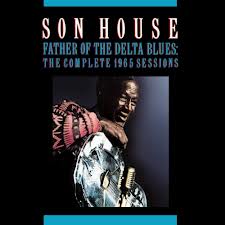
Warm and Fuzzy--Not!

Warm and Fuzzy–Not!

“Rediscovered” by a trio of young Blues fans in 1964, House had been living in obscurity in Rochester, New York, for two decades. Then, fueled by the banked fires of long-thwarted ambition and by an ever-growing quantity of alcohol, the old Blues man re-emerged onto the public stage for one last time. Son House took the acclaim that came to him in the 1960s–partner of Charley Patton, mentor to Robert Johnson, and “Father of the Delta Blues”–as his due, but he never really came to terms with it. It is this story that Daniel Beaumont tells, and he does so very well.]

* * * * *

Eddie “Son” House, Jr., was born in Lyon, Mississippi, near Clarksdale, on March 21, 1902. Both father and son were musicians, and each was torn by the conflict between observing conventional religion and playing “the Devil’s music” that scarred the lives of so many Blues performers. But, their reactions to this conflict were very different: House, Sr., stopped playing the Blues, quit his drinking, and became a deacon in the church; “Son,” on the other hand, while raised in the church, taught to detest Blues men, and “called” to preach at the age of fifteen, found the temptations of secular music, alcohol, and women impossible to resist. Son House’s decision to abandon the pulpit (more or less) for the Blues made him unique among Blues men, most of whom went in the other direction. (82)

At about the age of twenty-five, Son House had a “conversion experience” in reverse: blown away by the slide guitar work of Blues man Willie Wilson, House shortly found himself performing “the Devil’s music” regularly, while still continuing to preach. Then, in 1928, he shot and killed a man named Leroy Lee at a wild house party, was convicted of murder, and sentenced to a five-year term at the notorious Parchman Prison Farm. Fortunately for House–and for the Blues–his relatives (doubtless aided by an influential local white or two) secured his release from Parchman after a year, but a local judge warned him to leave town and never return. House moved to Lula, sixteen miles north of Clarksdale, where he was befriended by Charley Patton. And the rest, as they say, is (Blues) history.

In 1930, House accompanied Patton to a recording session in Grafton, Wisconsin, where he met–and performed with–Willie Brown, who would become his best friend. House also had the opportunity to record a number of tunes, including two of his most famous sides. In “My Black Mama,” the preacher turned Blues man proclaimed that “ain’t no heaven, say, there, ain’t no burnin’ hell,” and “where I’m going when I die, can’t nobody tell.” (66) Perhaps his most famous song, “Preachin’ the Blues,” revealed, according to his biographer, that House’s “ambivalent attitude about religion would become for him a full blown conflict whose tension and violence would fuel his drinking–but also raise his musical performances to the level of powerful art.” (69)
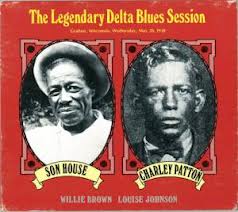
Son and Charley

Son and Charley

* * * * *


The timing of House’s Grafton sides was terrible: the Stock Market had collapsed several months earlier, and, by the time his tunes were released, the market for “race records” had all but dried up. It would be thirty-five years before Son House had a chance to record commercially again. During the 1930s, House managed to eke out a living doing farm work, playing the Blues, and–believe it or not–preaching, at least until 1934 or so, when his reputation as a Blues man caught up with him and led him, finally, to abandon the pulpit altogether.

It was during this same period that House and band mate Willie Brown attracted the attention of an aspiring Blues guitarist, Robert Johnson. The older players offered a few lessons to the younger Blues man and even let him sit in for them at house parties and juke joints when they were on a break. Shortly, Johnson disappeared, only to reappear six months or so later possessed of astounding guitar-playing skills acquired, according to Blues legend, as the result of a midnight rendezvous with the Devil at “the Crossroads.”

Robert Johnson--After the "Crossroads"

Robert Johnson–After the “Crossroads”

* * * * *

In the early 1940s, Son House was recorded for the Library of Congress by the peripatetic musicologist Alan Lomax, but nothing much came of this. Late in 1943, House finally abandoned the Delta for Rochester, where he would spend over two decades in “musical exile.” (109) According to Beaumont, House had left Mississippi for two reasons: to get out from under the onerous conditions of the “Jim Crow” South; and to escape from his wife, Evie, at least temporarily. (113) House hired on with the railroad for a time in New York, but eventually he abandoned that work for a series of menial jobs, one of which, in a labor camp on Long Island in 1955, led him to kill another man, this time in self-defense, at least according to a local grand jury.

The 1955 killing, for which he was exonerated, was the “highlight,” for lack of a better term, of House’s nearly two decades of obscurity in upstate New York. House was finally rescued from exile in 1964, “rediscovered” by three liberal, white Blues aficionados, the most important of whom (from the standpoint of Blues history, anyway) was Dick Waterman. Waterman became House’s manager and inherited the unenviable task of trying to keep him sober enough to perform for young, mostly white, college-age crowds, who expected to hear an exemplar of the “real folk Blues,” a performer who sounded exactly as he had a generation earlier, despite the effects of aging on his skills and the impact of advances in recording technology on the quality of records. And House did, or at least tried to, meet those expectations–at coffee houses, colleges, the Newport Folk Festival, even in Europe. Waterman also arranged for his client a one record deal with Columbia, which turned out to be House’s last studio recording (the “1965 Sessions” mentioned above).

Re-emergence of a Blues legend

Re-emergence of a Blues legend

Son House seldom disappointed his audience. Virtually every concert featured, for example, not just a shattering performance of “Preachin’ the Blues,” but also a bitter, funny introductory “homily” explaining how House had traveled from the pulpit to the Blues stage. To his fans, House expressed, in the words of his biographer, “an agonized vision–a struggle between the desire of the all too human son and the implacable law of the father, religion,” a conflict that produced a man “who had seen hell and lived to tell about it.” (167) Ironically, it was not House’s drinking but his smoking that did him in. After struggling for more than a decade with dementia, Son House died on October 19, 1988, of cancer of the larynx.

* * * * *

Preachin’ the Blues fits snugly into the “life and times” approach promised in his subtitle, forced into that category by an absence of personal correspondence. Usually, this way of telling House’s story works pretty well. For instance, the first chapter is a fine introduction to the “folk blues movement,” which would become, “at least initially, the market for blues reissues, and later, for the old bluesmen themselves.” (7)

Unlike some Blues historians, Beaumont does not lose sight of the proverbial “larger context.” For example, Dick Waterman and his associates had only arrived in Rochester to find House after first traveling to Memphis and then to Mississippi in the summer of 1964 in search of him. Beaumont takes pains to point out that this was also known as “Freedom Summer” in the history of the Civil Rights Movement, when three civil rights workers, Andrew Goodman, Michael Schwerner, and James Chaney, were abducted, murdered, and buried in an earthen dam in Philadelphia, Mississippi. All of which made the trip by Waterman and his two white, “Yankee,” Blues-loving buddies something more than a walk in the park.

On the other hand, Beaumont’s treatment of Alan Lomax’s visit to the Delta, and to House, in 1941-1942, soon wanders off course, and we learn more than we really need–or want–to know of Lomax’s leftist proclivities. Then, too, in trying to fit Son House into the local context of the African American community in Rochester, Beaumont focuses on a riot on July 24, 1964, yet eventually admits that House was not in town at the time; rather, he was in a hospital in Newport, Rhode Island, being treated for abdominal pains, which caused him to miss the entire Folk Festival.

Daniel Beaumont’s biography of Son House is probably definitive, given the relative paucity of primary sources from House and those who knew him. The work is clearly written, well-illustrated, and thoughtful throughout. I don’t think it’s possible to present a better balanced study of Son House than Preachin’ the Blues.

DISCOGRAPHY

Son House, Father of the Delta Blues: The Complete 1965 Sessions. Columbia, 1992 (C2K 48867). The good news: this is Son House after he had been “rediscovered” for the second time; the bad news: this is Son House after he had been “rediscovered” for the second time. For examples of House as a young Blues man, when he could rely on raw vocal power and undiminished instrumental skills, though without the help of modern recording techniques and equipment, see the following:

House, “Walking the Blues”; “My Black Mama (Parts 1 and 2)”; “Dry Spell Blues (Parts 1 and 2)”; “Preachin’ the Blues (Parts 1 and 2).” Masters of the Delta Blues: The Friends of Charlie Patton. Yazoo, 1991 (Yazoo 2002).

House, “County Farm Blues”; “The Jinx Blues (No.2)”; “Low Down Dirty Dog Blues”; “Walking Blues.” Deep River of Song: Mississippi–The Blues Lineage. Rounder, 1999 (11661-1825-2).

House, “Clarksdale Moan.” When the Levee Breaks: Mississippi Blues–Rare Cuts, 1926-1941. JSP Records, 2007 (JSP7781D).

* * * * * *

For those interested in reading more of my reflections on history, here are links to my books on the subject:

REABP CoverRancorous Enmities and Blind Partialities:  Parties and Factions in Georgia, 1807-1845 (University Press of America, 2015)

Pursuit Cover

In Pursuit of Dead Georgians:  One Historian’s Excursions into the History of His Adopted State (iUniverse, 2015)

Politics on the Periphery:  Factions and Parties in Georgia, 1783-1806 (University of Delaware Press, 1986)

Posted in "Charley Patton", Alan Lomax, American History, Books, Delta Blues, History, Research, Retirement, Robert Johnson, Son House, Southern History, Teaching, The Blues | Tagged , , , , , | 2 Comments

Big Bill Broonzy–The Blues Man as Pragmatist (Blues Stories, 9)

A Review of Robert Riesman, I Feel So Good:  The Life and Times of Big Bill Broonzy.  Chicago and London:  The University of Chicago Press, 2011.

[NOTE:  2011 was a very good year for Blues biographies:  three reputable university presses published books about the “life and times” of four noted Blues men–Big Bill Broonzy; Son House; Mississippi John Hurt; and Bobby “Blue” Bland.  Naturally, being “Retired But Not Shy”–and a Blues fan–I bought the biographies, and I hope to post reviews of them from time to time over the next few months.]

* * * * *  

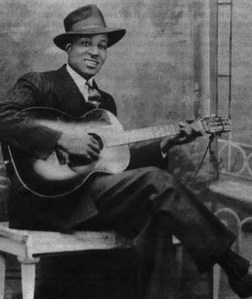
So, I’ve got this image, a sort of Blues version of the Statue of Liberty:  this statue stands, however, outside Union Station in Chicago, and, instead of “Lady Liberty,” it portrays the seated figure of a nattily-dressed Blues guitarist, Big Bill Broonzy.  The caption is, “Bring me your poor, your tired, your hungry, and, especially, your Blues players, fleeing the Jim Crow South for the comparative freedom of the Windy City.”  Broonzy made his exodus from the Mississippi Delta, headed for the “Promised Land” of Chicago, in the early 1920s, though under less dire circumstances than a number of his Blues-playing successors.  Taking to heart a lesson learned early, of the importance of what we would now call “mentoring,” Big Bill was there, with advice and other forms of assistance, as one talented Blues man after another made his way by train to Chicago–Muddy Waters, Little Walter, Jimmy Rogers, J.B. Lenoir, to mention a few.

Bring me your Blues players. . . .

Bring me your Blues players. . . .

For a historian trying to make sense of Big Bill and his contributions to the Blues, however, biographer Robert Riesman offers an early caveat:  “Big Bill Broonzy was a tremendous storyteller, and his greatest invention may have been himself.”  (5)  For example, although Broonzy claimed he was born in 1893 in Mississippi as William Lee Broonzy, according to Riesman he was born William Lee Conley Bradley, in rural Arkansas, on June 26, 1903.

Likewise, Big Bill spun tall tales about his relatives, making them “characters in a larger story,” “a rich source of keen and wise observations about the world he grew up in.” (11)  A supposedly influential uncle, Jerry Belcher, might not even have existed (19-20), for example. Moreover, despite Broonzy’s insistence that serving in the American army during World War I reinforced his view of the evils of the segregation he had experienced growing up in the Delta, Riesman argues that, if, as he believes, Broonzy was born in 1903, then he would have been fourteen, and much too young, to have served in Europe during the First World War. Still, Riesman contends, Broonzy’s stories about the war demonstrate “his skill at applying his first-rate imagination to the firsthand reports he had heard” of life in the segregated U.S. Army. (33) Even relating Big Bill’s marital adventures proves frustrating to Riesman, because each of his three marriages offers conflicting stories.  As a result, his biographer concludes, “the consistent theme connecting the conflicting versions is Bill’s view of his life history as a collection of fluid possibilities instead of fixed events–and his talent for carrying off each reinvention.”  (39-40)

* * * * *

Big Bill Broonzy had begun his musical career in the Delta with a fiddle, but, after he moved to Chicago, he took up the guitar and by 1928 had begun to record commercially.  Whatever instruments he played, however, Big Bill realized that his parents considered them sinful. He told an interviewer that he “never brought his guitar into his parents’ home, out of respect for [his mother’s] wish that there be” no “sinful things done around the house.” (120)

Once he arrived in Chicago, Bill’s arrangement with white producer Lester Melrose brought him no satisfaction. He later complained bitterly that a Blues singer was “just a meal ticket for the man or woman who wears dollar-signs for eyes” (53), another bit of wisdom he could pass on to younger Blues men arriving in the “Promised Land” from the Jim Crow South.  The thing about Big Bill Broonzy, though, was that he plotted his musical career pragmatically, making whatever adjustments were necessary to insure a continuous flow of income, which became another lesson he could teach aspiring Blues players who showed up at his door in Chicago.

As was the case with most recording artists, the Great Depression forced Broonzy to find other sources of income.  By mid-1934, he had entered a new phase of his career:  he became a “prolific songwriter” (85), he continued to record as “Big Bill,” but he was also in demand as a studio guitarist at recording sessions for other artists.  Moreover, his work backing vocalist Lil Green demonstrated that he could “adapt to a new playing style, as well as to become comfortable with the different capabilities of an amplified guitar.” (103)

It was also during the 1930s when Big Bill realized that his music appealed to left-wing, white audiences interested in “folk music” and jazz, a realization that would carry him into the “Blues man as folk singer” camp even before that particular movement was cool.  After World War II, Broonzy was more popular than ever with white audiences, aided by Pete Seger’s “People’s Songs” organization, by his participation in the clumsily-named “I Come for to Sing” group, and by Alan Lomax, who organized “The Midnight Special:  A Series of American Folk-Music Concerts,” in New York City, with Broonzy as one of the performers.  It was at one of these concerts that Big Bill unveiled his most famous “protest song,” “Black, Brown, and White Blues,” which met such a warm reception that it seemed to validate Broonzy’s decision “to appeal to white, politically liberal-to-left audiences.”  (126)

As a follow-up to these concerts, Alan Lomax organized a session featuring Broonzy, Memphis Slim, and the first Sonny Boy Williamson that produced an epochal record, Blues in the Mississippi Night, which mixed songs by the trio; excerpts from Lomax’s collection of recordings made when he visited rural southern churches, work camps, and prisons; and alcohol-fueled recollections from Big Bill, Memphis, and Sonny Boy, alternately scarifying and hilarious, about the “birth” and meaning of the Blues.  Yet, the weird thing about the album is that Alan Lomax was just as loose with the truth as Broonzy, so those who treasure the Blues in the Mississippi Night sessions for their insights into the origins of the Blues (as I do) really don’t know exactly what to believe about some of the stories told by the participants or by Lomax in his liner notes and, later, in his fascinating book, The Land Where The Blues Began (New York, 1993).

* * * * *

Between 1945 and 1955, the Chicago Blues were transformed, and it was during this period that Big Bill fulfilled his role as mentor to newly-arrived Blues players from the Jim Crow South.  Meanwhile, Broonzy was trying, successfully as it turned out, to break his ties with Lester Melrose and sign with Mercury Records, using Alan Lomax as intermediary.  As Riesman notes, this struggle showed Big Bill “responding to his new challenges with pragmatism, using his best judgment to identify the most reliable and trustworthy people who were available to him.” (146)

Using an acquaintance he had met through the “I Come for to Sing” group, Broonzy also lined up a one-year job as a janitor at Iowa State College, purportedly so he could recover from the effects of heavy smoke in Blues clubs. A member of the English Department at the college encouraged Big Bill to begin to write down his stories.  According to Riesman, Broonzy’s year-long sojourn in this overwhelmingly white world “laid much of the foundation for [Bill’s] professional success in the years that followed,” beginning with a European concert tour. (151) It also produced a published autobiography, Big Bill Blues (1955), as well as a posthumously released musical one, The Big Bill Broonzy Story (1961).

Yet, his first exposure to life in Europe did not push Big Bill in a new direction.  Rather, he continued to straddle two worlds, recording and performing for both white European and Black American audiences.  In an interview with Alan Lomax, Broonzy emphasized “the corrosive effects of racial prejudice by whites against blacks and the ways in which it continued to poison the lives of both blacks and whites.”  (175)

* * * * *

In 1955, Big Bill recorded, for Chess Records, his final sessions aimed primarily at African American audiences (200), and he also opened a tavern in Chicago in partnership with Josephine Moore.  By 1956, the ever-pragmatic Broonzy was trying his best to link the Blues with the rising phenomenon of rock ‘n’ roll, telling an interviewer that Elvis Presley was “singing blues now. . . . [W]hen I was a kid I used to hear them call it ‘rocking’ the blues–well, that’s what he’s doing now.”  And Elvis returned the favor later, when he said that “I dug real low-down Mississippi singers, mostly Big Bill Broonzy and Big Boy [Arthur] Crudup.” (236)

Yet, within a year of his effort to bridge the gap between the Blues and rock ‘n’ roll, Big Bill Broonzy was in desperate straits.  An operation for lung cancer, in late 1957, left him with no voice.  His friends rallied round him, staging a benefit concert early in 1958, but Big Bill died on August 15 of that year.  He was buried in Lincoln Cemetery, Blue Island, Illinois, on August 19, 1958.  Among the terrific illustrations in Riesman’s biography is one of Broonzy’s funeral, showing a number of noted Blues men as pallbearers, including Muddy Waters, Tampa Red, Sunnyland Slim, and Otis Spann, literally supporting their mentor at the end of his life as he had supported them at the beginning of their careers.

* * * * *

Big Bill Broonzy is not recognized today as a particularly influential Blues man, at least as far as his music is concerned.  And yet, without his dedicated work as an honest broker and mentor, any number of those who are considered Blues legends might not have made the transition from the Delta to Chicago–and beyond.  Big Bill did what he could–which was considerable–to help younger performers adapt to life in the Windy City, yet, in the process, his own contributions to the Blues tended to fade into the background.

Thus, it was interesting that, on January 20, 2009, at the inauguration of President Barack Obama, The Reverend Joseph Lowery, trying to explain the significance of the day, came close to quoting verbatim the words from Broonzy’s anthem, “Black, Brown, and White Blues,” as Riesman astutely notes. (254-255)

Now if you’re white, you’re all right

If you’re brown, stick around,

But if you’re black, oh brother, get back, get back, get back.

Broonzy was lucky in his friends, because over the years he hooked up with a number of influential figures who compiled their own private collections of letters, interviews, even films featuring Big Bill.  Bill also was fortunate in his biographer, for Robert Riesman seems to have run down virtually every available document, radio or television interview, and visual record of Broonzy’s performances, and he makes very good use of those sources.  While the verdict is perhaps still out about the importance of Big Bill Broonzy in the history of the Blues, it seems clear that, in Robert Riesman, he has found a first-rate biographer.

* * * * *

DISCOGRAPHY

Big Bill Broonzy, Good Time Tonight. Columbia, 1990 (CK 46219).
Broonzy, “Good Boy.” Bill Wyman’s Blues Odyssey. Document Records, 2001 (DOCD-32-20-2).
Broonzy, “Unemployment Stomp”; “In the Army Now.” News and the Blues: Telling It Like It Is. Columbia, 1990 (CK 46217).
Broonzy, “Spreading Snake Blues.” Legends of the Blues, Volume One. Columbia, 1990 (CK 46215).
Broonzy, Memphis Slim, and Sunny Boy Williamson, Blues in the Mississippi Night. Rykodisc, 1990 (RCD 90155).
Broonzy, “Black, Brown & White.” Defiance Blues. Platinum Entertainment, 1998 (51416 1340 2).
Broonzy, “How You Want It Done?”; “Getting Older Every Day.” Great Blues Guitarists: String Dazzlers. Columbia, 1991 (CK 47060).
Broonzy, “Mississippi River Blues.” Walk Right In: The Secret History of Rock & Roll. Bluebird, 2002 (09026-63986-2).
Broonzy, “Keep Your Hands Off Her.” That’s Chicago’s South Side: The Secret History of Rock & Roll. Bluebird, 2002 (09026-63988-2).

* * * * * *

For those interested in reading more of my reflections on history, here are links to my books on the subject:

REABP CoverRancorous Enmities and Blind Partialities:  Parties and Factions in Georgia, 1807-1845 (University Press of America, 2015)

Pursuit Cover

In Pursuit of Dead Georgians:  One Historian’s Excursions into the History of His Adopted State (iUniverse, 2015)
Politics on the Periphery:  Factions and Parties in Georgia, 1783-1806 (University of Delaware Press, 1986)

Posted in Alan Lomax, Big Bill Broonzy, Books, Chicago Blues, Delta Blues, History, Muddy Waters, Research, Retirement, Southern History, The Blues | Tagged , , , , , , | 2 Comments

“Never Get Out of These Blues Alive”–John Lee Hooker (1917-2001) [Blues Stories, 8]

John Lee Hooker was a true survivor. A native of the Mississippi Delta, he fled that region’s endless toil and painful, humiliating racism during the Great Depression, eventually settling in 1943 in Detroit, which remained his base until the early 1970s. His recording career began in 1948, with the appearance of “Boogie Chillen,” and continues after a fashion fifty-five years later, with the posthumous release by his estate of the CD, John Lee Hooker: Face to Face, in 2003, and, more recently, Hooker, a boxed-set retrospective.

During his long career, Hooker, like older blues men, went through a series of changes in his musical persona, trying to earn a living as the country’s musical tastes evolved. Yet, paradoxically, through all these alterations in his clothing and in the songs he sang, his biographer, Charles Shaar Murray, writes, “The story of John Lee Hooker’s life is, essentially, the story of his resistance to any and all attempts to change him, to dilute an intrinsic sense of self which has successfully withstood all pressures, including those of institutionalized racism, family, church and the music business. . . .” (Murray, p.16)

From the beginning, Hooker created an urban Blues that retained a country Blues feel. Not one to worry about rhyme schemes or consistent rhythms, he seems never to have performed a song the same way twice. Most of his tunes dealt with that archetypal trio of Blues themes–money, whiskey, and, especially, women. As he said, “If it weren’t for women, there wouldn’t be no blues.” (Quoted in Tom Pomposello, liner notes to the CD, Sittin’ Here Thinkin’, p.7) Or, as he remarked at another time—and without the misogynous undertone—“No matter what anybody says, it all comes down to the same thing, a man and a woman, a broken heart and a broken home.” (Gibson Guitars press release, 22 June 2001)

* * * * *

John Lee Hooker was born near Vance, Mississippi, on August 22, perhaps in 1917, though he also claimed other birth years between 1912 and 1923. His parents were The Reverend William Hooker, a tenant farmer and part-time evangelical preacher, and Minnie Ramsey Hooker. As a youngster, Hooker received his first guitar, a beat-up model, from an itinerant blues man who was courting one of his sisters. John Lee’s father, who believed, like many religious African Americans, that the blues was “the Devil’s Music,” reluctantly allowed his son to keep the guitar, but only on condition that he never bring it into the house. Eventually Hooker’s parents separated, and, unlike his ten brothers and sisters, young John Lee moved in with his mother and stepfather, Will Moore. Moore was a Louisiana-born guitarist who frequently played with such blues luminaries as Charlie Patton, Son House, and Blind Lemon Jefferson. Hooker’s new stepfather bought him a mail-order guitar and taught him all he knew about playing it, knowledge that, Hooker always claimed, shaped his playing throughout his long career.

About 1933, the teen-aged John Lee Hooker fled the Delta for the greater musical opportunities he felt awaited him in the big city of Memphis. Although he was quickly returned to his mother and stepfather by relatives, Hooker ran away again and this time escaped the Delta permanently. He moved from Memphis to Knoxville, then to Cincinnati, before finally settling in Detroit. At each stop along the way, John Lee worked a day job in a factory and played blues joints and house parties at night and on weekends. He launched his career as a conventional blues singer, whose Delta style, and perhaps erroneous birth date of 1917, allowed him to claim to be of the same lineage as already established performers like Muddy Waters and Howlin’ Wolf. Because of the need to be heard over the noise in the blues clubs, John Lee quickly adopted an electric guitar, for, as he said, “You barely have to touch the guitar, and the sound comes so silky. Electric sound is so lovely. I felt drawn to it. It’s the feel of it, the touch of it.” (Mark Humphrey, liner notes to the Rhino compilation, The Very Best of John Lee Hooker, p.7) Hooker tells about his early career in the song “That’s My Story,” from 1960.

Young John Lee

Young John Lee

* * * * *

Hooker’s dedication to his craft, and his persistence, eventually paid off. His reputation spread by word of mouth in the Motor City. Bernie Bessman, who later became his record distributor, recalled John Lee’s performance at a Saturday night concert in the Capitol Theater in the late 1940s:

“John came on last. . . and sat down in front of the 90-percent white audience to play his music. He was alone, unaccompanied, and at first he could hardly be heard over the conversation and noise from the audience. Then, after a minute or so, a strange hush fell over the crowd and continued until the end of the song, when they erupted with roaring applause. They weren’t quite sure what they were hearing, but they weren’t slow to recognize that they were witnessing something very special. To see that audience respond so strongly to John Lee Hooker was one of the most profound experiences of my life.” (Humphrey, op. cit., p.5)

Hooker made his recording debut in 1948, with “Boogie Chillen,” on Modern Records, which became a monster hit by the standards of that era, selling over a million copies. Hooker biographer Charles Shaar Murray has this to say about that first recording:

“On one level ‘Boogie Chillen’ was an extraordinarily simple record: a one-man show with zero chord changes, repetitive lyrics and little melody. On another, it was a work of sheer genius in which one man’s personal story deftly encapsulated the collective experience of a community in the throes of profound and far-reaching social change. Plus—in the finest traditions of what was, a little later, to become rock and roll—it had a great beat and you could dance to it.” (Murray, p.18)

The success of “Boogie Chillen” determined Hooker’s future: “It was ringin’ all around the country,” Hooker later told Living Blues magazine. “Every jukebox you went to, every drugstore you went, they were playin’ it. . . So I quit my job in the factory. I said, ‘No I ain’t workin’ no more!’” (John Milward, liner notes from the post-2001 compilation, John Lee Hooker Live at Newport, n.p.)

* * * * *

Between 1949 and 1955, John Lee cut records for just about any label that offered him a deal, because he “preferred upfront cash to the promise of royalties” (Milward, op.cit.)—and it was probably just as well, since music companies in that era were notoriously averse to sharing their profits with the talent. To avoid contractual conflicts, Hooker and his Detroit distributor, Bernie Bessman, saw to it that these records were issued “under a number of fake names, nicknames, or names that were a variation of his own.” Among these noms de blues were the following, the label first, then the alias Hooker used when recording there:

Staff (Johnny Williams)
Gotham (John Lee)
Regent (Delta John)
Savoy (Birmingham Sam and his Magic Guitar)
Gone (John Lee Booker)
Danceland (Little Pork Chops)
Fortune (Sir John Lee Hooker)
King (Texas Slim and John Lee Cooker)
Acorn (The Boogie Man)
Deluxe (Johnny Lee)
Chance (John L. Booker)

In 1955, Hooker signed with the Vee Jay label. When the blues came upon hard times with the advent of rock ‘n’ roll, Hooker moved into rhythm and blues and recorded a string of hits, including one of his signature tunes, “Boom Boom,” in 1962.

* * * * *

An r&b star by the end of the 1950s, John Lee next took advantage of the folk music revival of the early 1960s, appearing several times at the Newport Jazz Festival, where, dressing down but keeping his electric guitar, he won over a new, largely white audience. It was also during the early ‘60s that Hooker’s music caught on in Great Britain, where performers like the Animals, the Rolling Stones, and Eric Clapton became fans. By the time Hooker himself went to Europe, he later told an interviewer immodestly, “It was just like God let Jesus go over there.” (Humphrey, op. cit., p.7). Hooker’s attempt to straddle two musical styles is clearly apparent in performances available in a wonderful video collection, Come See About Me. See, for example:

“Maudie”–about his then wife–recorded live at the Newport Jazz Festival in 1960
“Hobo Blues”–American Folk Blues Festival, 1965
“Serves Me Right to Suffer”–1969

Folk Singer

Folk Singer

* * * * *

Then, when “the real folk blues” lost out to more popular styles in the late ‘60s and early ‘70s, Hooker made a series of jazz- and rock-oriented records in an only partially successful effort to keep his career afloat. He went into semi-retirement following his move to the Bay Area in the early 1970s, occasionally fronting a group of his own, the West Coast Blues Band. A gripping song by this group, “Never Get Out of These Blues Alive,” was recorded in 1981.

Never Get Out of These Blues Alive

Never Get Out of These Blues Alive

* * * * *

Finally, in the mid-1980s, Mike Kappus took over as Hooker’s agent, convinced that John Lee’s career had not yet run its course. And, sure enough, the release in 1989 of a CD entitled The Healer, pairing John Lee with musical “fans” like Bonnie Raitt, Carlos Santana, and Van Morrison, enabled Hooker to resurrect his career and take both his fame and his bank account to new heights. The sensuous centerpiece of that CD, a duet with Bonnie Raitt, is “I’m in the Mood.” (1990)

The Healer

The Healer

Hooker continued to record throughout the 1990s, and it was during this decade that he won Grammys for his duet with Bonnie Raitt on “The Healer” and for Best Traditional Blues Album, Don’t Look Back, in 1997. John Lee also received a Lifetime Achievement Award from the Grammys in 1990 and was inducted into the Rock and Roll Hall of Fame that same year (he had been elected to the Blues Hall of Fame in 1980). In 1997, he opened his own blues club, “John Lee Hooker’s Boom Boom Room,” in San Francisco. He was, at long last, as the title of his 1991 CD had it, Mr. Lucky

Mr. Lucky

Mr. Lucky

* * * * *

To Hooker, it was all about the music. As he told his biographer in 1991, “When I die, they’ll bury the blues with me, but the blues will never die.” (Quoted in Murray, p.13) When he passed away, on June 21, 2001, John Lee Hooker was mourned as a beloved elder statesman for the blues, a pop icon to be sure, but also a skilled performer whose influence helped to shape the blues, rhythm and blues, and rock ‘n’ roll for more than half a century, and, because he “Never Got Out of These Blues Alive,” continues to do so.

Blues Icon

Blues Icon

SOURCES

Bill Dahl, “John Lee Hooker,” in Michael Erlewine, et al., All Music Guide to the Blues. San Francisco: Miller Freeman Books, 1996, pp.115-118.

Charles Shaar Murray, Boogie Man: The Adventures of John Lee Hooker in the American Twentieth Century. New York: St. Martin’s Press, 2000.

John Lee Hooker: Come See About Me/The Definitive DVD. Eagle Eye Media (EE 39029-9).

John Lee Hooker: That’s My Story. A film by Joerg Bundschuh. Docurama (NVG-9549).

DISCOGRAPHY

1. “That’s My Story” (1960; 4:34)—That’s My Story: John Lee Hooker Sings the Blues. Riverside (OBCCD-538-2 [RLP-12-321]).

2. “Boogie Chillen” (1948; 2:42)—The Very Best of John Lee Hooker. Rhino (R271915).

3. “Boom Boom” (1962; 3:08)–The Very Best of John Lee Hooker. Rhino (R271915).

4. “Maudie” (Newport Jazz Festival, 1960; 3:02)—John Lee Hooker: Come See About Me/The Definitive DVD. Eagle Eye Media (EE 39029-9).

5. “Hobo Blues” (American Folk Blues Festival, 1965; 2:54)—John Lee Hooker: Come See About Me/The Definitive DVD. Eagle Eye Media (EE 39029-9).

6. “Serves Me Right to Suffer” (1969; 4:40)—John Lee Hooker: Come See About Me/The Definitive DVD. Eagle Eye Media (EE 39029-9).

7. “Never Get Out of These Blues Alive” (1981; 5:05)—John Lee Hooker: Come See About Me/The Definitive DVD. Eagle Eye Media (EE 39029-9).

8. “I’m in the Mood” (1989; 4:30)—John Lee Hooker: The Healer. Chameleon (D2-74808).

9. “Mr. Lucky” (1991; 4:38)—John Lee Hooker: Mr. Lucky. Charisma/Pointblank (91724-2).

* * * * * *

For those interested in reading more of my reflections on history, here are links to my books on the subject:

REABP CoverRancorous Enmities and Blind Partialities:  Parties and Factions in Georgia, 1807-1845 (University Press of America, 2015)

Pursuit Cover

In Pursuit of Dead Georgians:  One Historian’s Excursions into the History of His Adopted State (iUniverse, 2015)

Politics on the Periphery:  Factions and Parties in Georgia, 1783-1806 (University of Delaware Press, 1986)

Posted in Delta Blues, History, John Lee Hooker, Research, Retirement, Southern History, The Blues | Tagged , , , , , | Leave a comment

Electric Mud–The Life and Music of Muddy Waters,1915-1983 (Blues Stories, 7)

Muddy Waters (April 14, 1915-April 30, 1983) was born McKinley A. Morganfield in Rolling Fork, Mississippi. His family moved farther north, to the Stovall Plantation near Clarksdale, when he was about three, and it was there that he eventually taught himself to play both the harmonica and guitar.

Muddy's Cabin at Stovall

Muddy’s Cabin at Stovall

By the early 1940s, young Morganfield was a tractor driver during the day and performed at night as “Muddy Waters, Stovall’s Famous Guitar Picker” in neighboring juke joints. He was “discovered” by a traveling folklorist, Alan Lomax, who, along with John Work from Nashville’s Fisk University, recorded him at Stovall in the summers of 1941 and 1942. As Muddy described the experience, “[W]hen Mr. Lomax played me the record [of his 1941-42 songs] I thought, man, this boy can sing the blues.” Indeed he could. Encouraged by Lomax’s enthusiasm, Muddy left for Chicago in 1943.

The beginning of a fine DVD, “Muddy Waters: Can’t Be Satisfied,” is evocative of the place and time he grew up. Listen for the strains of one of the first songs Lomax recorded, “I Be’s Troubled.” Imagine Muddy showing up after work, barefooted, and sitting down to play the piece on a guitar borrowed from Lomax. We’ll return to this tune, later called “Can’t Be Satisfied,” as we chart Muddy’s growth as a performer.

Muddy and His First Record

Muddy and His First Record

Muddy Waters had made his name in Clarksdale as a singer of the “Delta Blues,” either as an acoustic guitar soloist or as a member of a quartet. His new home, the South Side of Chicago, was known as that city’s “Black Belt” because of its preponderance of African-American population by the 1940s. In fact, former sharecroppers, as well as the occasional restless musician like Muddy, had been leaving the South for the “Promised Land” of Chicago in increasing numbers ever since World War I, a movement usually referred to as the “Great Migration.” Thus, there was a ready-made audience for the Blues in Chicago, once performers used to the (relatively quiet) frenzy of rural juke joints learned how to reach the crowds in the city’s raucous downtown music clubs.

As he worked house parties and clubs on Chicago’s South Side, Muddy realized that he needed more volume to cut through the noise generated by large, enthusiastic audiences. He purchased his first electric guitar in 1944 and began to experiment with its sound. Using a thumb pick and a bottleneck slide with this guitar was a first step to increasing the volume of his performances, even as he built a band around a second electric guitar, an amplified harmonica, a bass, drums, and a piano.

More than any other performer, Muddy Waters was responsible for introducing the “electric Blues,” which in turn exerted a major influence on rock ‘n’ roll. (Yet, as writer Amin Sharif points out, “Much has been made about Muddy playing an amplified guitar and using amplified instruments in his band. But none of this would have made a difference if Muddy hadn’t been one hell of a musician.”)

"One Hell of a Musician"

“One Hell of a Musician”

Nevertheless, Muddy’s bosses at Chess Records, where he began to record in 1948, insisted at first that he forget about electrifying his guitar and try instead to achieve a spare “Mississippi sound,” so they paired him only with bass player Ernest “Big” Crawford on his earliest recordings. Muddy and Big’s first song for Chess was the same tune Alan Lomax had recorded at Stovall as “I Be’s Troubled,” but it was now called “Can’t Be Satisfied.”

In 1950, Muddy Waters and Big Crawford recorded a song that still “echoes down through rock ‘n’ roll history,” according to writer Tim Cahill. This was “Rollin’ Stone,” which was re-done in classic fashion by Bob Dylan, used as the name of an English rock band, and adopted as the title for the first magazine to take rock music seriously as part of popular culture. By the mid-‘50s, an insistent Muddy Waters had convinced Chess Records to allow him to record with his full band (guitars, harmonica, piano, drums, and bass), as you can hear, for instance, in his 1956 rendition of “Got My Mojo Workin’.”

Between 1951 and 1956, Muddy put fourteen songs on the national charts, and by the latter date his songwriting had lost most of the traces of his Mississippi roots and become “almost wholly urban in character.” (“Bio Chronology”) During this same period, a new musical sound, rock ‘n’ roll, had begun to cut into the popularity of the Blues. Ironically, Muddy himself aided this development, for in 1955, when young Chuck Berry arrived in Chicago, Muddy advised him to record at Chess. Berry recorded “Maybellene,” and the rest, as they say, is rock ‘n’ roll history.

The explosive growth of the popularity of rock ‘n’ roll cost Blues performers audiences and record sales. As national tours grew scarce for Muddy and his band, he found other outlets abroad. In 1958 and again in the ‘60s, he toured Great Britain, where his flaming electric Blues won him many new fans, including some who went on to form groups that would be at the forefront of rock’s “British Invasion” of the U.S. in the 1960s, including the Rolling Stones, the Yardbirds, and the Animals.

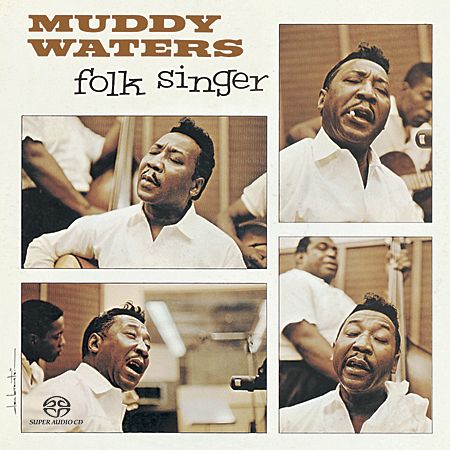
The early ‘60s saw the beginning of an interest in folk music among affluent young whites, and numerous festivals sprang up to stoke that interest. Muddy Waters performed at the Newport Jazz Festival to great acclaim in 1960, winning a new audience for himself. Chess Records attempted to capitalize on this altered perspective of one of their most successful artists, releasing a new recording, “Muddy Waters: Folk Singer” in January, 1964, and a compilation, “Muddy Waters: The Real Folk Blues,” in January, 1966. The Chess brain-trust continued to experiment with Muddy’s sound during the ‘60s, for example by backing his guitar stylings with a horn section on the album “Brass and the Blues.”

Muddy, Folk Singer

Muddy, Folk Singer

Then, in 1968, young Marshall Chess, son of one of the founders of the Chess label, decided to give Muddy the Jimi Hendrix, screaming psychedelic guitar treatment on what is surely the most controversial of Muddy’s albums, “Electric Mud.” (That title, by the way, was ironic, for Muddy Waters had been playing an electric guitar for almost a quarter of a century by 1968. In 1968, though, “electric” was “a buzz word for ‘turned-on,’ psychedelic, as in ‘electric Kool-aid.’” [Mark Humphrey, notes for cd, “Electric Mud.”]) According to Marshall Chess, the album sold between 150,000 and 200,000 copies, even though Blues purists attacked it unmercifully. (ibid.) On the other hand, a modern Rap performer, Chuck D, asserts, correctly I think, that “Muddy brought the Blues to the band, not the other way around.” (Sharif) Decide for yourself: listen, for example, to the “Electric Mud” version of a Muddy Waters’ classic, “Mannish Boy.”

Electric Mud

Electric Mud

So, listening to Muddy’s recorded output during the 1960s, fans might be forgiven for wondering exactly what sort of singer he was—a Blues singer, a folk singer, a fugitive from Herb Alpert and the Tijuana Brass, an older clone of Jimi Hendrix? But, as writer Tim Schuller points out, “If fans who wanted the real Muddy Waters couldn’t find him on wax—they’d find him on the road.” (Schuller, notes on cd, “Muddy Waters: The Lost Tapes.”) Check out, for instance, two cuts from live concert recordings: “Long Distance Call,” (1969) from one of my favorite Muddy Waters’ albums, “Fathers and Sons”; and “Hoochie Coochie Man” (1971), from “Muddy Waters: The Lost Tapes.”

Muddy finally severed his long relationship with Chess Records in 1975, for what looked like retirement, but fate intervened, in the form of blues/rock star Johnny Winter. Winter brought together Muddy and a band in 1976 to produce his “comeback album,” “Hard Again,” which won a Grammy Award in 1977. The band members, who worked with Muddy on the last four albums he made, all for Columbia’s Blue Sky label and with Winter as producer, were a veritable “super group.” They included: James Cotton and Jerry Portnoy on harmonica; Calvin Jones on bass; “Pine Top” Perkins on piano; Willie “Big Eye” Smith on drums; and Luther “Guitar Jr.” Johnson, Bob Margolin, and Johnny Winter himself on guitars.

Hard Again

Hard Again

The success of “Hard Again” gave Muddy the opportunity to open for Eric Clapton, jam with the Rolling Stones, record three more albums, and win two more Grammys. From “Hard Again,” listen once more to “I Can’t Be Satisfied,” noting especially the strength and confidence in Muddy’s voice, seasoned by constant use over the past four decades, and the interplay among the musicians. It’s a wonderful recording!

Also in 1976, Muddy settled a lawsuit with his publishers, Arc Music, the proceeds from which enabled him to live in financial comfort for the rest of his life. He died in his sleep on April 30, 1983, in his home in the Chicago suburb of Westmont.

grave

A comprehensive, if a tad overwritten, assessment of Muddy’s career comes from Blues critic Pete Welding, who called him “one of the greatest, most influential and enduringly important musicians of the century, one who had reshaped the course of the blues, set it on a new path, and, through the influence he exerted on so many others who followed in his trailblazing wake, completely altered the sound, substance, and very character of all popular music.” (Quoted in Humphrey, “Muddy Waters: His Best, 1956 to 1964.”)

SOURCES

Cahill, Tim. “It Changed Your Life,” slate.com (11/22/02) http://www.slate.com/id/2073792

Davis, Francis. The History of the Blues. Hyperion, 1995 (pb).

Gordon, Robert. Can’t Be Satisfied: The Life and Times of Muddy Waters. Little, Brown and Company, 2002 (hb). A companion DVD to Gordon’s biography is “Muddy Waters: Can’t Be Satisfied” (Wellspring Video, 2002).

Lomax, Alan. The Land Where The Blues Began. Pantheon Books, 1993 (hb).

Palmer, Robert. Deep Blues. Penguin, 1981 (pb).

Amin Sharif, “Muddy Waters on PBS,” Chicken Bones: A Journal for Literary & Artistic African-American Themes, http://www.nathanielturner.com/muddywaters.htm“ Attached to Sharif article is “Muddy Waters (1915-1983): A Bio Chronology.”

DISCOGRAPHY

1. “I Be’s Troubled” (1941)–Muddy Waters: The Complete Plantation Recordings. Chess/MCA (CHD—9344).

2. “Can’t Be Satisfied” (1948; 2:40)—Muddy Waters: His Best, 1947 to 1955. Chess/MCA (CHD—9370).

3. “Rollin’ Stone” (1950; 3:05)—Muddy Waters: His Best, 1947 to 1955. Chess/MCA (CHD—9370).

4. “Got My Mojo Workin’” (1956; 2:50)—Muddy Waters: His Best, 1956 to 1964. Chess/MCA (CHD—9380).

5. “Mannish Boy” (1968; 3:47)—Electric Mud. MCA/Chess (CHD—9364).

6. “Long Distance Call [live]” (1969; 6:37)—Fathers and Sons. MCA/Chess (088 112 648-2).

7. “Hoochie Coochie Man [live]” (1971; 3:46)—Muddy Waters: The Lost Tapes. Blind Pig (BPCD 5054).

8. “I Can’t Be Satisfied” (1977; 3:30)—Muddy Waters—Hard Again. Blue Sky (ZK 34449).

* * * * * *

For those interested in reading more of my reflections on history, here are links to my books on the subject:

REABP CoverRancorous Enmities and Blind Partialities:  Parties and Factions in Georgia, 1807-1845 (University Press of America, 2015)

Pursuit Cover

In Pursuit of Dead Georgians:  One Historian’s Excursions into the History of His Adopted State (iUniverse, 2015)

Politics on the Periphery:  Factions and Parties in Georgia, 1783-1806 (University of Delaware Press, 1986)

Posted in Alan Lomax, Chicago Blues, Delta Blues, Muddy Waters, The Blues, Uncategorized | Tagged , , , | 2 Comments

Georgia and the Federal Constitution, Part II (In Pursuit of Dead Georgians, 11)

[NOTE: In part one, we saw that Georgia played a small, but still significant, part in the creation of the Federal Constitution of 1787, especially in the role of the state’s delegation in helping to establish the famous “Connecticut Compromise,” which dictated that the Senate should feature equal representation for each state, while the House should base representation on population in each state. We now look at the aftermath of the Philadelphia Convention, especially at the process of ratification in Georgia, and its sequel.]

* * * * * *

After the Philadelphia Convention adjourned, William Pierce and William Few returned to Congress and were present when that body voted to send the proposed Constitution to the states. In late September, Pierce wrote to Virginia’s St. George Tucker, giving his general impressions of the Convention and its handiwork. He explained that, while he had been in New York on important business when the Convention delegates signed the finished document, he certainly would have signed it had he been present.

Pierce sailed for Savannah carrying a copy of the new frame of government with him. He arrived on October 10, and three days later the proposed Constitution was published in the state press. Within a week, a special session of the Assembly, which was meeting to consider the Indian troubles many Georgians blamed on the Confederation Congress, took time out to call for election of a ratifying convention in December.

Surviving evidence suggests that “public debate” in Georgia over the wisdom of ratifying the new Constitution was extremely one-sided. Only one opponent of the proposed frame of government evidently took his case to the people through the press. This writer, who called himself “A Georgian,” asserted that the powers granted the central government in the proposed Constitution were too strong, and he protested the absence of a bill of rights. Supporters of the Constitution confined themselves to heaping abuse on “A Georgian.” “Demosthenes Minor,” for instance, contended that, if the Constitution were not speedily adopted, “we shall be shamed in history, cursed by posterity, the scoff of nations, and the jest of fools.” (“A Georgian,” GG, November 15; “Demosthenes Minor,” ibid..) One of these writers even argued that opposition to ratification amounted to “toryism,” which he defined as a desire to destroy the institutions won on the battlefield at the cost of the “blood of all real Georgians, as well as all other Whig Americans.” (Quote from “A Farmer,” ibid., November 29; see also, “Demosthenes Minor, November 22, December 6; “A Citizen,” and “A Georgian,” both ibid., December 6, 1787.)

Lachlan McIntosh

Lachlan McIntosh

Likewise, only a single private letter has been found that advised against the complete adoption of the Constitution. On December 17, 1787, General Lachlan McIntosh of Revolutionary War fame wrote to his good friend, John Wereat, who had been elected to the state ratifying convention and would later be chosen the convention’s president. McIntosh suggested that the Constitution be ratified, but with the proviso that another convention be called in twenty years to consider amending the nation’s frame of government. McIntosh realized that the southern states would be in a minority in the new government, and he hoped to protect southern interests, specifically the region’s “peculiar institution” of slavery, from attack by the majority, which he believed to be anti-slavery.

John Wereat, President of Georgia’s Ratifying Convention (Wikipedia)

The Georgia ratifying convention opened on Friday, December 28, 1787, in Augusta, with twenty-four delegates in attendance from ten of the state’s eleven counties. The attendees reviewed the Constitution on Saturday. At the end of the session, Joseph Habersham, a member from Chatham County, wrote to his wife that the document would “[probably be sp]eedily adopted by this state, as it seems to have a good many friends in the convention.” Indeed it did, for, when the delegates reconvened on Monday morning, December 31, they ratified the Constitution without a single dissenting vote. Over and above its intrinsic significance, this action by the Georgia ratifying convention was noteworthy for the fact that men of differing social, economic, and political positions demonstrated the ability to work together on a matter of common concern, a rare and wonderful sight in the annals of the state.

Two days later, the formal approval and signing of the ratification document by the delegates took place. As the last delegate signed his name, two field pieces positioned opposite the state house fired thirteen shots in salute. On January 5, 1788, the convention met for the last time, agreed to send a letter to the Confederation Congress announcing Georgia’s ratification of the proposed Constitution, and ordered its journal published. Convention president John Wereat carried the ratification document with him to New York City, where he personally presented it to the Congress on May 5, 1788.

Ever since 1913, when Charles A. Beard published his controversial book, An Economic Interpretation of the Constitution of the United States, arguing that the “Founding Fathers” were motivated less by patriotism in ratifying the Constitution than by their desire to protect their own economic interests, the task of explaining the ratification of the Constitution has become a veritable cottage industry among American historians. Without entering into this debate, it is still clear that there were several reasons for the strongly pro-Constitution sentiment in Georgia. The most important factor in the state’s prompt ratification was the general disgust felt towards the Confederation Congress over the question of Indian relations. As one modern writer has said, “The crux of the disagreement was that the state wanted to negotiate without interference from congressional agents, but once a treaty was signed, Georgia officials wanted federal assistance in enforcing its provisions. Not surprisingly, Congress rejected this role. . . .” (Jackson, Lachlan McIntosh, p.144) For nearly two years before the Philadelphia Convention, the state had faced the threat of war with the Creeks, and Georgia’s leaders knew that the state could not protect itself unaided. So, many Georgians hoped for a stronger central government as a bulwark against the Indians.

If the frontier hoped for protection against the Indians, Savannah and the coast wanted better trade regulations and an end to state-issued paper money. As Savannah merchant Joseph Clay informed a European correspondent in June 1788, “it is to the operation of the [federal] constitution, we look up to as a means to enable us to discharge all our Contracts with faithfullness [sic] & honour, & not only so, but to enable us to extend our Commercial views in all its [sic] branches.” (Clay, Telfair, & Co. to [A.F. Delaville?], June 20, 1788, Clay, Telfair, & Co. Letterbooks, III: 1787-1795, Georgia Historical Society, Savannah) Moreover, despite Lachlan McIntosh’s misgivings, Georgians who owned or hoped to own slaves apparently were reassured by the compromise that delayed congressional consideration of the foreign slave trade until 1808.

There are several other factors that could be cited with the aid of the historian’s most effective weapon, 20/20 hindsight, to explain Georgia’s overwhelming ratification of the new Federal Constitution. Instead, let me close with an evocative contemporary opinion that I discovered in the course of my research.

It seems that Georgia’s prompt, unanimous ratification of the Constitution raised hackles across the Savannah River in South Carolina, where her action was criticized as hasty. When word of this criticism reached Savannah, a resident of the port, probably the influential William O’Bryen, Sr., penned a reply to the Charleston Daily Advertiser over the signature of “A Georgia Backwoodsman.” The Georgian conveyed in a brief passage the feelings of one who was comparing the hopes of 1776 to what he perceived as the realities of 1788:

It ought to be considered, that the infantine situation of Georgia makes it more her interest to form a solid compact which will give health and vigour to the extremest parts of the political body than any other state. The imbecility of her situation requires the efficient hand of a powerful government, having grown more grey in political disquietude and calamity than her sister states, although she has only the constitutional strength of infancy to support her. They also feel that constant movement in the human mind of providing against future contingent misfortunes, and endeavouring to profit herself by the advantage of melancholy experience . . . . All men saw no alternative. . . . (Reprinted in Georgia Gazette, June 12, 1788, where it was attributed to “W.O____n.”)

Suggested Reading:

Coleman, Kenneth, gen. ed. A History of Georgia.2nd ed. Athens, Ga.: University of Georgia Press, 1991.

________________. The American Revolution in Georgia, 1763-1789. Athens, Ga.: University of Georgia Press, 1958.

Farrand, Max. The Records of the Federal Convention of 1787. 4 vols. Paperback reprint. New Haven and London: Yale University Press, 1974.

Jackson, Harvey H. Lachlan McIntosh and the Politics of Revolutionary Georgia. Athens, Ga.: University of Georgia Press, 1979.

_________________. “The Road to the Constitution, 1783-1787: Georgia’s First Secession.” Atlanta Historical Bulletin 20 (Spring 1976): 43-52.

Lamplugh, George R. Politics on the Periphery: Factions and Parties in Georgia, 1783-1806. Newark, Del.: University of Delaware Press, 1986.

Phillips, Ulrich B. Georgia and State Rights. Reprint. Macon, Ga.: Mercer University Press, 1984.

Saye, Albert Berry. A Constitutional History of Georgia, 1732-1945. Athens, Ga.: University of Georgia Press, 1948.

_______________

For those interested in reading more about Georgia History, here are links to my books on the subject:

REABP CoverRancorous Enmities and Blind Partialities:  Parties and Factions in Georgia, 1807-1845 (University Press of America, 2015)

Pursuit Cover

In Pursuit of Dead Georgians:  One Historian’s Excursions into the History of His Adopted State (iUniverse, 2015)

Politics on the Periphery:  Factions and Parties in Georgia, 1783-1806 (University of Delaware Press, 1986)

Posted in American History, Constitution of 1787, Georgia History, History, Philadelphia Convention (1787), Research, Southern (Georgia) History, Southern History, Teaching, Uncategorized | Tagged , , , , | Leave a comment

Georgia and the Federal Constitution, Part I (In Pursuit of Dead Georgian, 10)

[Note: Part I of a talk delivered during the celebration of the Bicentennial of the Federal Constitution, at the quarterly meeting of Historic Jonesboro/Clayton County (Ga.). I did not think that, as a high school teacher, I would ever be asked to address a local historical group, but I was wrong, thanks to the efforts of a couple of scholarly acquaintances, Hardy Jackson and Brad Rice, faculty members at what was then Clayton Junior College but is now Clayton State University. A list of sources will be appended to Part II.]

* * * * *

On December 31, 1787, a convention meeting in Augusta ratified the proposed Federal Constitution. Georgia was the fourth state to ratify the Constitution and one of only three to do so unanimously. Thus, at first glance there doesn’t appear to be much of a story here: politically astute Georgians, recognizing the peril in which their nation stood under the notoriously ineffectual Articles of Confederation, enthusiastically supported the new frame of government created by an assembly of demigods in Philadelphia. The reality was a good deal more complex, however.

To begin with, it is possible to see Georgia’s prompt approval of the Constitution less as a fervent embrace of the new than as a decisive rejection of the old. One scholar who takes this line goes so far as to label the action of the Augusta ratifying convention as nothing less than “Georgia’s first act of secession from the United States.” (Jackson, “The Road to the Constitution,” p.43) In truth, Georgia’s relations with the Confederation Congress could hardly have been worse in 1787. Throughout the 1780s, the state was consistently in arrears in her financial obligations to Congress under the requisition system, and for a variety of reasons was seldom fully represented in that body. Another sore point was Georgia’s vast land claims, which extended south to Spanish Florida and westward to the Mississippi River. Native American tribes, Spaniards, and the American Congress all coveted this territory, while Georgia desired to open the lands to settlement under her own authority but found herself unable to do so.

At the heart of the ill will between Georgia and Congress was the question of Indian relations. In order to open her western territory to white settlement, Georgia had to normalize relations with her Indian neighbors, who had supported the British during the American Revolution. To do this, state officials negotiated a series of treaties with the Creeks in 1783 (at Augusta), 1785 (Galphinton), and 1786 (Shoulderbone). Unfortunately for the prospects of peace along the southern frontier, only a few Creek chiefs were willing to sign away tribal lands at these treaty sessions; others, including the most influential Creek leader, Alexander McGillivray, denounced each treaty in turn and refused to recognize its validity. Moreover, Congress moved to assert its control over the southern Indians, a step that gave hope to the Creeks but angered Georgians. The result of all this frontier intrigue was a steady deterioration in relations between Georgia and the Creeks, on the one hand, and between the state and Congress on the other. Violence flared in the backcountry between white settlers and the Creeks, and a full-scale Indian war loomed on the horizon.

It was in this context of frontier tensions and political alienation that Georgia reacted to the possibility of a reinvigorated central government. The Georgia Assembly considered the report of the Annapolis Convention, which paved the way for the more famous gathering in Philadelphia, in January and February 1787. On February 10, the Assembly elected William Few, Abraham Baldwin, William Pierce, George Walton, William Houstoun, and Nathaniel Pendleton as delegates to represent Georgia in Philadelphia, where the convention was to assemble in May to consider revision of the Articles of Confederation. Four of those chosen by the Assembly actually attended the Philadelphia Convention; except for a period of about ten days in late July and early August, the state had at least two delegates present. Abraham Baldwin attended throughout and was the state’s outstanding delegate; William Few was in Philadelphia except for a month when he had to attend a congressional session in New York City; William Pierce remained from May 31 to about July 1, and he spent much of that time taking notes on personalities and proceedings of the convention that have proven useful to scholars ever since; William Houstoun arrived at the convention on June 11 and remained until about July 26.

Georgia’s convention delegates did not speak very often: Abraham Baldwin took the floor eight times; William Houstoun, seven; William Pierce, four; and William Few, not at all. In the course of debate, Baldwin and Pierce favored a stronger central government, but they also hoped to protect the rights of the states. Baldwin believed that the first branch of the proposed bicameral national legislature should represent the people and the second the states. He also insisted that the new government should have some contact with the people and that the states needed to surrender some of their sovereignty; otherwise, he felt, the new government would be no improvement over the old one. In short, the Georgia delegation in Philadelphia usually voted with the “large states” or “stronger central government” group in the convention.

Abraham Baldwin and William Houstoun, the only Georgians present in early July, played key roles in helping to resolve a knotty problem and, according to some scholars, helped to save the Philadelphia Convention. At the time, delegates were badly split over the question of the basis for representation in the upper house of the proposed national legislature and seemed about to break up in disarray. On July 2, the convention voted on a crucial motion by Oliver Ellsworth of Connecticut that the states have equal representation in the Senate. The vote was by states, which meant that members of each state delegation had to settle the issue among themselves before their state’s one vote could be cast and counted. With eleven states represented at Philadelphia, the vote on Ellsworth’s proposal stood at five to five when Georgia’s turn came. Abraham Baldwin, who had previously announced that he would oppose the motion, instead voted for it, while William Houstoun voted against it; this split the Georgia delegation, so the state’s vote could not be cast. The tie stood, and the convention had time to devise and adopt the famous “Connecticut Compromise,” which provided for proportional representation in the House of Representatives and equal representation in the Senate.

Abraham Baldwin

Abraham Baldwin

William Houstoun

William Houstoun

Ordinarily, Georgia’s delegation would have voted with the large states, which opposed Ellsworth’s motion. If both Georgians had done so, the large states would have defeated the proposal by one vote, and the small states probably would have gone home. This time, though, Baldwin reversed his earlier stand and voted for Ellsworth’s motion. Why? The only direct evidence on this question is a statement from a Maryland delegate, Luther Martin, who said that Baldwin voted as he did in order to preserve the tie, buy time for compromise, and thus prevent the immediate breakup of the convention. Moreover, Baldwin was a native of Connecticut, and he knew several of the delegates from that state personally. A final, tantalizing bit of circumstantial evidence supporting Martin’s assertion is that, when the convention subsequently approved the “Connecticut Compromise” by one vote, Baldwin reverted to type and voted against the proposal.

The members of the Georgia delegation at Philadelphia also took an active interest in another potentially divisive question, the foreign slave trade. Abraham Baldwin joined delegates from South Carolina in arguing that slavery was a local matter that should be left to the states, and he asserted that Georgia would oppose any attempt to restrict one of her “favorite prerogatives.” Baldwin also claimed that states still allowing the foreign slave trade would probably abolish it shortly if left alone. Only the Carolinas and Georgia favored further importation of slaves from abroad. The other states were therefore able to carry another compromise measure that allowed the foreign slave trade to continue until 1808, at which time Congress could examine the question again.

William Few and Abraham Baldwin signed the finished Constitution, and William Pierce said he would have done so if he had been in Philadelphia at the time. Pierce did not believe that the Constitution was perfect, but he felt that it was probably the best one possible under the circumstances. There is also no reason to believe that William Houstoun would not have signed the Constitution had he been present in Philadelphia when the convention ended. With the end of the convention, the fate of the proposed Constitution was in the hands of the states.

End of Part 1

_______________

For those interested in reading more about Georgia History, here are links to my books on the subject:

REABP CoverRancorous Enmities and Blind Partialities:  Parties and Factions in Georgia, 1807-1845 (University Press of America, 2015)

Pursuit Cover

In Pursuit of Dead Georgians:  One Historian’s Excursions into the History of His Adopted State (iUniverse, 2015)

Politics on the Periphery:  Factions and Parties in Georgia, 1783-1806 (University of Delaware Press, 1986)

Posted in American History, Constitution of 1787, Georgia History, History, Philadelphia Convention (1787), Research, Southern History, Uncategorized | 4 Comments

Race–and History–Matter

“The past is never dead. It’s not even past” (William Faulkner)

[NOTE:  Perhaps it’s because I live in the South; or maybe it’s because February was Black History Month; or I suppose it could be because the Republican Party is still in a snit over the recent Presidential election; or, maybe it has to do with the phases of the moon. Whatever the reason, lately a number of (perhaps) well-meaning people have questioned the importance of a knowledge of American history, and of the significance of race in particular, in understanding both current events and prospects for the nation’s future.

I’ve been asked why it’s necessary to keep “stirring all that stuff up.” Can’t we just “move on”? And yet, if only they’d put away their rose-colored glasses, these same individuals might have seen several significant examples, “ripped from the headlines,” of what happens when one tries to understand “current events” while ignoring the history of race in this country.]

* * * * *

Very few historians believe that history is meaningless. If it were, then there goes the paycheck! Professional historians think the past can speak to us, if only we’d listen. The problem is that these “experts” don’t always agree on how particular people and events fit into the American story; because of their biases, they draw different “lessons” from the past, even though they arrive at them by looking at the same body of facts. We’re talking, in short, of the crucial difference between facts, discrete bits of evidence that have been proven true, and interpretations, how historians assemble some of the facts to create a picture of the past that makes sense to them. It is this confusion between facts and interpretation that is the source of several recent controversies over the importance of the burden of race to an understanding of the present-day United States.

For instance, following Barack Obama’s election to the Presidency in 2008, one pundit after another argued that we were now living in a “post-racial America.” Anyone who thinks the past five years reflect some sort of rosy, “post-racial America” has not been paying attention.

Consider, for example, a recent column by the Miami Herald’s Leonard Pitts. Conservative talk radio icon Rush Limbaugh had informed his listeners that John Lewis might have avoided having his skull fractured by Alabama state troopers in Selma, Alabama, forty-eight years ago, if only he’d been armed; so Pitts suggested, tongue in cheek, that Limbaugh would probably have given the same advice to Rosa Parks in Montgomery a decade earlier. “David from Georgia,” in an e-mail to Pitts, contended that of course Limbaugh would have “insisted that Ms. Parks REMAIN seated.” Pitts responded, “The idea that, in Alabama, in 1955, as a black woman was committing an illegal act of civil disobedience, this particular white man would have done what 14 other white passengers did not is, well, rather fanciful.” According to Pitts, “It is easy to ‘stand up’ for the right thing when doing so requires only paying lip service 50 years after the fact, something at which Limbaugh and his brethren have become scarily adept.” The columnist concluded, “Can we find comfort in delusions like [‘David from Georgia’ does]? Of course not.”

* * * * *

Then there were the ill-timed remarks of Emory University President James Wagner, who, in an article in the school’s alumni magazine, supported his plea for compromise in today’s Washington by citing the (in)famous “three-fifths compromise” adopted by the Philadelphia Convention in 1787, which counted a slave as 3/5 of a white person, for purposes of both taxation and representation (Article I, Section 2). The Internet soon exploded with harsh criticism of Wagner’s argument, because the “compromise” he praised came at the expense of slaves, and Wagner promptly backpedalled. In response to this brouhaha, the Atlanta Journal-Constitution’s political cartoonist, Mike Luckovich, pictured a chastened Wagner being told by a diverse trio of Emory students that, “We accept three-fifths of your apology.” Ouch!

In his take on the Wagner controversy, columnist Jim Galloway wrote that “Mixing history with politics in Georgia. . . is like a trip to a suburban dog park. Keep your eyes on the ground, because it’s still nothing but a minefield.” Despite Galloway’s wildly mixed metaphor, he had a point. For example, in 2002, Democratic Governor Roy Barnes pushed through the legislature a new, less “Confederate,” state flag, to the cheers of Northern liberals, then found himself a one-term Governor, courtesy of angry (white) Georgia voters. Then there was the Georgia Republican legislator who, during Black History Month no less, offered a bill that would have given the legislature “the power to determine which federal laws and regulations this state would be obliged to follow” (AKA, “Nullification,” an issue settled with finality by President Andrew Jackson in 1832-33).

Once Nullification was quashed, unhappy Southerners were left with “Plan B,” the so-called “right of secession,” which, incredibly, some modern Americans have revived as a solution to their unhappiness with President Obama. Folks, that train left the station in the spring of 1861, and, by the time it reached its destination, Appomattox, in 1865, it had cost perhaps 620,000 Americans their lives. As one Georgia academic commented, “When you don’t know your history, you allow other people to dictate that history. If you leave it to just a few people, you can get burned—there’s no doubt about it.”

* * * * *

AJC op-ed contributor Rob Teilhet wrote that the current Shelby County, Alabama, challenge to Section 5 of the 1965 Voting Rights Act relies on the idea that there has been sufficient “progress . . . on matters of race that preclearance requirements are no longer necessary.“ But, Teilhet claimed, while it “is true that the South has made progress on the issue of race,” nothing has yet invalidated William Faulkner’s oft-quoted assessment of the heavy hand of the past, quoted above.

Shannon McCaffrey and Daniel Malloy added that even those who claim the Voting Rights Act has “fed hyper-polarization” in southern politics believe that, “on balance, the act may still be worth the trade-off,” because it had both produced effective protections for minority voters and led to an increase of minority officeholders since it took effect.

The Supreme Court began considering the Shelby County suit on the same day the nation’s first black President dedicated a statue of civil rights pioneer Rosa Parks, which suggests that the past remains relevant to an understanding of the present–and that it sometimes has a powerful taste for irony.

* * * * *

On March 2, a New York Times editorial writer noted that the annual visit to Selma, Alabama, by a congressional delegation led by Georgia’s John Lewis, to commemorate the brutal March 7, 1965, attack on civil rights marchers, including Lewis, by state troopers and other thugs, on the Edmund Pettus Bridge, “should remind [the justices of the Supreme Court] of the enormous cost many Americans have paid to win the right to vote, and why that remains under persistent threat and must be defended.” This bloody incident played a key role in energizing American public opinion, helping to apply enough pressure on Congress that, a few months later, the Voting Rights Act of 1965 became law.

Commenting on oral arguments offered before the Supreme Court in that case of Shelby County, Alabama v. Holder, conservative columnist George Will contended that there has been so much progress in race relations, and in the matter of voting rights in particular, since 1965, that Section 5 of the Voting Rights Act, which deals mainly with racial discrimination in the South, was no longer necessary. (Or, as Justice Antonin Scalia inelegantly put it, the measure was “a perpetuation of racial entitlement.”)

On the other hand, New York Times correspondent Charlie Savage pointed out that, although it is true that, if Section 5 were declared unconstitutional, Section 2, which applies to the entire country, would still be in effect, the federal government’s oversight of voting rights under Section 2 would be more limited, and thus less effective, than under Section 5. Or, as noted Southern historian Orville Vernon Burton argues, “Revolutions can and do go backward, especially in economically difficult times. . .; racial justice is often sacrificed when the economic pie shrinks.”

* * * * *

Let’s do the math here: the Civil War ended in 1865; the Civil Rights Act was passed in 1965. And, in between, there was the “Age of Jim Crow,” generally reckoned as the nadir of existence for African Americans in this country, because, despite the addition of the 13th, 14th, and 15th amendments to the Constitution as a result of the War, white Americans, north and south, blithely ignored the constitutional mandate to protect the civil and political rights of former slaves and their descendants.

Is it any wonder that African Americans remain leery of the intentions of whites, especially those in the modern Republican Party, when it comes to insuring that all Americans have equal rights? As a black resident of McComb, Mississippi, which saw its share of bloodshed during the Civil Rights Movement, told a reporter when asked if he accepted the claims of whites that racially motivated politics were a thing of the past, “I think they’re full of it.”

The nub of this problem was noted by former Atlantan Tracy Thompson, who pointed to the “cognitive dissonance” she encountered growing up here, “the vague unease we feel when what we see and experience doesn’t quite fit with what we believe, or want to believe.” Thompson added that, “Cognitive dissonance has long been one of the South’s principal exports: Our region, where so much of our nation’s history has happened, is also home to generations of Southerners who have devoted themselves to ensuring that only a carefully vetted version of that history is remembered.”

For instance, one tactic in this campaign has been to deny that the Civil War was about slavery; but, as historian Orville Burton states, “When slavery is left out, the history is distorted; and when history is distorted, people feel justified in harboring anger, bitterness, and resentment.”

* * * * *

Discussing the impact of the destruction of Moscow in 1812, Leo Tolstoy wrote in War and Peace that, “Even those [Russians] who, being fond of talking on intellectual subjects and expressing their feelings . . ., unconsciously imported into their talk a shade of hypocrisy or falsity or else of useless fault-finding and bitterness against persons, whom they blamed for what could be nobody’s fault.”

To some extent, this dictum applies to the fulminations of today’s op-ed writers, political speechifiers, and, yes, bloggers, when confronting the related issues of race and history. Yet, while some commentators merely ransack the past looking for “facts” to support their particular “spin” on current issues, the worst of the lot are those who dismiss the idea that the past has any relevance at all to the present, and they do so at their peril.

In short, we should not stop “stirring all that stuff up” just to “get along,” if “getting along” means ignoring the weight of the past, and, thus, refusing to confront the impact of long-buried issues on the present, especially the burden of race. Put another way, while we certainly can ignore the past in confronting the present and the future, doing so comes with a cost. And, while we individually might be willing to pay that cost, American society would surely be the worst for it.

* * * *

SOURCES

Orville Vernon Burton, “The South as ‘Other,’ the Southerner as Stranger,” The Journal of Southern History 79 (Feb. 2013): 7-50.
Lincoln Caplan, Editorial, “Bloody Sunday Revisited,” New York Times (NYT), Mar. 2, 2013.
Laura Diamond, “Emory chief blasted for slavery reference,” Atlanta Journal-Constitution (AJC), Feb. 21, 2013.
Jim Galloway, “Politics plus history can equal problems,” AJC, Feb. 21, 2013.
Mike Luckovich cartoon, AJC, Feb. 22, 2013.
Shannon McCaffrey and Daniel Malloy, “Voter law deepens political divides,” AJC, Feb. 26, 2013.
Leonard Pitts, “No, Rush wouldn’t have stood up for Rosa Parks,” reprinted in AJC, Feb. 21, 2013.
Campbell Robertson, “A Divide on Voting Rights in a Town Where Blood Spilled,” NYT, Mar. 1, 2013.
Mary Sanchez, “Some states still up to old tricks trying to deny vote,” reprinted in AJC, Mar. 5, 2013.
Charlie Savage, “Decision on Voting Law Could Limit Oversight,” NYT, Feb. 28, 2013.
Rob Teilhet, “Politics haven’t left issue of race in past,” AJC, Feb. 26, 2013.
Tracy Thompson, “Leaving Atlanta,” AJC, Mar. 3, 2013.
George Will, “To progressives, a civil wrong is a threat forever,” reprinted in AJC, Mar. 3, 2013.

* * * * * *

For those interested in reading more of my reflections on history, here are links to my books on the subject:

REABP CoverRancorous Enmities and Blind Partialities:  Parties and Factions in Georgia, 1807-1845 (University Press of America, 2015)

Pursuit Cover

In Pursuit of Dead Georgians:  One Historian’s Excursions into the History of His Adopted State (iUniverse, 2015)

Politics on the Periphery:  Factions and Parties in Georgia, 1783-1806 (University of Delaware Press, 1986)

Posted in American History, Constitution of 1787, Current Events, Georgia History, History, Interdisciplinary Work, Nullification, Philadelphia Convention (1787), Retirement, Southern (Georgia) History, Southern History, Teaching, Uncategorized | Tagged , , , , , , , , , | 2 Comments

Peace of Bread, Bread of Peace, Lent, 2013 (Adventures in Interdisciplinary Land, 5)

john-quincy-adams-picture[Now for something completely different–reflections on John 6:41-51, my contribution to a Lenten devotional booklet created by parishioners and published under the auspices of St. James’ Episcopal Church, Marietta, Georgia. Once again, we see that “adventures in interdisciplinary land” can lead down some roads not (usually) taken, especially when one is “retired but not shy.”]

Thursday, March 14, 2013

John 6.48. I am the bread of life.

The human need for bread is so strong that it helped produce settled agriculture, and the rise of “civilization,” in the river valleys of ancient Mesopotamia, Egypt, China, and Mesoamerica. Bread remained crucial to life in the first century C.E., as today’s reading from John’s gospel reveals. A day after miraculously producing enough food from five loaves of bread and two fish to feed five thousand people, Jesus tells the crowd that he is “the bread of life.” John’s version of the “feeding of the five thousand,” unlike accounts found in the three synoptic gospels, makes Jesus’ meaning explicit: This mass feeding might be reminiscent of God’s sending manna to the Hebrews in the Wilderness, but, Jesus explains, manna was subject to decay and could sustain human life only for a finite period. In contrast, he does not merely provide bread; he is the “true bread from heaven.” The crowd shouts, “Sir, give us this bread always,” but the text says that the Jews attack Jesus for what he has said. After all, they know him: he is Joseph’s son; how can he say he has come down from heaven? Jesus responds firmly that everyone who believes he comes from the Father will have eternal life, “and the bread I will give for the life of the world is my flesh.”

John’s treatment of the Last Supper, in contrast to the other gospels, lacks an account of the institution of the Eucharist, but today’s reading (and through the end of chapter 6) has what one theologian calls “unmistakable eucharistic echoes.” The “bread” Jesus refers to is not a thing of the past, like manna in the wilderness; this bread is being given now to those who have faith. As we still hear, during the Eucharist, “The Body of Christ, the bread of heaven”; as we still pray, in the Lord’s Prayer, “Give us this day our daily bread.”


Readings assigned for this day:

Psalm 69:1-23(24-30)31-38; 73 Jeremiah 22:13-23 Romans 8:12-27 John 6:41-51

* * * * * *

For those interested in reading more of my reflections on history, here are links to my books on the subject:

REABP CoverRancorous Enmities and Blind Partialities:  Parties and Factions in Georgia, 1807-1845 (University Press of America, 2015)

Pursuit Cover

In Pursuit of Dead Georgians:  One Historian’s Excursions into the History of His Adopted State (iUniverse, 2015)
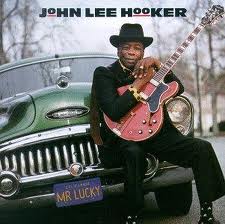
Politics on the Periphery:  Factions and Parties in Georgia, 1783-1806 (University of Delaware Press, 1986)

Posted in "Lent", Episcopal Church, Retirement, Uncategorized | Tagged | Leave a comment

The Book that Changed my Life (Adventures in Interdisciplinary Land, 4)

[Note:  A couple of years before I retired, our energetic new high-school librarian proposed that interested faculty and staff contribute to the library’s website brief essays on books that had had a significant impact on their lives.  What follows is a revised version of my contribution.]

* * * * *

Armchair Audience

Armchair Audience

Many years ago, in graduate school, I was reading the preface to a new book about Kentucky politics during the era of the Early American Republic (yes, I should have gotten out more!), and I noted that the author had interesting things to say about the role Kingsley Amis’ Lucky Jim, a novel set in a backwater college in England after World War II, had played in helping her navigate the emotional and intellectual shoals of graduate study and college teaching.

Amis follows the stumbling academic career–and love life–of the title character, a historian who has very little good to say about either college teaching or historical research.  I was so taken by the description of the novel that I found a copy, read it–and laughed myself silly.

I was especially struck by a passage that occurs while Jim Dixon is accompanying his department head, Professor Welch, on a scarifying drive in the country.  To pass the time, and to remind Dixon how important publishing his work in a professional journal is to his future at the school, Welch asks for the title of the article Dixon says he has been working on:

Dixon looked out of the window at the fields wheeling past, bright green after a wet April. It wasn’t the double-exposure effect of the last half-minute’s talk that had dumbfounded him, for such incidents formed the staple material of Welch colloquies; it was the prospect of reciting the title of the article he’d written. It was a perfect title, in that it crystallized the article’s niggling mindlessness, its funereal parade of yawn-enforcing facts, the pseudo-light it threw upon non-problems. Dixon had read, or begun to read, dozens like it, but his own seemed worse than most in its air of being convinced of its own usefulness and significance. “In considering this strangely neglected topic,” it began. This what neglected topic? This strangely what topic? This strangely neglected what? His thinking all this without having defiled and set fire to the typescript only made him appear to himself as more of a hypocrite and fool. “Let’s see,” he echoed Welch in a pretended effort of memory: “oh yes; The Economic Influence of the Developments in Shipbuilding Techniques, 1450 to 1485. . . .” (pp.14-15)

* * * * *

After reading Lucky Jim, I promptly put it down and forgot about it, until I had been in my prep school teaching job for a few years.  By then, as someone who had trained to be a college professor but had somehow wound up as a high school History teacher, I was struggling with the transition from “professing” to “teaching” and worrying about what I might have to do if I were unable to make that quantum leap. Moreover, the politics of this place, both secular and religious, were pretty brutal “back in the day”:  each year seemed to bring a series of events that ranged from just plain loopy to outright bizarre, and trying to navigate these conflicts and crises proved very stressful.

Finally, one summer, anticipating with dread the crazy things that the new school year would undoubtedly have in store for me, I once more picked up Lucky Jim , re-read it, and again could hardly stop laughing.  Then it occurred to me that, having experienced in Amis’s fictional setting a place that made this school seem almost “normal” by comparison, perhaps I might now be better prepared to return to work in the Fall.  And that’s how things worked out.

Pleased with the results of this exercise in “literary therapy,” I made it a practice over the next decade or so to re-read Amis’s novel towards the end of each summer.  I even passed on to colleagues my belief that reading Lucky Jim might have a positive impact on other harried faculty members here. Once, I even lent my copy of the novel to a fellow teacher, and the embarrassed borrower told me later that the book had been ruined by rain on a camping trip and so had to be replaced.

 Kingsley Amis (qotd.org)

Kingsley Amis (qotd.org)

* * * * *

Lucky Jim never failed to prepare me (and a few others) to cope with the new year at this school, a development I’m sure was the farthest thing from Kingsley Amis’s mind when he published the novel. More broadly, the novel played a major role in enabling me to fit in to the overall life of this place.

I had never attended any private school before I entered graduate school, and my first years at the “prep school” where I had fetched up after finishing my doctorate were, not to put too fine a point on it, the equivalent of my having landed on Mars. For instance, I found myself expected to further the school’s “Christian mission,” while at that point I was unsure of my own stance on the whole Christianity issue. Moreover, I was to do this in an institution that segregated classes by gender, for the most part (the History Department, where I worked, was the lone exception at the time). But, hey, you take comfort where you can find it, right?

Strangely enough, it was only when I no longer needed Kingsley Amis’s wacky outlook on things “educational” before the start of each new academic year that I finally felt I was where I was supposed to be. I could finally face the new school year without using Amis’s book as a crutch, so Lucky Jim became just another of the many volumes on the shelves in my study–reassuring to look at but infrequently consulted. (In the years since my retirement, I’ve re-read Amis’s novel just once.)

Yet, to those of you still active in–or contemplating a move into–“prep school” teaching, I have to say that I continue to believe Kingsley Amis’s Lucky Jim can, as the Quakers say, “speak to your condition.” And, if it doesn’t, then perhaps you’ll be able to find a different key to life in the prep school classroom, just as I did all those years ago.

* * * * * *

For those interested in reading more of my reflections on history, here are links to my books on the subject:

REABP CoverRancorous Enmities and Blind Partialities:  Parties and Factions in Georgia, 1807-1845 (University Press of America, 2015)

Pursuit Cover

In Pursuit of Dead Georgians:  One Historian’s Excursions into the History of His Adopted State (iUniverse, 2015)

Politics on the Periphery:  Factions and Parties in Georgia, 1783-1806 (University of Delaware Press, 1986)

Posted in Books, History, Interdisciplinary Work, Kingsley Amis, Lucky Jim, Teaching | Tagged , , , , , , | 3 Comments

Denying the Holocaust (Adventures in Interdisciplinary Land, 3)

[Note: In the late 1990s, a number of seniors at my school received, through the mail, “information” from a group denying the reality of the Holocaust. (For an earlier instance, go here)  One of their English teachers asked me to talk to her classes about the issue; this is an updated version of what I said.]

* * * * *

Ms.______ has told me that you were shocked that some people deny the reality of the Holocaust, and she has asked me to speak to you about it.  I am glad to do so, for while, on one level, this is simply a more sophisticated version of the antisemitism that has scarred the Christian worldview almost since the Crucifixion, which disturbs me as a Christian, at a deeper level it is an attack on the nature of historical truth, which goes to the heart of my calling as a historian.

Briefly put, these people deny the reality of one of the defining events of the 20th century:  the deliberate attempt by Nazi Germany to exterminate the Jews of Europe, an effort that was heavily documented by the Germans themselves (though most of the documentation was not made public until after World War II).  The reality of the Holocaust was attested to by Nazi leaders in the dock at the Nuremberg war crimes trials; by former guards at the death camps; by the Sonderkommandos who supervised the executions; by Jews who survived; by the postwar government of Germany; by thousands of documents concerning the camps; by Allied troops who liberated the inmates of the death camps at war’s end (including a former faculty colleague of mine at this school); and by both still and moving pictures.

In the face of this overwhelming evidence, how can rational people say that the Holocaust did not happen?  The simple answer is that rational people cannot say it, which means that, in examining the motives of those who deny the Holocaust, we are dealing with the irrational.

* * * * *

As a professional historian, I belong to several historical organizations.  From time to time, these associations sell their membership lists to other, supposedly legitimate, groups as a way to make a little money.  A number of years ago I received a copy of what appeared to be a new professional publication, The Journal of Historical Review.  As I leafed through it, however, I soon realized that this was no ordinary historical journal:  every article seemed bent on proving that the Holocaust had not happened. The group behind this alleged journal was the “Institute for Historical Review,” founded in California in 1978, and a major force among those attempting to prove that the Holocaust is a myth. This publication so outraged the members of the historical organization to which I belonged that it promptly revised procedures for selling its membership list to ensure that such a thing could not happen again.  (If you’re interested in seeing what this sleazy “institute,” which evidently still exists, is up to today, see http://www.ihr.org/.)

* * * * *

The logical questions to ask are, why do some people deny the Holocaust, and how do they do it?  The why is easy to state but hard to grasp; the how is more complex.

First, the why:  these folks live in a world of paranoid conspiracy fantasies.  They believe that an international “Jewish plot,” aided by African Americans and members of other supposedly “inferior races,” is engaged in a campaign to seize control of the world from supposedly “superior, Aryan” races.  If this sounds a lot like lines from one of Adolf Hitler’s speeches, that should come as no surprise.  Deniers practically worship Hitler and his ideology of Fascism, but, to make Fascism seem respectable, they must try to wash away the stain of the Holocaust.  Included in this collection of Hitler adorers are the Ku Klux Klan, skinheads, neo-Nazis, white supremacists, white nationalists, and militias, groups with which most of us have no desire to be associated.

You may wonder how such obviously outrageous claims could gain a “respectful hearing” in a postwar world that had literally grown up reading books about and watching documentary and theatrical films on, the Holocaust.  A quick answer would be that we are more comfortable with relativism than was the generation that fought World War II.

For example, in the teaching of English at the college level, deconstructionism, the idea that no text has an absolute meaning, only what each individual reader brings to it, had been gaining ground in recent years.  Likewise, in the study of History, the postwar generation had pretty much destroyed the idea that historians can be “completely objective,” which some have interpreted to mean that there is no such thing as “historical truth,” only divergent versions of the truth, what historians call “conflicting interpretations.”  Whether or not these views are true (and I don’t believe they are), the point remains that they have helped create an intellectual climate where there apparently is no solid truth, only competing truths, each equally valid. (Think of The Colbert Report’s Stephen Colbert’s concept of “truthiness.”)  Thus, through some crazy intellectual calculus, a paranoid fantasy based upon lies, half-truths, and antisemitism can come to be seen as of equal merit, as the “other side of the question,” to the reality of the Holocaust.  (Think, Fox News’ misleading slogan, “We report; you decide.”)

* * * * *

How do those who deny this reality go about “proving” their case?  Theirs is a wide-ranging assault lacking both consistency and logic.  From “the Germans didn’t do it”; to “the Germans did it, but it was only a couple of hundred thousand Jews, not six million, and, besides, what could you expect from wartime conditions?”; to “the Soviets did it”; to “the Allies were themselves guilty of atrocities against German civilians.”  From (believe it or not!) “why haven’t any of the victims of the Holocaust testified?”; to “if there are so many pictures, why do we always see the same ones?”  From “Zyklon-B gas wasn’t capable of doing what it’s supposed to have done”; to “gas chambers–what gas chambers?”  None of these arguments hold up under scrutiny, but still they go on.  Even The Diary of Anne Frank is not safe from their assaults:  a few years ago, Holocaust deniers claimed that The Diary was a post-World War II forgery produced to stir up sympathy for the Jews.

The Institute for Historical Review (IHR), the organization I mentioned earlier in connection with that purported “historical journal,” went so far as to offer a $50,000 reward in 1980 to any “Holocaust survivor” who could prove that the Holocaust actually happened.  One survivor, Mel Mermelstein, took up the challenge, sending his own personal evidence as well as the names of other witnesses who could back up what he’d said.  When the IHR was slow to respond, Mermelstein took the organization to court, charging breach of contract.  The IHR was ordered by the court to pay Mermelstein the $50,000 reward, as well as $40,000 for “pain and suffering,” and the judge ruled that the reality of the Holocaust was “not reasonably subject to dispute. And it is capable of immediate and accurate determination by resort to sources of reasonably indisputable accuracy. It is simply a fact (emphasis added).”

* * * * *

What does one do in the face of such nonsense?  I would say ignore it, but that’s becoming harder to do in our media-crazy age.  With so many talk shows on television and radio, and the almost daily proliferation of websites on the Internet, hardly a month goes by without the appearance on one of these sources of a spokesman for those who deny the Holocaust.  In recent years, these groups also have made appearances on college campuses, either in person or in the form of advertisements in college newspapers, to trumpet their views.

If you cannot ignore the blather of these fanatics, what can you do?  The obvious answer is, inform yourself about the facts of the Holocaust.  There are many books out there, as well as documentary and theatrical films, that, unlike the work of Holocaust deniers, are firmly grounded in the surviving evidence.  For example, a solid book on the topic is The Holocaust, by Martin Gilbert.  Professor Deborah Lipstadt of Emory University has published a work entitled Denying the Holocaust, upon which I’ve drawn in preparing this talk.  And, when one of those whom Lipstadt had labeled a “Holocaust denier,” writer David Irving, sued her in British courts, she fought–and won–the ensuing trial, and wrote a book about that as well. The best documentary I’ve seen is the episode on the Holocaust, “Genocide: 1941-1945,” in the fine 1973 British series, The World at War. As far as theatrical films are concerned, you couldn’t do much better than Steven Spielberg’s grim, black-and-white epic, “Schindler’s List,” based upon a book by historian Thomas Kenneally.

* * * * *

More than a half century has passed since the end of World War II, which means that many–if not most–of the surviving witnesses to the Holocaust have died.  Given this, the creation of the Holocaust Memorial Museum in Washington and of similar museums elsewhere was crucial in keeping alive the memory–and the testimony–of what was once done by a supposedly “civilized” nation in the name of “racial purity.”  These were not new ideas in the 1930s and 1940s, nor have they disappeared today, as news reports from the Balkans to Africa to our Nation’s Capital inform us with depressing regularity of efforts by governments or other forces to destroy large groups of people for religious or ideological reasons.  It is well to remember the words of philosopher George Santayana:  “Those who cannot remember the past are condemned to repeat it.”

Suggested Reading:

Gilbert, Martin.  The Holocaust: A History of the Jews of Europe During the Second World War . New York: Holt Publishers, 1987.
Lipstadt, Deborah E.  Denying the Holocaust: The Growing Assault on Truth and Memory. New York: Plume, 1993.
______________.  History on Trial: My Day in Court with David Irving. New York: ECCO, 2005.

* * * * * *

For those interested in reading more of my reflections on history, here are links to my books on the subject:

REABP CoverRancorous Enmities and Blind Partialities:  Parties and Factions in Georgia, 1807-1845 (University Press of America, 2015)

Pursuit Cover

In Pursuit of Dead Georgians:  One Historian’s Excursions into the History of His Adopted State (iUniverse, 2015)
Politics on the Periphery:  Factions and Parties in Georgia, 1783-1806 (University of Delaware Press, 1986)

Posted in Current Events, Georgia History, History, Interdisciplinary Work, Southern History, Teaching, Uncategorized | Tagged , , , , , | 6 Comments